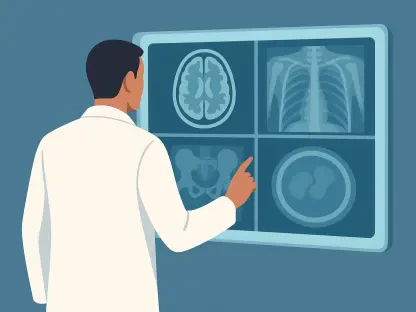
The rapid proliferation of foundation models has fundamentally altered the trajectory of medical diagnostics, promising a shift from specialized algorithms to versatile, general-purpose systems. While early diagnostic software focused exclusively on isolated tasks like detecting lung nodules or

The diagnostic process for sudden abdominal pain remains one of the most high-stakes challenges within modern emergency departments because symptoms often manifest identically across both trivial and fatal conditions. Medical professionals frequently find themselves in a race against the clock,

The rapid integration of wireless technologies into the human cardiovascular system has introduced a set of unprecedented clinical challenges that force medical professionals to reconsider the traditional boundaries of patient safety and device efficacy. EBR Systems, a prominent medical technology

Precision in oncology often hinges on the ability to distinguish microscopic malignant cells from healthy tissue, yet current imaging tools frequently fail during the most critical moments of a procedure. While surgeons increasingly rely on near-infrared fluorescence to navigate complex anatomical
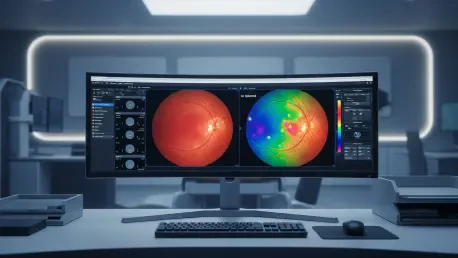
A patient suffering from an undiagnosed visual impairment often spends more than half a decade circulating through various clinical settings before finally receiving a definitive genetic answer for their condition. This prolonged period of uncertainty, frequently referred to as a diagnostic

The prevailing narrative of human aging has long depicted a slow and inevitable erosion of cognitive faculties, yet a remarkable demographic known as SuperAgers continues to defy these expectations by maintaining memory performance typical of individuals decades younger. These unique individuals,