
The predictive accuracy of breast cancer treatment outcomes is being improved through the integration of advanced mass spectrometry and machine learning algorithms. This breakthrough addresses the persistent challenge of HER2-positive breast cancer, a subtype known for its aggressive nature and tendency to develop resistance against conventional targeted therapies. Recent investigations focus on the tumor-immune microenvironment (TIME) to understand why some patients remain unresponsive despite high levels of immune cell presence. Central to this inquiry is the endoplasmic reticulum (ER) stress response, a cellular mechanism that often shifts the balance between tumor suppression and progression. While the body normally uses stress signals to maintain cellular health, chronic activation within the malignant site creates a protective shield for the cancer. This intricate dance between cellular stress and the surrounding immune landscape dictates the ultimate efficacy of medical intervention, necessitating a shift toward more nuanced diagnostic and therapeutic frameworks.
Cellular Mechanisms and Immune System Dynamics
The unfolded protein response (UPR) serves as the primary signaling pathway triggered by sustained ER stress, acting as a critical regulator within the tumor-immune microenvironment. In malignant cells, the UPR promotes survival by allowing the cancer to adapt to harsh, low-oxygen conditions that would typically prove fatal to healthy tissue. However, this same pathway has a detrimental effect on infiltrating immune cells, effectively neutralizing their ability to recognize and destroy the tumor. This phenomenon explains why many advanced treatments fail; the immune cells are physically present but functionally paralyzed by the surrounding stress signals. By examining these intracellular dynamics, researchers have identified that modulating the UPR could potentially flip the switch from immunosuppression to active defense. Understanding this dual role is essential for developing therapies that not only target the cancer itself but also rejuvenate the patient’s own immune response to ensure a more robust clinical outcome.
To confirm these complex interactions, scientists employed multidimensional experimental frameworks combining laboratory co-culture models with high-resolution imaging. These models allowed for the direct observation of how stress pathways in malignant cells dictate the behavior of nearby T-cells and macrophages. When researchers experimentally inhibited specific ER stress markers, they observed a significant restoration of immune cell vigor, which led to a marked decrease in tumor viability. These findings were subsequently validated through the analysis of clinical tissue specimens, where distinct transcriptional patterns revealed a clear correlation between stress levels and therapeutic failure. This spatial profiling highlights that the location and intensity of stress signals are just as important as the presence of the biomarkers themselves. By mapping these interactions with high precision, the medical community can now visualize the invisible barriers that have historically hindered the success of HER2-targeted protocols in high-risk patients.
Advanced Diagnostics and Strategic Implementation
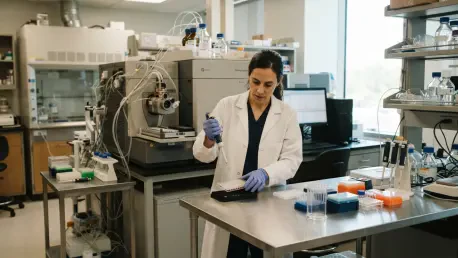
A cornerstone of this technological evolution involves the application of serum-based matrix-assisted laser desorption/ionization time-of-flight (MALDI-TOF) mass spectrometry. This high-precision tool profiles systemic molecular changes that occur when the tumor and immune system interact under stress. By training machine learning algorithms on this proteomic data, clinicians can now differentiate between treatment responders and non-responders with unprecedented accuracy. This predictive model analyzes hundreds of molecular variables simultaneously, allowing for the identification of resistance patterns long before clinical symptoms appear. Unlike invasive tissue biopsies, this liquid biopsy approach provides a comprehensive snapshot of the patient’s physiological state through a simple blood draw. The integration of artificial intelligence with physical chemistry ensures that the diagnostic process is not only less painful but also significantly more informative for long-term care.
The investigation into ER stress modulation provided a transformative perspective on managing aggressive breast cancer cases. Researchers demonstrated that targeting the unfolded protein response could restore the functional capacity of immune cells, bridging the gap between basic biology and practical clinical application. Moving forward, clinical adoption requires a standardized integration of mass spectrometry into routine oncology screenings to establish a baseline of proteomic health. Healthcare providers should prioritize the use of UPR inhibitors alongside standard chemotherapy to neutralize stress-induced resistance. Pharmaceutical development must focus on refining these inhibitors to selectively target the tumor site without disrupting normal healthy functions. Furthermore, collaboration between bioinformaticians and oncologists will be essential to translate algorithmic insights into actionable decisions. By embracing these technological advancements, the medical field can significantly improve long-term survival rates.