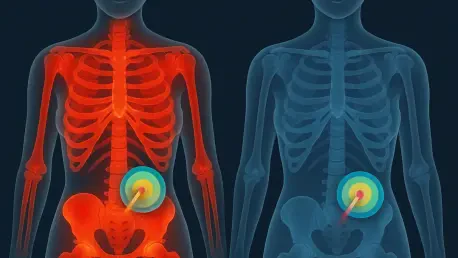

The persistent challenge of balancing aggressive oncologic treatment with the preservation of a patient’s fundamental physiological resilience has led to a significant paradigm shift in the management of advanced cervical cancer. For decades, concurrent chemoradiotherapy has remained the standard of care, yet the collateral damage to the pelvic bone marrow often results in severe hematologic toxicity that compromises treatment continuity. Modern advancements in 2026 have introduced pelvic bone marrow-sparing volumetric modulated arc therapy as a sophisticated solution designed to shield the body’s primary blood cell production sites. This technique aims to maintain the intensity of radiation required to eradicate malignant cells while simultaneously minimizing the dose to the pelvic bones. By carefully mapping the active marrow regions, clinicians are now able to navigate the complex internal landscape of the pelvis with unprecedented precision, ensuring that the life-sustaining functions of the hematopoietic system are not sacrificed during the pursuit of curative outcomes for the patient.
Clinical Performance: Precision in Radiotherapy Planning
Implementing such a specialized approach requires a rigorous comparison between standard volumetric modulated arc therapy and the bone marrow-sparing variant to ensure that tumor control is not inadvertently compromised. Recent data indicate that the transition to sparing protocols does not necessitate a trade-off in target coverage; rather, the radiation dose remains highly concentrated on the primary tumor and involved lymph nodes. A critical concern during the development of these plans was “dose shifting,” where radiation diverted from the marrow might increase the burden on other nearby organs such as the bladder, rectum, or femoral heads. However, sophisticated optimization algorithms have demonstrated that the surrounding healthy tissues do not receive any significant increase in radiation when bone marrow constraints are prioritized. This stability confirms that protecting the marrow is a technically viable objective that fits seamlessly into existing clinical workflows without increasing the risk of secondary complications for the patient.
The most immediate clinical benefit observed from this refined radiotherapy technique is a substantial reduction in acute hematologic toxicity, which historically plagues patients undergoing intensive chemotherapy combinations. Observations from comparative cohorts show that the incidence of grade 2 or higher blood-related complications fell from approximately 73% in traditional treatment groups to about 51.6% when marrow-sparing protocols were employed. This improvement is largely attributed to the preservation of lymphocyte counts, which are crucial for maintaining the body’s natural defense mechanisms against both the cancer and potential infections. By shielding the ilium, lower spine, and sacrum—the high-concentration areas of active marrow—physicians can prevent the massive depletion of white blood cells that often leads to treatment delays or dose reductions. Consequently, patients experience a more stable recovery phase, as their immune systems remain more intact throughout the duration of the chemoradiotherapy process and the crucial weeks following its completion.
Analytical Breakthroughs: Optimization and Future Outcomes
A deeper statistical analysis of treatment data has identified the “V10” parameter as the most definitive predictor of hematologic outcomes, representing the volume of pelvic bone marrow receiving at least 10 Gy of radiation. For every incremental increase in this specific volume, the risk of developing significant hematologic complications rises proportionally, making it a vital target for dosimetric optimization. Beyond the simple reduction of side effects, there is a compelling correlation between bone marrow preservation and the overall effectiveness of the tumor response itself. In recent studies, the group receiving marrow-sparing therapy achieved a complete response rate of 61.48%, a marked improvement over the 48.36% observed in the control group. This suggests that a healthier physiological state, supported by a functional hematopoietic system, may actually enhance the biological impact of the radiation on the malignancy. By focusing on these specific technical metrics, oncologists can tailor radiation plans to maximize both the safety and the curative potential of the intervention.
The integration of bone marrow-sparing constraints into standard oncologic protocols represented a decisive step toward more personalized and less debilitating cancer care. Clinical teams successfully adopted these advanced planning techniques to ensure that the patient’s long-term rehabilitation was as much a priority as the immediate eradication of the tumor. Future implementations should focus on automating the identification of active marrow sites using functional imaging to further refine the precision of the shielding. By prioritizing the health of the blood-forming organs, medical facilities significantly reduced the physical burden of chemoradiotherapy, leading to faster patient discharge and improved overall quality of life. These developments established a new benchmark for cervical cancer therapy, where the protection of the immune system became a core component of the treatment philosophy. Ultimately, the data confirmed that sparing the marrow did not just prevent complications; it actively strengthened the therapeutic pathway, providing a clear roadmap for the continued evolution of radiation oncology.