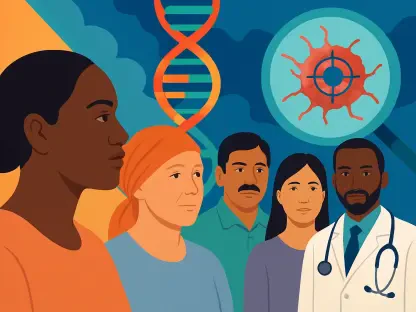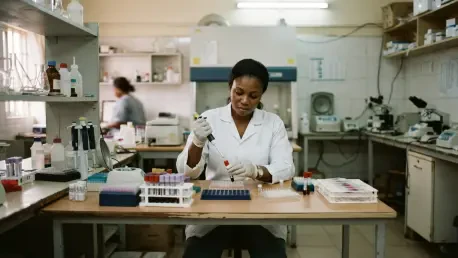

While approximately 95.7 percent of Nigerian breast cancer patients express readiness for genetic testing, the vast majority have a mean correct response rate of only 20.5 percent regarding recognized risk factors. The epidemiological landscape of Nigeria has undergone a profound transformation as of 2026, with breast cancer now representing the primary source of cancer-related mortality and the most frequent malignancy among the female population. This public health crisis is exacerbated by a consistent pattern of late-stage clinical presentations, where an estimated 80 percent of patients seek medical intervention only after the disease has progressed to stage III or IV. In stark contrast to many Western healthcare systems that benefit from established early detection protocols, the Nigerian context involves younger patients presenting with more aggressive disease types, including a high prevalence of triple-negative cases. These clinical observations indicate that genetic susceptibility may play a more dominant role in the region than previously understood by the general public or global health observers, requiring a shift toward precision oncology that incorporates genomic data into standard care pathways.
Educational Barriers and Clinical Profiles
Challenges in Patient Literacy
A primary obstacle to improving outcomes in the Nigerian oncology sector is the significant gap in patient literacy regarding disease etiology and personal risk management. Despite the life-threatening nature of their diagnosis, many patients struggle to identify the biological or lifestyle factors that contribute to cancer development. For instance, while a personal history of the disease is recognized by over half of patients, fewer than 10 percent are aware of the roles that obesity or physical inactivity play in increasing susceptibility. This lack of awareness extends to the understanding of how family history influences individual risk, leaving many women unaware that their relatives may also require closer monitoring or early intervention. Addressing these knowledge gaps is essential for the transition toward a healthcare model that emphasizes prevention and early detection over late-stage palliative care, which currently dominates the clinical experience for most women across the country.
Beyond a simple lack of biological knowledge, the clinical environment is further complicated by the persistence of cultural misconceptions and spiritual explanations for cancer. A substantial portion of the patient population remains influenced by myths, such as the belief that storing cell phones or currency in a bra can lead to malignant growths. More concerning is the attribution of cancer to supernatural causes or witchcraft, which can lead to delays in seeking professional medical help as patients turn to traditional or spiritual healers first. These beliefs are not merely anecdotal; they represent a significant percentage of the reasoning behind the late-stage presentations seen in tertiary hospitals. Educational interventions must therefore be designed to respect cultural contexts while firmly grounding patient understanding in modern medical science. Only by debunking these persistent myths can the healthcare system ensure that patients prioritize clinical diagnosis and genetic screening over ineffective alternative treatments.
Sociodemographic and Institutional Trends
The typical profile of a breast cancer patient in Nigeria reflects the broader socioeconomic challenges of the region, with a median age of 47 and a majority coming from low-income backgrounds. These individuals often balance the demands of large families and informal employment, such as trading, which leaves little room for the high costs and time commitments associated with modern cancer therapy. Education levels vary significantly, yet a large segment of the population has not completed formal schooling, which directly correlates with lower health literacy and a decreased likelihood of recognizing early symptoms. This sociodemographic reality means that any progress in genetic testing or precision medicine must be accompanied by economic support and simplified communication strategies. Without accounting for the financial and educational limitations of the average patient, the implementation of advanced diagnostic tools risks becoming an exclusive service available only to the affluent urban population.
Institutional disparities across different geopolitical zones also play a crucial role in how patients experience care and acquire information about their condition. Research conducted at facilities such as the University of Ilorin Teaching Hospital and the Obafemi Awolowo University Teaching Hospitals Complex has shown that clinical awareness levels can fluctuate depending on regional healthcare infrastructure. Some centers benefit from more robust public health outreach programs, resulting in patients who are better informed about symptoms such as nipple discharge or axillary pain. In contrast, other regions suffer from a lack of standardized patient education, leading to higher rates of nonresponses when patients are surveyed about basic cancer knowledge. These regional inconsistencies suggest that a national strategy is required to harmonize the quality of information provided at the point of care. Strengthening the capacity of regional hospitals to deliver consistent health education is a vital step toward ensuring equitable cancer care across the entire federation.
Scarcity of Diagnostic Resources
The ability to manage breast cancer effectively is severely hindered by a lack of molecular profiling resources in many of Nigeria’s public healthcare centers. Immunohistochemistry, a standard diagnostic tool used to determine the specific characteristics of a tumor, is often unavailable due to reagent shortages, equipment deficiencies, or high costs. In recent multicenter studies, results for these critical tests were available for only about a quarter of the participants, leaving oncologists to make treatment decisions based on incomplete data. This absence of routine diagnostic information makes it difficult to identify patients who would benefit most from targeted therapies or specific genetic screenings. The lack of a baseline for molecular data also means that the aggressive nature of many Nigerian breast cancer cases remains poorly understood at the institutional level. Expanding access to these foundational tests is a prerequisite for any meaningful integration of genetic services into the national oncology framework.
Furthermore, the domestic capacity for genetic sequencing is currently insufficient to meet the needs of a country with over 200 million people. Most samples intended for germline analysis must be sent to international laboratories, a process that introduces significant delays and increases the financial burden on patients. This dependence on foreign infrastructure not only makes testing less accessible but also prevents Nigerian scientists from building a robust local genomic database. Without locally owned and operated sequencing facilities, the unique genetic variations present in the Nigerian population may be overlooked or misinterpreted by external researchers. Developing domestic sequencing capacity would empower local clinicians to provide faster, more accurate diagnoses while simultaneously fostering a culture of genomic research within the country. This transition from being a consumer of foreign diagnostics to a producer of local genomic insights is necessary for the long-term sustainability of precision medicine in sub-Saharan Africa.
Awareness of Heredity and Testing Interest
Navigating the BRCA Paradox
A fascinating and contradictory phenomenon known as the “BRCA paradox” has been observed among Nigerian patients, where a high general awareness of heredity exists alongside a total lack of specific genetic knowledge. While more than half of patients understand that breast cancer can “run in the family,” only a tiny fraction—less than five percent—have ever heard of the BRCA1 or BRCA2 genes. This gap suggests that while the concept of hereditary transmission is culturally accepted, the scientific language used to describe it has not yet reached the patient level. Education remains the primary driver of this disparity; individuals with higher education are vastly more likely to understand that cancer is linked to specific biological markers, even if they cannot name the genes themselves. This paradox highlights a critical opportunity for healthcare providers to bridge the gap by connecting existing cultural understandings of family history with modern genetic concepts.
The implications of this paradox are significant for genetic counseling and the informed consent process in Nigeria. If a patient agrees to testing without understanding the specific genes involved or the nature of mutations, their ability to make informed decisions about their health or their family’s health is limited. Counselors must work to demystify the science of genetics, moving beyond the broad concept of “family disease” to explain how specific mutations can influence treatment pathways and risk management. This requires the development of educational materials that are linguistically and culturally appropriate, ensuring that the “BRCA paradox” is resolved through clear communication. By empowering patients with specific knowledge, clinicians can move toward a more collaborative form of care where genetic information is used as a tool for empowerment rather than a source of confusion. This educational shift will be instrumental as the country looks to expand its germline analysis programs in the coming years.
High Acceptance of Genetic Screening
Despite the significant barriers to health literacy, there is a remarkable and near-universal willingness among Nigerian breast cancer patients to undergo genetic testing. Recent data shows that over 95 percent of women are ready to participate in BRCA1 and BRCA2 screening if it is offered to them, a figure that remains high across all educational and socioeconomic levels. This finding effectively debunks the long-held assumption that cultural or religious resistance is a major barrier to the adoption of genetic medicine in the region. Instead, the data suggests that patients are highly motivated to understand their condition and are eager for any tool that might improve their prognosis or protect their children. This level of enthusiasm provides a strong mandate for policymakers to prioritize the rollout of genetic services, as the demand from the patient population clearly outweighs the current supply of medical resources.
This readiness to seek genetic screening also indicates a high level of trust in medical institutions, despite the historical and systemic challenges faced by the healthcare system. Patients appear to view genetic testing as a logical step in their clinical journey, regardless of whether they fully comprehend the underlying molecular biology. However, this high level of acceptance also places a heavy responsibility on the medical community to ensure that testing is delivered ethically and with adequate support. High willingness must not be confused with informed readiness; without proper counseling, patients may have unrealistic expectations about the benefits of testing or may be unprepared for the psychological impact of a positive result. Therefore, the focus of healthcare providers should shift from convincing patients to get tested to ensuring that the infrastructure is in place to manage results in a way that is medically and emotionally supportive.
Family Communication and Support
In the Nigerian context, a diagnosis of hereditary breast cancer is rarely an individual experience, as patients are deeply embedded in strong family and communal networks. Approximately 95 percent of patients have indicated that they would be willing to disclose their genetic status to their siblings and would actively encourage their relatives to undergo testing. This proactive attitude toward family disclosure is a positive sign for the implementation of cascade testing, where relatives of an affected individual are screened for the same mutation. By leveraging these existing family bonds, healthcare providers can identify high-risk individuals much earlier, potentially preventing the late-stage diagnoses that currently plague the region. Family communication is thus a powerful tool in the fight against hereditary cancer, turning a single diagnosis into an opportunity for broader community health improvement.
The role of the spouse is particularly critical in the decision-making process for many Nigerian women facing a breast cancer diagnosis. Data show that the majority of patients inform their husbands first and rely on them for emotional support and financial decisions regarding their treatment. This reality necessitates a family-centered approach to genetic counseling, where partners are encouraged to participate in the process. When spouses are well-informed about the nature of hereditary risk, they are more likely to support their wives through the testing process and help manage the implications for their children. Conversely, a lack of spousal involvement can lead to friction or a lack of support, making the clinical journey even more difficult for the patient. Designing counseling sessions that involve key family members can ensure a more robust support system and a higher rate of adherence to follow-up care and preventive measures.
Overcoming Structural and Financial Obstacles
Systemic Bottlenecks and Infrastructure
The primary challenge in establishing a functional genetic testing framework in Nigeria is not patient reluctance but a severe lack of specialized infrastructure and personnel. Currently, there is a notable shortage of trained genetic counselors and laboratory technicians capable of handling the complexities of genomic data. This human resource gap means that even if testing kits were widely available, the clinical follow-up required to interpret and explain the results would be missing. Furthermore, the absence of centralized biobanks and genetic databases makes it difficult for local researchers to track patterns of hereditary mutations across different ethnic groups. To overcome these bottlenecks, the government and the private sector must invest in specialized training programs and the construction of modern diagnostic facilities. Building this foundation is the only way to move beyond small-scale research studies toward a sustainable national program for hereditary cancer management.
In addition to the personnel shortage, the logistical challenges of sample transport and data management continue to hamper progress in the field. Because many tertiary centers lack the equipment for high-throughput sequencing, they must rely on international partnerships that can be disrupted by shipping delays or bureaucratic hurdles. This dependence on global supply chains often results in turnaround times that are too slow for urgent clinical decision-making. Developing local hubs for genetic analysis would reduce these delays and ensure that genetic information is available in a time frame that can actually influence the patient’s initial treatment plan. Moreover, establishing domestic data storage solutions is vital for protecting the privacy of Nigerian citizens and ensuring that their genetic data is used for the benefit of the local population. Solving these systemic bottlenecks will require a coordinated effort to modernize the entire pathway of genetic care, from the initial blood draw to the final counseling session.
Burden of Out-of-Pocket Costs
For the average Nigerian family, the cost of genetic testing remains the most significant barrier to access, as healthcare is largely funded through out-of-pocket expenses. With many patients falling into low-income categories, the price of a BRCA1 or BRCA2 test can exceed an entire year’s worth of healthcare spending for the household. This financial reality creates a situation where precision medicine is effectively limited to a tiny fraction of the population, leaving the majority without access to life-saving diagnostic information. Even when patients are willing to undergo testing, the high cost often forces them to prioritize basic needs or immediate surgical treatments over genetic screening. Without a shift in how these services are funded, the revolutionary potential of genomic medicine will remain out of reach for those who need it most, deepening the existing health inequities in the country.
To address this financial burden, there is an urgent need for the National Health Insurance Program to expand its coverage to include germline analysis and molecular profiling. Subsidizing the cost of genetic testing would make it a viable option for a much larger segment of the population, facilitating a more proactive approach to cancer management. Additionally, partnerships with international NGOs and diagnostic companies could help drive down the cost of testing through bulk purchasing or the donation of laboratory equipment. Some local initiatives have already begun to explore sliding-scale fee structures based on a patient’s socioeconomic status, but these efforts remain localized and limited in scope. A comprehensive national policy that treats genetic testing as an essential component of cancer care, rather than a luxury add-on, is necessary to ensure that every Nigerian woman has the opportunity to understand her hereditary risk.
Future Directions for Precision Oncology
The proactive attitude demonstrated by Nigerian patients throughout 2026 has provided a clear roadmap for the future of oncology in sub-Saharan Africa. Moving forward, the focus must shift toward the practical implementation of culturally adapted counseling and the expansion of domestic diagnostic capacity. Healthcare providers worked to bridge the literacy gap by integrating genetic education into routine prenatal and primary care visits, ensuring that women are aware of hereditary risks long before a diagnosis occurs. Clinicians also prioritized the training of specialized staff to manage the unique psychological and social implications of genetic results in the Nigerian context. These actions established a more resilient healthcare system that is better equipped to handle the rising burden of noncommunicable diseases through the lens of precision medicine and individualized care plans.
The successful integration of genetic services into the national framework required a multifaceted approach involving policy reform and international collaboration. By late 2026, researchers and policymakers advocated for a transition toward a healthcare model where genomic data is routinely used to guide both surgical and systemic therapies for breast cancer. This shift included the adoption of national guidelines for managing high-risk individuals, ensuring that those with identified mutations have access to surveillance and preventive measures regardless of their income level. Ultimately, the readiness of the Nigerian patient population served as the catalyst for a broader transformation in how cancer is diagnosed and treated across the region. These structural improvements and policy changes provided a sustainable foundation for reducing mortality rates and improving the quality of life for thousands of women facing the challenges of hereditary breast cancer.