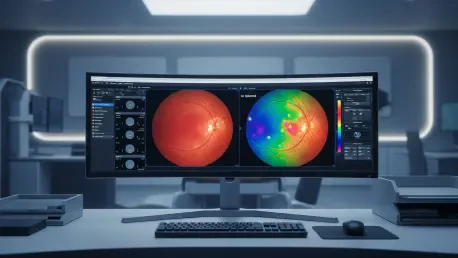
The relentless progression of Huntington’s disease has long stood as one of the most daunting challenges in modern neurology, leaving families without any effective way to halt the decay of the human mind. For decades, the medical community struggled to offer anything beyond palliative care,
Decoding the Topography of Neural Decline through Deep Learning The traditional metric of biological age often falls short when applied to the complex organ of the human body, failing to account for how individual neural circuits deteriorate at vastly different speeds. Instead of relying on a

The landscape of Australian general practice is currently experiencing a profound shift as clinicians increasingly turn toward algorithmic solutions to manage the mounting complexities of modern healthcare. Recent data from the Royal Australian College of General Practitioners indicates that

The seamless integration of interconnected medical systems into routine clinical workflows has fundamentally transformed the landscape of modern patient care while simultaneously introducing unprecedented digital risks. As clinicians increasingly rely on real-time data from networked infusion
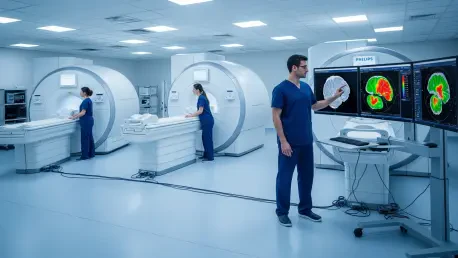
The fundamental pursuit of identifying reliable biomarkers for neurological and psychiatric conditions in the year 2026has necessitated the aggregation of neuroimaging data across numerous global research sites and scanner platforms. While this collaborative approach provides the statistical power

The traditional image of healthcare as a paper-heavy, bureaucratic machine has been dismantled by a wave of digital tools that prioritize efficiency and patient outcomes above all else. As providers navigate an environment defined by high patient expectations and tightening regulatory requirements,