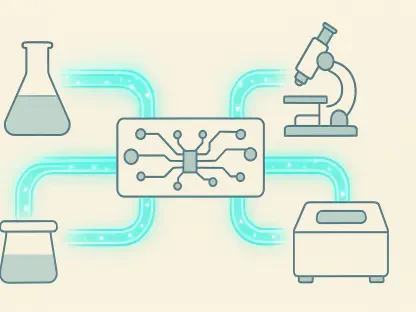
The pharmaceutical industry is currently witnessing a seismic transition that rivals the historical shift from basic alchemy to modern chemistry, as digital precision begins to replace the traditional reliance on serendipitous discovery. Closed-loop systems where AI predictions are immediately

Dramatically expanding the top of the discovery funnel ensures that the handful of compounds selected for synthesis possess significantly higher predicted potency and solubility. The pharmaceutical industry is currently witnessing a fundamental shift in how drug candidates are identified and

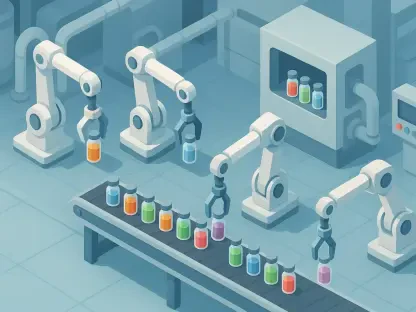
Automated robotic systems at facilities like the Living Measurement Systems Foundry are now essential for removing human error and generating the high-fidelity data needed for scientific discovery. Professor Chris Myers, a prominent researcher from the University of Colorado Boulder, has
Retrofitting artificial intelligence into outdated laboratory infrastructures frequently creates technical bottlenecks that hinder the speed of drug discovery. For many years, the life sciences sector has grappled with a persistent productivity plateau, where research methodologies remained
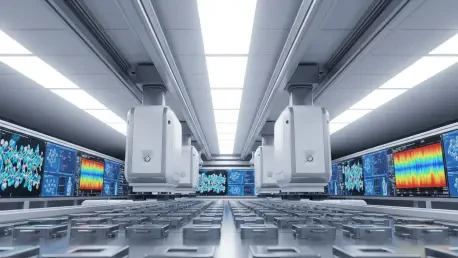
The traditional image of a metallurgist surrounded by roaring furnaces and manual measuring tools has been rapidly superseded by a high-tech reality where silicon-based intelligence directs the assembly of novel atomic structures. Texas A&M University’s ARM-MIP initiative represents a pivotal
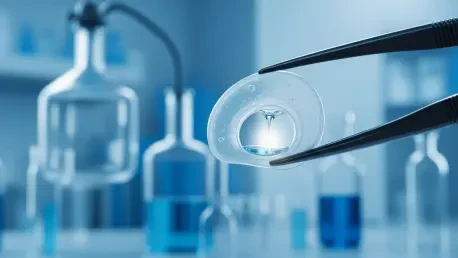
The persistent gap between the growing demand for organ transplants and the limited supply of donor tissues has driven researchers to seek more sophisticated bioengineering solutions for several decades. While the scientific community has successfully fabricated large-scale arteries and microscopic