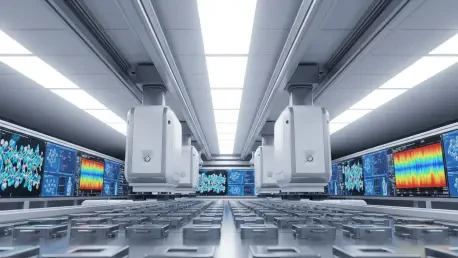

The traditional image of a metallurgist surrounded by roaring furnaces and manual measuring tools has been rapidly superseded by a high-tech reality where silicon-based intelligence directs the assembly of novel atomic structures. Texas A&M University’s ARM-MIP initiative represents a pivotal investment of $24.9 million into this paradigm shift, signaling an end to the era of labor-intensive experimentation. This specialized research hub is not merely a collection of advanced machines but a centralized brain designed to identify and characterize metal alloys for aerospace and defense at speeds that were previously relegated to science fiction. By removing the physical limitations of human researchers, the facility has begun to bridge the gap between theoretical material design and industrial manufacturing. This evolution ensures that the development of materials for high-stress environments is no longer a matter of trial and error but a precise, automated orchestration of molecular physics.
Overcoming Research Bottlenecks Through Autonomous Discovery
Early iterations of automated laboratories demonstrated that integrating artificial intelligence into the research workflow could accelerate the discovery process by a hundred-fold compared to traditional methods. However, these successes often encountered significant friction during the transition from the digital design phase to the physical verification of new samples. Human intervention was still required to manage the logistics of moving materials, tracking samples, and coordinating the specialized equipment used for testing. Modern autonomous platforms solve this problem by acting as a scientific time machine that eliminates the logistical delays associated with human-led laboratory management. By automating the entire lifecycle of a sample—from its initial composition to its final structural analysis—the researchers have effectively bypassed the bottlenecks that once delayed the deployment of critical new materials for several years at a time.
Maximizing Scientific Output: The Power of Autonomous Logistics
This systemic shift does far more than just accelerate the timeline; it fundamentally alters the methodology of metallurgical experimentation by enabling a continuous loop of discovery. With robotic arms and automated conveyors handling the physical movement of materials, the laboratory operates as a tireless engine of innovation that functions around the clock without exhaustion. This high-throughput environment allows scientists to synthesize and evaluate thousands of unique alloy combinations in the same timeframe previously required to test a mere dozen candidates. This leap in productivity is crucial for industries like aerospace, where discovering a metal that is just five percent lighter can lead to massive gains in fuel efficiency. The ability to iterate rapidly through massive data sets means that the most promising materials are identified through exhaustive empirical evidence rather than educated guesses or the inherent limitations of manual sampling.
The Technical Infrastructure: Closed-Loop AI Architectures
At the heart of these self-driving laboratories is a sophisticated closed-loop architecture where AI-driven simulations serve as the primary filter for material composition. Before a single gram of metal is melted, the system runs extensive computational models to predict how specific elemental mixtures will behave under extreme heat or mechanical stress. Only the candidates that demonstrate the highest potential for success are moved forward into the physical manufacturing stage, which involves robotic precision in melting, shaping, and heat-treating the resulting alloys. This selective approach ensures that valuable physical resources and energy are utilized only for the most viable compositions, significantly reducing the environmental footprint of material science. The integration of software means that every physical result is immediately fed back into the AI, which learns from its successes and failures to refine its future predictions.
Digital Transparency: Capturing the Processing History of Alloys
The internal strength and structural integrity of an alloy depend heavily on its processing history, which refers to the specific sequence of heating and cooling cycles applied during fabrication. To capture this complexity, the autonomous system utilizes advanced digital backbones like the MIND 3.0 platform to meticulously record every variable involved in the manufacturing process. This level of data transparency is unprecedented in the field of metallurgy, as it provides a comprehensive map of how various production techniques influence the final properties of the material. By documenting every millisecond of thermal exposure and every Newton of applied force, the system allows researchers to recreate successful alloys with perfect fidelity. Furthermore, this wealth of data is shared across a collaborative network, enabling scientists from different disciplines to identify new ways to enhance the durability of materials for deep-space exploration.
Democratizing Access: Opening the Laboratory to the Global Community
One of the most transformative aspects of the current technological surge is the democratization of high-end metallurgical research, making elite tools available to a broader range of innovators. Historically, the prohibitively high cost of specialized laboratory equipment meant that only the most well-funded institutions and massive corporations could afford to develop advanced alloys. However, the rise of autonomous facilities that offer open-access models has changed this dynamic by providing researchers from smaller academic labs and startups the ability to run high-throughput experiments. These platforms are designed to produce hundreds of new alloys every month, fostering a collaborative ecosystem where data and insights are exchanged more freely than ever before. This shift from isolated research silos to a shared infrastructure allows the entire scientific community to benefit from the rapid pace of discovery, ensuring that progress is driven by collective intelligence.
Empowering Future Scientists: The Shift from Labor to Logic
The integration of robotics into the laboratory has also sparked a necessary evolution in the role of the modern scientist, particularly for those entering the field during this era. Graduate students and junior researchers are no longer tethered to the repetitive and often hazardous tasks of sample preparation and manual monitoring, which once consumed the majority of their professional time. Instead, the focus has shifted toward high-level cognitive engagement, such as conceptualizing innovative material properties and designing the complex logic that governs AI-driven experiments. This transition empowers a new generation of scientists to act as directors of automated systems rather than manual operators, allowing them to tackle larger and more ambitious research questions. By removing the drudgery of the lab, automation ensures that human creativity remains the primary catalyst for breakthroughs while maintaining a competitive edge.
Implementing Strategic Frameworks: The Path Toward Material Resilience
The successful implementation of autonomous discovery systems marked a definitive departure from traditional metallurgy and established a new baseline for global industrial competition. To capitalize on these advancements, industry leaders and policymakers prioritized the creation of standardized digital protocols to ensure that data produced in one facility remained compatible with systems across the entire manufacturing sector. Investment strategies shifted toward building resilient domestic supply chains that integrated these AI-driven laboratories directly into the production lines for critical aerospace and defense components. It became essential for organizations to foster interdisciplinary teams where materials scientists worked alongside data engineers to refine the algorithms driving discovery. These actions ensured that the rapid pace of alloy development translated into tangible improvements for infrastructure, securing a leading position in materials.