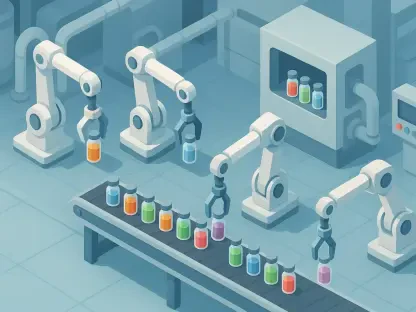
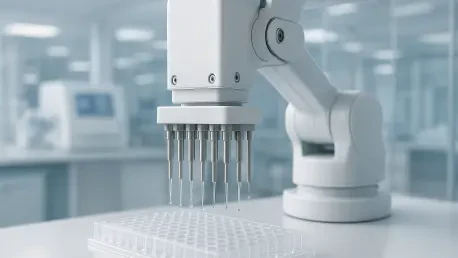
The transition to automated systems is less about replacing scientific staff and more about liberating them from the mechanical motions of repetitive bench work. For decades, researchers spent significant portions of their day manually pipetting microvolumes of liquids into 96-well plates, a

Maintaining the international norms against biological warfare depends on making the effects of any such attack ineffective through rapid response. For decades, the logic of national security remained tethered to the principles of the nuclear age, where the primary objective was to discourage

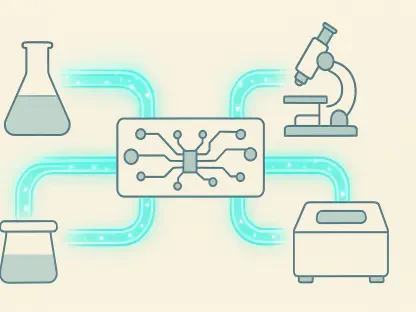
AI-driven insights risk becoming another layer of noise if the information being processed is not delivered through reliable and automated data pathways. This fundamental challenge defines the current landscape of biopharmaceutical research, where the rapid adoption of high-resolution imaging,
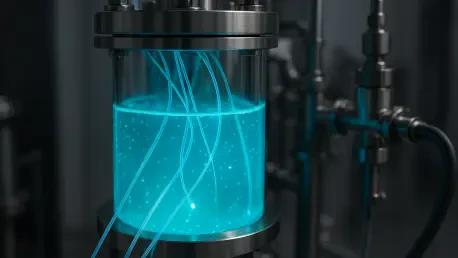
Industrial biomanufacturing efficiency is often compromised because the behavior of a cell population can change significantly from the early phase to high-density growth. This phenomenon creates a fundamental disconnect between the highly controlled blueprints of synthetic biology and the messy,
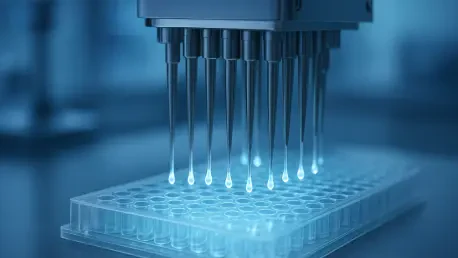
The biological monopoly held by the standard twenty amino acids has finally met its match in a laboratory environment that prioritizes chemical versatility over the stubborn requirements of cellular survival. For decades, the progress of synthetic biology was tethered to the growth cycles and

The precision of orthogonal overlap design ensures that minor errors in initial chemical synthesis do not multiply into larger misassembled products. As biotechnology continues to accelerate into the mid-2020s, the ability to architect complex metabolic pathways and entirely new genomes has moved