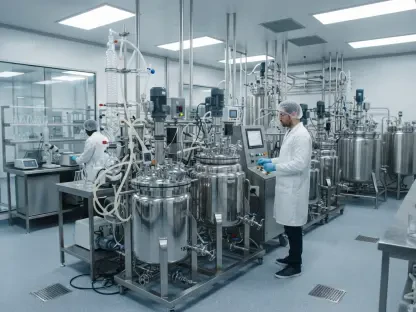

Manufacturing packaging in ISO Class 7 clean rooms ensures that the stringent requirements for cytotoxicity and purity in pharmaceutical applications are met. This baseline of safety is becoming even more critical as the life sciences industry shifts toward high-purity bioprocessing workflows that cannot tolerate any external contamination. Historically, ensuring such protection meant relying on complex multi-layer laminates that utilized various plastics to achieve durability. However, the modern push for sustainability has created a significant technical challenge: maintaining these high-performance barrier properties while moving toward a circular economy. SÜDPACK Medica has addressed this tension by unveiling a pioneering mono-polyethylene barrier system designed to protect sensitive process bags. This advancement marks a departure from traditional composite materials, offering a streamlined solution that simplifies the supply chain while adhering to the rigorous safety protocols demanded by global healthcare regulators.
Engineering Structural Resilience: Mono-Material Innovations
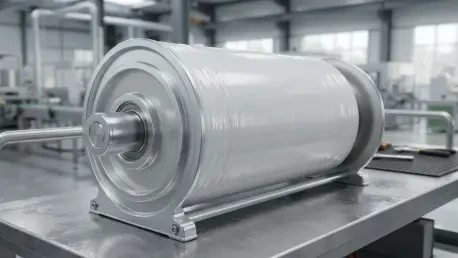
The evolution of medical-grade packaging has frequently been constrained by the necessity for mechanical strength, which previously necessitated the use of polyamide in combination with polyethylene. These traditional PE/PA/PE structures provided the necessary toughness to prevent punctures during the transport and handling of heavy liquid process bags, yet they remained notoriously difficult to recycle. By redesigning the film structure from the ground up, engineers managed to replicate this essential mechanical performance within a mono-material framework. This is achieved through a sophisticated coextrusion process that optimizes the polymer orientation and distribution. The resulting material provides a high degree of flex-crack resistance, which is vital for preventing barrier failure when the packaging is subjected to the repetitive stresses of shipping. By eliminating the polyamide layer, the system streamlines production and avoids the complications inherent in bonding dissimilar materials together.
A key component of this structural success lies in the meticulous screening of raw materials and the application of advanced polymer technology. The focus was on creating a film that could withstand the significant physical demands of bioprocessing environments without becoming brittle or failing under pressure. During the testing phase, the mono-PE film demonstrated exceptional durability, proving that multi-material laminates are no longer a prerequisite for high-stress applications. This level of resilience is particularly important for outer packaging, which serves as the primary shield for high-value biopharmaceutical products. If the outer barrier fails, the integrity of the entire sterile system is compromised, leading to significant financial losses and delays in drug production. By providing a mono-material solution that equals the puncture resistance of conventional films, the industry is now able to maintain high safety standards while simultaneously preparing for more stringent environmental regulations across the global market.
Purity and Sustainability: A Dual Approach for Modern Life Sciences
Beyond mechanical strength, the shift to a mono-PE structure offers profound benefits for chemical purity and environmental sustainability. In traditional laminated films, the use of adhesives is often necessary to hold different plastic types together, creating a risk that these agents could migrate into sensitive biological contents. By developing a coextruded mono-material that requires no such bonding agents, the risk of migratables is effectively eliminated. This is particularly vital for cell culture media and buffers where trace contaminants can alter results. Furthermore, this mono-material design aligns with global sustainability trends by being fully compatible with established polyethylene recycling streams. Internal assessments confirm a 100% recyclability rate, while lifecycle data shows a reduction in carbon emissions by more than 50% compared to polyamide-based structures. This dual focus on purity and ecology provides a future-proof solution that satisfies both technical necessity and the increasing pressure for green industrial practices.
Strategic implementation of these recyclable barrier systems allowed manufacturers to future-proof their operations against tightening environmental legislation and fluctuating waste management costs. To maximize the benefits of this technology, organizations should evaluate their current packaging portfolios and identify high-volume applications where a transition to mono-PE can yield the greatest carbon savings. Collaborating with material scientists to validate these new structures within existing workflows ensured that the transition was seamless and did not disrupt production timelines. By adopting these high-purity materials, the industry took a decisive step toward a more sustainable future while maintaining the highest levels of patient safety. This development demonstrated that technical excellence and ecological responsibility can coexist through innovative engineering. The successful launch of this system provided a scalable model for how medical packaging can be simplified, ultimately leading to a more resilient and environmentally conscious global healthcare supply chain.