
The move toward fully automated organic synthesis is expected to significantly reduce the time required to bring life-saving treatments from the lab to clinical phases. While artificial intelligence has already revolutionized the digital design of complex molecules, the physical manifestation of these designs has remained a major hurdle. For decades, chemists have struggled with manual, labor-intensive processes that created a massive bottleneck in pharmacological development. The Korea Advanced Institute of Science and Technology, led by Professor Yoonsu Park, recently broke this barrier by developing a 24-hour unmanned synthesis platform. This system integrates robotics with visible light to bridge the gap between virtual molecular modeling and real-world chemical production. By ensuring that synthesis speeds match the rapid pace of computational design, the platform allows for a seamless transition from the drawing board to the bench, eliminating the delays that once hindered progress.
Continuous-Flow Systems: The Power of Photocatalytic Advancements
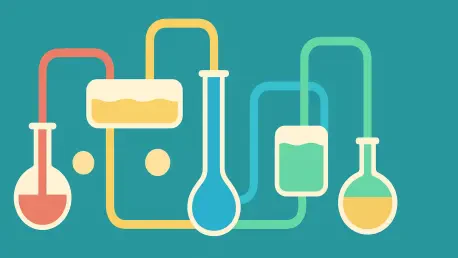
The platform relies on a sophisticated continuous-flow process that differs fundamentally from traditional batch chemistry. In a standard laboratory setting, reagents are typically mixed in a single large vessel, a method that often leads to inconsistencies in reaction quality and light exposure. In contrast, this automated system utilizes high-precision pumps to feed chemical solutions through thin, transparent tubing at a perfectly controlled rate. As the solution traverses the system, it is systematically exposed to visible light, which acts as the catalyst for specific chemical transformations. This constant flow ensures that every milliliter of the mixture receives an identical dose of light, resulting in a degree of reaction uniformity that is nearly impossible to achieve through manual stirring. This methodology streamlines the synthesis process and provides a more stable environment for delicate reactions that are sensitive to timing and fluctuations.
Beyond the fluid dynamics, the integration of hardware components allows the platform to function without human intervention for extended periods. The setup includes a raw-material preparation robot that handles the initial weighing and mixing, followed by a light-irradiation device tailored for maximum efficiency. High-tech analytical instruments are embedded into the workflow, verifying the purity and quantity of the resulting compounds in real-time. This structural integration means that scalability is no longer a complex engineering problem; instead, increasing production simply requires running the system for longer durations rather than building larger reaction vessels. By automating the entire cycle from raw material handling to final quality control, the system maintains a rigorous standard of reproducibility. This level of precision is essential for modern drug discovery, where even the slightest variation in chemical purity can lead to failed trials.
Precision Chemistry: The Breakthrough of Single-Atom Editing
A defining scientific achievement of this research involves the application of high-precision single-atom editing within the automated workflow. This technique permits researchers to selectively replace individual atoms within a molecular structure, such as the furan backbone, without disturbing the rest of the chemical arrangement. Such surgical precision is a game-changer for medicinal chemistry, as the substitution of a single atom can profoundly alter how a drug candidate interacts with human proteins or affect its metabolic toxicity. The team successfully demonstrated this through the synthesis of over twenty furan-based compounds and the continuous production of the N-methyl pyrrole scaffold. By automating this process, the platform enables the rapid creation of molecular analogs, allowing scientists to fine-tune the properties of a drug with unprecedented accuracy. This capability transforms molecular editing into a systematic utility, facilitating the exploration of vast chemical spaces.
Stakeholders in the pharmaceutical sector recognized that integrating these automated platforms into existing research pipelines was the logical next step for accelerating drug development. By combining robotics with advanced light-mediated chemistry, laboratories established a more resilient infrastructure that functioned independently of manual labor constraints. Future implementations focused on coupling these synthesis platforms with generative AI models to create a closed-loop discovery system where molecules were designed and synthesized without human delay. Organizations moved toward adopting modular synthesis units that could be easily reconfigured for different therapeutic targets, ensuring flexibility in a changing market. This approach prioritized the development of standardized protocols for atom-editing techniques to expand the range of accessible chemical structures. Ultimately, the adoption of these technologies proved that bridging the gap between digital design and production was vital.