
The integration of NVIDIA computing into Danaher’s diagnostic portfolio addresses the growing gap between rapid AI hypothesis generation and the slower pace of physical experimentation. As biological research scales in complexity, the traditional manual approach to laboratory work has become a significant bottleneck for pharmaceutical development. This partnership leverages high-performance computing to synchronize digital predictions with physical throughput, creating a seamless pipeline for discovery. By deploying advanced infrastructure across Danaher’s global install base of tools, the companies are establishing a standard for autonomous labs that function with minimal human intervention. This transition is not merely about speed but about precision; it ensures that every data point generated in a physical wet lab is immediately processed and used to refine the next set of experimental parameters. This synergy allows for the immediate harvest of insights, moving discovery from a linear path to a self-optimizing loop.
Technical Infrastructure for Edge Intelligence
The technical backbone of this initiative centers on the deployment of NVIDIA DGX Spark hardware at the edge, moving heavy computation away from distant cloud servers and directly onto the laboratory floor. This architecture allows Danaher’s diagnostic instruments to process massive datasets locally, which is essential for workflows that require immediate feedback, such as high-content screening. By reducing latency, the system can adjust instrument settings or trigger additional tests based on preliminary findings of an ongoing run without waiting for human review. This capability is further enhanced by the integration of NVIDIA’s RAPIDS libraries, which accelerate data science pipelines by offloading computational tasks to the GPU. For researchers, this means that data cleaning and preparation can now be completed in minutes. This immediate availability of structured data allows for a faster transition from raw output to actionable scientific evidence.
Beyond raw data processing, the collaboration utilizes specialized AI models like BioNeMo to interpret the intricacies of biological systems. These foundation models understand the language of proteins and DNA, enabling diagnostic equipment to perform complex reasoning tasks previously reserved for expert human analysts. When these models are embedded into the Danaher ecosystem, they allow for intelligent instrument behavior, where hardware can recognize anomalies or significant patterns as they emerge during an experiment. This level of sophistication transforms the laboratory from a collection of static tools into a dynamic environment capable of independent hypothesis testing. Furthermore, the use of accelerated computing ensures that these models can be updated frequently based on the local data generated within the facility. This localized learning ensures that the AI remains relevant to specific research goals while maintaining data security. This autonomy represents a major shift in how modern discovery is managed.
Digital Twins and Future Research Paradigms
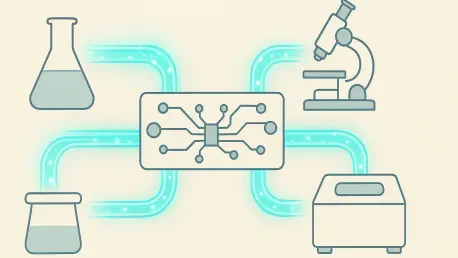
A revolutionary aspect of this partnership is the application of NVIDIA’s Omniverse technology to create digital twins of entire laboratory ecosystems. These digital replicas allow scientists to simulate every movement of a robotic arm and every reaction within a microfluidic chip before a single physical reagent is ever consumed. By modeling the physical properties of reagents and mechanical constraints of hardware in a virtual space, organizations can optimize their workflows for maximum efficiency and minimum waste. This approach, often referred to as Physical AI, bridges the divide between the digital world and the physical reality of the lab. Starting from 2026, many diagnostic facilities have begun implementing these simulations to troubleshoot potential failures in complex processes, significantly reducing the trial and error phase of experiment design. This predictive capability ensures that when an experiment is finally performed, it has a higher probability of success, thereby conserving valuable biological materials for future use.
The successful deployment of these integrated systems laid the groundwork for a transition toward a fully autonomous future for life sciences. To maximize the benefits of this shift, stakeholders prioritized the continuous training of scientific personnel to work alongside sophisticated AI agents. Organizations that invested in bridging the skill gap between biology and data science realized the greatest gains in productivity. Future considerations included the development of more sustainable lab practices by leveraging simulation to minimize chemical waste. The implementation of these advanced workflows suggested that the integration of physical and digital intelligence was the only viable path to meet the increasing demand for rapid clinical results. By focusing on scalable infrastructure and ethical AI oversight, the industry established a framework that balanced technological power with rigorous scientific validation. These efforts transformed the diagnostic laboratory into a hub of discovery, where the fusion of computing and automation solved persistent challenges.