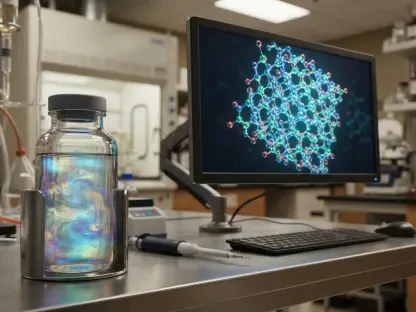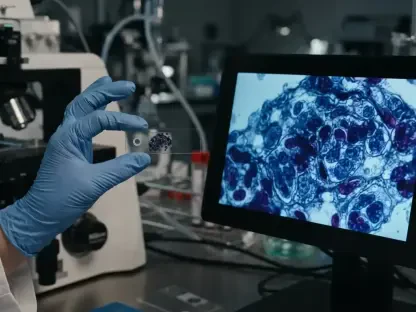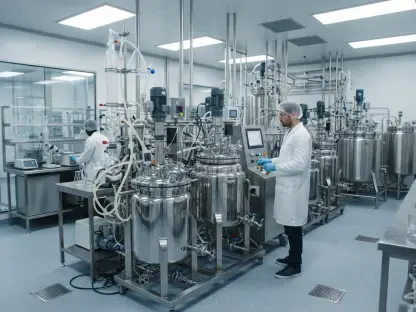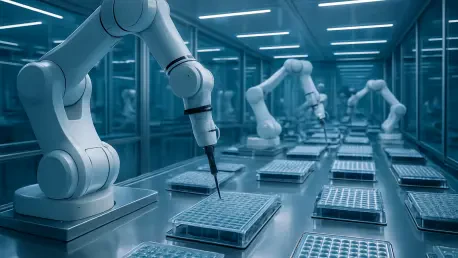

Automated robotic systems at facilities like the Living Measurement Systems Foundry are now essential for removing human error and generating the high-fidelity data needed for scientific discovery. Professor Chris Myers, a prominent researcher from the University of Colorado Boulder, has spearheaded a move to transition synthetic biology from a largely unpredictable craft into a disciplined engineering profession. During a yearlong collaboration at the National Institute of Standards and Technology, he has focused on creating the foundational data standards necessary to make biological research more predictable and scalable for modern industrial applications. This effort is supported by major scientific institutions and aims to integrate these standards into the life sciences to allow for more effective use of artificial intelligence and more reliable experimental outcomes. By shifting the focus toward rigorous engineering principles, the research community ensures that biological designs can be reproduced with absolute precision across different laboratories.
Bridging Biological Complexity: The Engineering Framework
Predictability: Creating Reliable Biological Models
Biological systems are inherently complex and often behave in ways that are difficult to forecast, which sets them apart from the predictable components used in civil or electrical engineering. In traditional disciplines, engineers rely on parts with fixed specifications, yet biological components like genetic circuits often vary based on their cellular host or environmental conditions. Myers’ research seeks to apply traditional engineering principles like standards and abstraction to biology so that scientists can finally trust their computational models to produce reliable results. By developing biological systems that function as expected across various environments, researchers can move past the current limitations caused by the unpredictable nature of living organisms. This approach involves creating standardized data sheets for genetic parts, providing a clear understanding of performance parameters and potential failure modes. Such rigor allows bio-engineers to assemble complex systems with the same level of confidence found in other modern technological fields.
Communication: Developing a Shared Digital Language
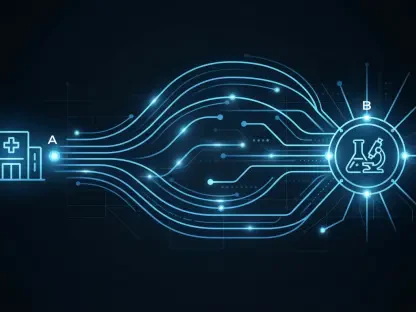
For scientific progress to be consistent, researchers must be able to share and reproduce each other’s work using a common language that facilitates global collaboration and innovation. Myers has spent over 15 years developing the Synthetic Biology Open Language, known as SBOL, which serves as a digital standard that allows labs to represent biological designs and data uniformly. Without these standards, research often happens in isolation, leading to fragmented datasets that cannot be easily integrated or compared by peers across the industry. However, with the widespread adoption of SBOL, the community can collaborate more effectively and build on previous discoveries with a higher degree of confidence. This standardized communication layer is essential for the digital transformation of the life sciences, making it possible for labs to operate at a higher level of complexity while ensuring that genetic designs are clearly defined, including their sequence, function, and relationship to other biological parts.
Collaboration: Fostering Reproducibility in Global Science
This common language is not merely a tool for documentation but a catalyst for community-wide innovation and the reliable exchange of valuable intellectual property within the sector. When every researcher follows the same set of data standards, the time spent translating or interpreting foreign datasets is virtually eliminated, allowing for faster scientific breakthroughs. Moreover, these standards support the creation of large-scale repositories where biological parts are indexed and ready for immediate use in new projects by teams around the globe. This accessibility is a cornerstone of the modern synthetic biology ecosystem, fostering an open-source culture that accelerates the development of new therapeutics and sustainable materials. By adhering to these protocols, the scientific community can verify findings more quickly, reducing the prevalence of irreproducible results. The move toward a shared language democratizes access to cutting-edge tools, ensuring that diverse research groups can contribute to the bio-economy.
Modernizing Research: Advanced Infrastructure and AI
Automation: Integrating Robust Robotic Workflows
A key part of Myers’ work involves integrating data standards directly into the experimental process rather than organizing information after the work is done, which often results in lost metadata. By using robotic workflows that record every step in real-time, researchers can ensure that data is captured in a consistent format from the start of an experiment to its finish. This approach makes it easier to characterize biological parts, helping scientists predict how they will perform in different conditions just as an engineer understands a mechanical component. Implementing these robotic systems allows for the meticulous tracking of every variable, from the exact volume of a liquid transfer to the precise timing of a heat shock. This granular level of detail is captured automatically, creating a comprehensive digital twin of the biological experiment. By embedding standards into the hardware, the community ensures that the data generated is inherently high-fidelity and ready for analysis.
Infrastructure: The Role of Automated Foundries
The Living Measurement Systems Foundry at NIST provides the automated technology required to generate the high-quality data needed for these advancements in engineering rigor. Using robots to move samples and collect data over long periods removes the risk of human error and provides a stable environment for testing that cannot be achieved manually. This level of automation is essential for modern discovery, as it produces the large volumes of reliable data necessary to verify the performance of engineered microbes across many permutations. The Foundry serves as a model for the modern research lab, where the focus shifts from manual labor to experimental design and data interpretation. By leveraging these automated systems, scientists can conduct high-throughput experiments that would be physically impossible for a human team to manage efficiently. This infrastructure not only increases the speed of research but also enhances the reliability of the outcomes for commercial use.
Intelligence: Leveraging Data for Biological Logic
While artificial intelligence is a powerful tool for analyzing biological data, its effectiveness depends entirely on the quality of the information it receives, following strict input requirements. Myers emphasizes that AI should be used to help researchers understand biological logic rather than just memorizing patterns that may not hold up in different contexts or varying conditions. When AI is supported by well-organized and standardized datasets, it can help scientists identify gaps in their models and suggest new hypotheses for testing that might be overlooked. This synergy between data quality and machine learning allows for the discovery of complex biological interactions that are too subtle for human observation alone. Furthermore, AI-driven analysis can optimize biological designs by simulating millions of potential outcomes before any wet-lab work begins. By grounding AI in high-fidelity data, the field moves toward transparent systems that provide deep insights into the fundamental mechanisms of life.
Evolution: Establishing Next Steps for the Bio-Economy
The transition toward a more engineered version of biology required a fundamental cultural shift that positioned data as the primary asset for future innovation and discovery. Researchers successfully implemented these standards across diverse institutions, proving that disciplined documentation is the key to sustainable progress in the life sciences. Moving forward, the industry should prioritize the full integration of automated data capture in all laboratory builds to maintain these high standards of precision. Educational institutions must also update their biology curricula to include training in data standards and robotic programming, ensuring the next generation of scientists is prepared for this digitized landscape. By continuing to refine these engineering frameworks, the scientific community will secure a future where designing a biological system is as precise as any other modern technology. This commitment to rigor will enable the creation of life-saving technologies that are both safe, effective, and reproducible for the long term.