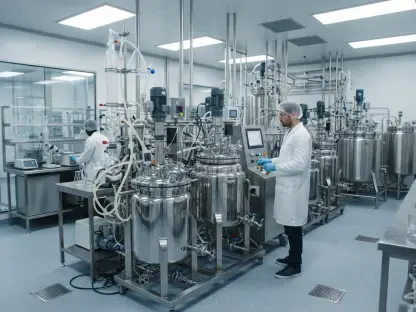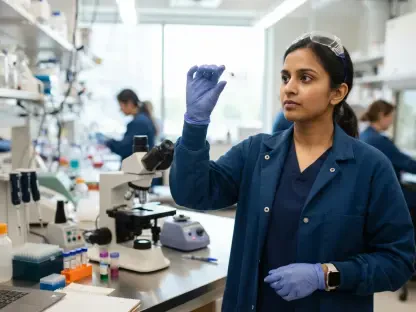

The pharmaceutical industry is currently witnessing a seismic transition that rivals the historical shift from basic alchemy to modern chemistry, as digital precision begins to replace the traditional reliance on serendipitous discovery. Closed-loop systems where AI predictions are immediately validated in a laboratory setting are becoming the new standard for refining drug discovery algorithms. This maturation of computational tools has effectively transformed the search for novel therapeutics from a labor-intensive, trial-and-error physical process into a sophisticated data science challenge. By leveraging high-performance computing clusters, researchers can now simulate the behavior of millions of chemical compounds before a single pipette is ever touched in a wet lab. This transition is not merely about speed; it represents a fundamental change in how biological interactions are understood, allowing for a far more granular analysis of drug-target binding than was possible through conventional methods.
The Shift: From Manual Models to Deep Learning
The historical trajectory of drug discovery was long defined by linear research methodologies that often struggled with the sheer complexity of biological systems. Earlier iterations of machine learning in this field required scientists to manually select and “engineer” specific molecular features for algorithms to analyze, a process that was heavily constrained by the existing limits of human chemical intuition. However, the emergence of deep learning has fundamentally altered this landscape by introducing architectures like Graph Neural Networks and Transformers that can autonomously identify non-linear relationships within vast datasets. These modern systems view molecules not just as static strings of text, but as dynamic three-dimensional entities with complex electronic signatures. By treating chemical structures as graphs, neural networks have gained the ability to learn the intricate “language” of chemistry without being explicitly programmed with every rule.
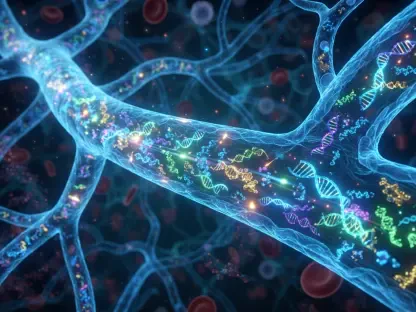
Beyond the identification of chemical structures, the industry is now moving toward a paradigm of multimodal fusion, where disparate data streams are synthesized into a unified analytical framework. This approach recognizes that a drug does not operate in a vacuum but interacts within a complex biological ecosystem involving genomic variations and metabolic pathways. Instead of analyzing a single protein-ligand pair, these advanced models integrate knowledge from gene expression profiles, side-effect databases, and large-scale knowledge graphs that map the entire human interactome. By combining these diverse layers of information, multimodal systems can predict how a molecule might behave in a living organism with far greater accuracy than isolated structural models. This holistic view is crucial for identifying potential off-target effects early in the development cycle, which significantly reduces the high failure rates that have historically plagued clinical trials.
Data Precision: Mapping the Molecular Universe
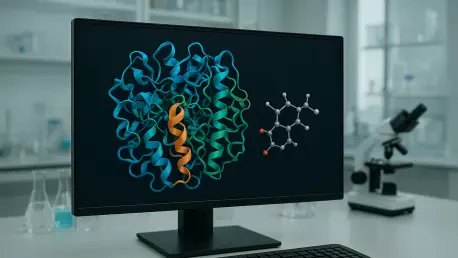
To achieve these predictive milestones, the digital translation of biological entities must be executed with extreme precision, as the quality of the input directly dictates the reliability of the output. In modern drug-target interaction modeling, chemical compounds are no longer just represented by binary fingerprints but are instead mapped through high-dimensional vectors that capture functional groups and spatial arrangements. Similarly, proteins are decoded from simple amino acid sequences into complex three-dimensional conformational models that account for folding patterns and binding pocket geometries. The field is also shifting from binary classification—where a model simply predicts whether a drug binds to a target—toward quantitative affinity prediction. This advancement involves calculating the precise strength of the molecular bond, which is a critical factor in determining the required dosage and efficacy of a potential treatment with high confidence.
Despite these significant technical advancements, the presence of data bias remains a persistent challenge that necessitates a more critical approach to model training and validation. Many existing datasets are heavily skewed toward well-documented chemical classes and popular protein families, which can lead to a phenomenon known as “memorization” rather than genuine generalization. When an AI model is presented with a “cold-start” scenario involving an entirely new class of chemical compounds or a previously unmapped protein, its predictive accuracy can plummet if it has only learned to recognize familiar motifs. To address this, the scientific community has begun implementing more rigorous testing protocols that emphasize cross-dataset robustness and the use of “unseen” biological spaces during the validation phase. By forcing models to demonstrate their predictive power on truly novel data, researchers can ensure that these tools are capable of discovering genuine breakthroughs.
Mechanism and Insight: The Quest for Interpretability
One of the most critical hurdles for the widespread adoption of AI in the pharmaceutical industry is the requirement for mechanistic interpretability, as researchers must understand the “why” behind a prediction. While complex deep learning models are often criticized as “black boxes,” current efforts are focused on developing architectures that provide a traceable rationale for their binding predictions. This involves highlighting the specific atomic interactions or protein residues that contribute most to the predicted affinity, effectively providing a map that laboratory scientists can use to verify the model’s findings. This level of transparency is not just a scientific requirement but a regulatory one, as safety and efficacy must be justified through physical evidence before a treatment can proceed to human trials. By bridging the gap between raw statistical output and biological mechanism, interpretable AI allows human researchers to act as partners with the technology.
The next frontier of this technological evolution is the development of specialized biomedical foundation models that possess an innate understanding of the fundamental principles of biology and chemistry. Unlike narrow models trained for specific tasks, these massive foundation models are pre-trained on nearly all available biochemical literature and structural data, allowing them to grasp the underlying rules that govern molecular behavior. This foundational knowledge can then be fine-tuned for specific applications, such as identifying treatments for rare diseases or designing entirely new synthetic molecules from scratch. The shift toward these versatile systems represents a move away from chasing marginal improvements on specific benchmarks toward building a comprehensive digital infrastructure. As these models become more sophisticated, they will likely serve as the backbone for automated discovery platforms that drastically narrow the scope of physical experimentation required to find a cure.
Future Considerations: Building Resilient Discovery Pipelines
The integration of artificial intelligence into the pharmaceutical sector demonstrated that the historical barriers to efficient drug discovery were largely rooted in data processing limitations rather than biological complexity. By shifting toward an engineering-centric approach, the industry successfully reduced the time required for early-stage lead identification while simultaneously improving the safety profiles of potential treatments. To continue this momentum, stakeholders focused on the standardization of data collection and the implementation of transparent, interpretable algorithms that allowed for seamless collaboration between human experts and digital systems. This strategy ensured that computational predictions remained grounded in physical reality, preventing the accumulation of errors that often hampered earlier purely theoretical models. This phase of development emphasized that the true power of AI lay in its ability to augment human expertise during verification.
Furthermore, the adoption of specialized foundation models enabled researchers to navigate the difficult “cold-start” problem, opening the door for the treatment of diseases that were previously considered unreachable due to a lack of historical data. Ultimately, the industry moved toward a more resilient and proactive model of medicine where therapeutic responses became faster, more targeted, and significantly more attuned to the diverse needs of the global population. This evolution proved that the combination of high-throughput laboratory validation and sophisticated predictive modeling could overcome the stagnant success rates that had defined the previous decade. By prioritizing cross-institutional data sharing and ethical transparency, the pharmaceutical world established a new benchmark for how technology could solve the most pressing health challenges and address emerging viral threats with unprecedented agility.