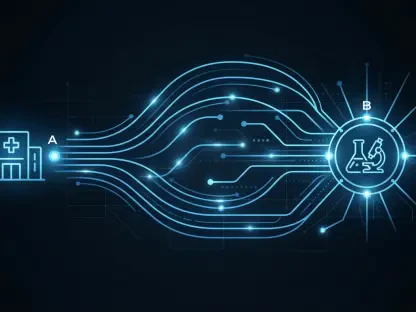

A lack of standardized data elements across different tumor types makes it difficult for researchers to track patient outcomes over long periods. This fundamental challenge often forces life sciences companies to rely on fragmented information that fails to capture the true complexity of a patient’s medical history. While clinical trials remain the gold standard for regulatory approval, they often exclude the diverse populations found in everyday practice. ON.Journey emerged as a critical response to this disparity, offering a way to harness high-grade evidence from the clinics where most cancer patients receive care. By focusing on community oncology settings rather than just academic centers, the platform provides a more representative view of how therapies perform in the real world. This shift is essential because the nuances of treatment—such as minor dose adjustments—are frequently lost when data is not collected with clinical rigor. Bridging this gap requires moving beyond static datasets toward a dynamic model of longitudinal research that captures the patient journey in its entirety.
Optimizing Data Acquisition: Integrated Networks and Clinical Depth
Building a Foundation: Community-Based Clinical Evidence
The structural integrity of this solution is rooted in its direct connection to The US Oncology Network, utilizing the iKnowMed electronic health record system across hundreds of sites. This unified sourcing reduces documentation variability and provides a consistent framework for data collection that spans over 2,800 providers in the United States. By centering the data within a single network, the platform offers a level of reliability and clinical depth that is often missing from fragmented data sources gathered from disparate systems. For researchers, this means that the patient journey is not a series of disconnected snapshots but a continuous narrative that includes diagnosis, treatment, and follow-up care. The scale of this network ensures that even rare tumor types can be studied with a statistically significant population size. Consequently, the move from academic-heavy data to a community-centric model provides a more realistic assessment of therapeutic value and treatment patterns in various clinical environments.
Data Transformation: AI Integration and Longitudinal Logic
To transform raw clinical documentation into actionable intelligence, the platform employs advanced oncology-specific artificial intelligence and natural language processing. This technology is paired with a ‘human-in-the-loop’ model to ensure that extracted insights, such as tumor progression and biomarker results, maintain high clinical credibility throughout the process. Much of the most valuable information in oncology exists as unstructured text within clinician notes, which historically required manual curation that was both slow and prone to error. By automating the extraction of these key variables while maintaining expert oversight, the system effectively unlocks the ‘data trap’ that has hindered large-scale research for years. Furthermore, augmenting electronic records with claims data creates a comprehensive view of the patient journey across different points of care. This integration allows for a better understanding of healthcare utilization and the total cost of care, providing a multi-dimensional perspective for modern health economics.
Accelerating Insights: Methodologies for Life Sciences and HEOR Teams
Streamlining Research: Standardized Data Cohorts and Extraction
A significant trend in evidence generation is the move toward off-the-shelf data cohorts that allow research teams to bypass the lengthy setup phases of traditional studies. ON.Journey provides access to over 150 oncology-specific data elements across multiple tumor types, delivering standardized datasets within a remarkably short six-week window. This scalability enables Medical Affairs and Health Economics and Outcomes Research teams to pivot quickly between various research questions without the need for custom, one-off data requests that usually take months to fulfill. In the fast-paced environment of drug development, the ability to access research-grade data on demand is a competitive advantage. It allows for the rapid identification of patient subgroups that may benefit from specific interventions, even as new therapies enter the market. By providing a pre-validated structure, the platform ensures that the focus remains on the scientific inquiry rather than the tedious logistics of data cleaning or normalization.
Evidence Generation: Optimizing Treatment Pathways and Outcomes
By converting the chaos of routine clinical documentation into a structured format, the platform empowers organizations to focus on high-level synthesis rather than manual data preparation. This efficiency allows for a deeper exploration of treatment effectiveness, drug sequencing, and the impact of biomarkers on patient survival in real-world settings. Ultimately, this approach fosters a more responsive healthcare ecosystem where the speed of evidence generation can finally keep pace with the rapid rate of clinical innovation in oncology. Researchers can now analyze how patients transition between different lines of therapy and identify the clinical triggers that lead to treatment switching. This level of detail is crucial for developing value-based care models and optimizing treatment pathways for individual patients. As the industry moves toward 2027 and beyond, the integration of real-world evidence into the drug lifecycle will likely become the standard for demonstrating clinical utility and informing health policy decisions.
Strategic Implementation: Future Considerations for Evidence Generation
Advancing Standards: Integrating Data for Precision Medicine
The implementation of standardized longitudinal data successfully addressed the historical limitations of oncology research by providing a direct line to community-based clinical evidence. Stakeholders who utilized these integrated datasets found that they could validate therapeutic outcomes much faster than through traditional retrospective studies. Moving forward, the priority shifted toward the continuous integration of multi-omic data with clinical records to further refine precision medicine. Organizations that adopted these standardized cohorts were able to streamline their internal workflows, allowing medical experts to dedicate more time to strategic analysis. The transition to research-grade real-world data established a new benchmark for evidence generation, ensuring that patient care decisions were grounded in broad, representative insights. This evolution suggested that the future of oncology research would depend on the ability to maintain this high standard of data integrity while expanding the scope of captured variables.
Actionable Insights: Enhancing Value-Based Healthcare Models
To maximize the utility of these platforms, researchers focused on developing robust frameworks for cross-referencing clinical outcomes with long-term survival data. The integration of claims and electronic health records provided a clearer picture of the financial implications of treatment pathways, which became a cornerstone for value-based reimbursement strategies. Pharmaceutical leaders leveraged these insights to adjust their development pipelines, prioritizing therapies that demonstrated the highest efficacy in underserved or complex patient populations. This shift ensured that the next generation of oncology treatments was not only innovative but also practical for widespread use across diverse clinical environments. By maintaining a focus on high-fidelity, real-world evidence, the industry moved closer to a truly personalized approach to cancer care. The lessons learned from this transition underscored the importance of data transparency and cross-industry collaboration in overcoming the persistent challenges of oncology research.