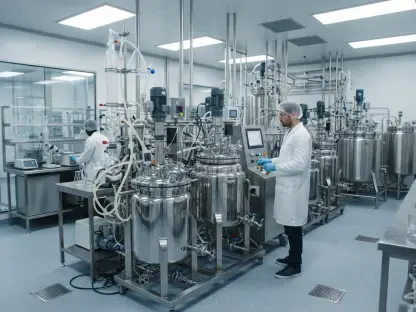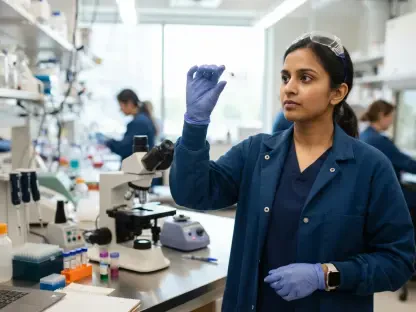

Biopharmaceutical companies in France are utilizing disposable systems to remain competitive by shortening the downtime required between different product batches. This shift represents a fundamental realignment of industrial priorities, moving away from the rigid, permanent infrastructure of the past toward a more agile and responsive manufacturing model. As the sector matures, the valuation of the French single-use bioprocessing market has reached approximately $255.7 million, with experts projecting a steady climb to $406.8 million by 2030. This trajectory is supported by a compound annual growth rate of 9.7%, reflecting an industry-wide commitment to modernization. By replacing traditional stainless-steel vessels with pre-sterilized, plastic-based components, manufacturers are effectively bypassing the time-consuming cleaning and validation cycles that once hindered production efficiency. This transition is not merely a matter of convenience; it is a strategic necessity in a landscape where speed-to-market and operational flexibility determine a company’s long-term viability in the global life sciences arena.
Strategic Industry Drivers and Technological Evolution
The Pivotal Role of Contract Manufacturing: Boosting Operational Agility
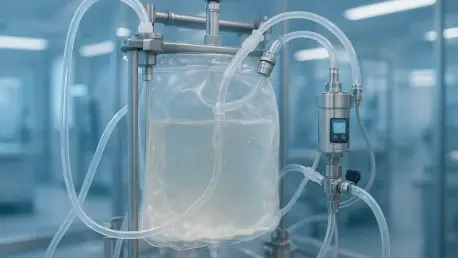
Contract Development and Manufacturing Organizations have become the primary engines of growth for the single-use bioprocessing sector in France. These entities operate on a business model that requires the frequent transition between different client projects, often involving entirely different types of biological products. By integrating disposable technologies, French CDMOs can effectively eliminate the risk of cross-contamination that is inherent in multi-product facilities using shared stainless-steel equipment. The ability to swap out an entire fluid path—from the bioreactor bag to the filtration assembly—allows these organizations to maintain an incredibly high utilization rate. This efficiency is vital for meeting the diverse demands of the pharmaceutical market, which currently ranges from the production of seasonal vaccines to the development of specialized monoclonal antibodies for rare diseases.
Furthermore, the economic advantages of single-use systems are particularly attractive to contract manufacturers looking to minimize their initial capital outlays. Building a traditional bioprocessing facility requires a massive investment in complex piping, steam generation for sterilization, and extensive water purification systems. In contrast, a facility designed around single-use architecture can be established with significantly less upfront capital, allowing French firms to allocate more resources toward advanced research and process optimization. This lower barrier to entry has encouraged a surge of new players in the French market, fostering a competitive environment where innovation flourishes. As these organizations continue to expand their capacities from 2026 to 2028, the reliance on disposable hardware will likely become the standard for any facility aiming to provide high-speed, cost-effective manufacturing services.
Focus on Advanced and Personalized Therapies: Meeting Precision Needs
The French biotechnology landscape is currently experiencing a shift toward the development of complex “New Biological Entities,” with a specific emphasis on cell and gene therapies. These advanced medicinal products differ significantly from traditional biologics because they are often produced in smaller, highly specialized batches tailored to specific patient populations or even individual patients. Single-use technologies are uniquely suited for these applications because they provide the rigorous sterility and containment required when handling sensitive genetic materials or living cells. The modular nature of disposable systems allows for a “scale-out” approach, where multiple small-scale production lines can operate in parallel within the same facility. This strategy ensures that each batch remains isolated, which is a critical requirement for maintaining the safety and efficacy of personalized treatments.
Moreover, the use of disposable components in cell and gene therapy manufacturing reduces the complexity of regulatory compliance. Because single-use assemblies are typically delivered pre-sterilized via gamma irradiation, the burden of proving that a system is free of contaminants is shifted to the technology supplier. For French biotech startups, this means they can focus their internal efforts on the science of therapy development rather than the mechanics of facility maintenance. The flexibility to quickly adapt a production line to accommodate different viral vectors or cell lines is a major advantage in a field that is evolving as rapidly as regenerative medicine. As we progress through the current decade, the integration of single-use systems will be the primary factor enabling the transition of these therapies from experimental laboratory settings to commercial-scale availability across France.
Integration of Automation and Digital Systems: The Rise of Industry 4.0
A significant driver in the modernization of French bioprocessing is the convergence of single-use hardware with advanced digital control systems, often referred to as Industry 4.0. Modern disposable bioreactors are no longer just plastic containers; they are sophisticated environments equipped with integrated sensors that monitor critical process parameters in real-time. These sensors track variables such as pH levels, dissolved oxygen, and temperature, feeding the data directly into automated control units that can make instantaneous adjustments to maintain optimal growth conditions. In France, the adoption of these automated systems is helping manufacturers achieve a level of batch-to-batch consistency that was previously difficult to reach with manual processes. This digital oversight is essential for meeting the stringent quality standards set by health authorities, ensuring that every biological product meets exact specifications.
The implementation of these technologies also facilitates the collection of massive amounts of data, which can be analyzed to further optimize the biomanufacturing process. By using predictive analytics, French companies can identify potential issues before they result in a lost batch, thereby protecting their high-value biological assets. This move toward “smart” bioprocessing is also reducing the need for manual intervention in the cleanroom, which inherently lowers the risk of human-introduced contamination. As automation becomes more deeply embedded in the single-use workflow, the role of the bioprocessing technician is evolving from manual operator to data manager. This transformation is positioning France as a leader in high-tech pharmaceutical production, capable of leveraging artificial intelligence and machine learning to drive the next generation of biomanufacturing efficiency.
Market Segmentation and Product Dynamics
The Dominance of Consumables: Sustaining the Economic Model
Within the broader single-use market, the consumables segment remains the most robust and fastest-growing category, characterized by a recurring demand for 2D and 3D storage bags, specialized connectors, and tubing assemblies. These items are the lifeblood of the disposable manufacturing process, as they must be replaced after every single production run to ensure absolute sterility. This creates a “razor and blade” economic model that provides a steady and predictable revenue stream for equipment suppliers operating in France. The growth in this segment is particularly aggressive, with an expected compound annual growth rate of 13.3% as more facilities move from pilot-scale operations to full-scale commercial manufacturing. The constant need for these high-quality plastic components ensures that the supply chain remains highly active and integrated into the daily operations of French labs.
In addition to traditional storage and transfer components, the market for specialized consumables like disposable filter capsules and chromatography columns is also expanding rapidly. These products are essential for the downstream processing phase, where the biological product is purified and concentrated. The shift toward single-use downstream technologies is helping French manufacturers overcome the “bottleneck” effect often seen when high-titer upstream processes are paired with slow, traditional purification methods. By using disposable filtration and chromatography systems, companies can maintain a continuous flow throughout the entire manufacturing line, further reducing the total time required to produce a finished drug product. This comprehensive adoption of consumables across both upstream and downstream operations is a clear indicator of the maturity and depth of the French single-use bioprocessing ecosystem.
Evolution of Hardware and Bioreactors: The Foundation of Production
While consumables represent the recurring portion of the market, the hardware segment—specifically single-use bioreactors—serves as the foundational infrastructure for the entire industry. In France, there has been a notable increase in the adoption of stirred-tank bioreactors, which are designed to mimic the fluid dynamics and mixing efficiency of traditional stainless-steel reactors. These systems allow for a smoother transition when scaling up a process from the laboratory to a larger production environment, as the biological cells behave similarly regardless of the vessel material. The latest generation of hardware also features improved motor drives and more robust support structures, allowing for the safe handling of larger volumes. This evolution in hardware design has been a key factor in convincing traditional pharmaceutical companies to move away from their legacy steel equipment in favor of disposable alternatives.
Furthermore, the hardware market in France is diversifying to include a wide range of ancillary equipment, such as automated mixing systems and single-use centrifuges. These machines are designed to work in perfect harmony with the disposable bags and tubing, creating a seamless and integrated production environment. The focus on ergonomics and ease of use is also a significant trend, as hardware manufacturers seek to reduce the physical labor involved in setting up and tearing down a single-use assembly. By simplifying the mechanical aspects of bioprocessing, these hardware innovations allow French scientists and engineers to spend more time on high-level process development. As the technology continues to advance from 2026 to 2028, we can expect to see even more specialized hardware designed specifically for the unique requirements of emerging modalities like mRNA and viral vector production.
Scaling Operations from Lab to Factory: Bridging the Volume Gap
The French bioprocessing sector is successfully bridging the gap between small-scale research and large-scale commercial production through the clever application of single-use technologies. Historically, disposable systems were limited to small volumes, making them suitable only for R&D or early-stage clinical trials. However, recent advancements in plastic film integrity and mixing technology have enabled the creation of single-use bioreactors with capacities of up to 2,000 liters. This development has been a game-changer for French pharmaceutical firms, as it allows them to use the same technology platform throughout the entire drug development lifecycle. The ability to maintain consistency in the manufacturing environment from the lab bench to the factory floor significantly reduces the risks associated with process scale-up, ensuring that the final product remains identical to the clinical version.
The trend toward larger single-use volumes is also supported by the increasing productivity of biological cell lines. As the “titer”—or concentration of the product—increases, manufacturers can produce a higher volume of drugs in smaller vessels. This means that a 2,000-liter single-use bioreactor can often produce the same amount of medicine as a much larger traditional steel vessel. For French manufacturers, this “intensification” of the process makes single-use systems an even more attractive option, as they can maximize their output while minimizing their physical footprint. This efficiency is particularly important in regions where laboratory and manufacturing space is at a premium. By embracing these high-capacity disposable systems, France is proving that it is possible to maintain a world-class manufacturing base that is both compact and highly productive.
Competitive Landscape and Regional Influence
Key Players and Supply Side Dynamics: A Hub of Innovation
The supply side of the single-use market in France is characterized by a mix of powerful global corporations and highly specialized local innovators. Leading companies like Sartorius, Merck KGaA, and Thermo Fisher Scientific have established a deep presence in the country, often maintaining dedicated research and manufacturing centers on French soil. For instance, the presence of major production facilities in regions like Aubagne has turned France into a central hub for the design and manufacturing of single-use bags and filtration systems. these companies invest heavily in research and development to ensure that their products meet the increasingly complex needs of modern bioprocessing. This local expertise not only supports the domestic market but also positions France as a major exporter of single-use technology to the rest of Europe and beyond.
In addition to the global giants, a growing number of French startups and specialized firms are carving out niches in the single-use space. These companies often focus on solving specific technical challenges, such as the development of more accurate sensors or the creation of specialized connectors that reduce the risk of leaks. This vibrant ecosystem of suppliers ensures that French biopharmaceutical companies have access to the latest technological advancements right on their doorstep. The collaboration between these technology providers and their customers is a hallmark of the French market, often leading to the co-development of customized solutions that push the boundaries of what is possible in biomanufacturing. This dynamic interplay between the supply and demand sides of the market is a primary reason why France continues to be a global leader in the life sciences sector.
Demand from Pharma and Academic Institutions: Fueling the Discovery Pipeline
The demand for single-use bioprocessing technology in France is driven by a diverse array of end-users, ranging from global pharmaceutical leaders to prestigious academic research institutes. Large companies like Sanofi and Servier are increasingly integrating disposable systems into their production lines to support the development of biosimilars and innovative biologics. These firms recognize that the flexibility of single-use technology is essential for managing a diverse product portfolio in an increasingly competitive global market. At the same time, the French academic community plays a vital role in the early stages of the technology lifecycle. Research institutes often act as the first adopters of new single-use tools, using them to accelerate the discovery of new therapies and to conduct pilot studies that prove the feasibility of a particular biological process.
The relationship between academia and industry in France is further strengthened by a robust system of public-private partnerships. These collaborations facilitate the transfer of technology from the university lab to the commercial manufacturing plant, ensuring that scientific breakthroughs are quickly translated into tangible health benefits. By providing students and researchers with access to modern single-use equipment, these partnerships also help to train the next generation of bioprocessing experts. This steady flow of talent and ideas is essential for maintaining the long-term health of the French biotech sector. As more research projects move into the clinical and commercial phases between 2026 and 2030, the demand for high-quality single-use components is expected to grow, further cementing the role of these technologies in the French healthcare ecosystem.
Government Initiatives and Sovereignty: Building a Resilient Future
The French government has identified biomanufacturing as a strategic priority, launching several initiatives designed to bolster the nation’s healthcare sovereignty. The “France 2030” investment plan, for example, provides significant funding to support the development of domestic manufacturing capabilities for critical medicines and vaccines. A major focus of these efforts is the adoption of efficient and flexible production technologies, such as single-use bioprocessing systems. By encouraging the creation of local production hubs, the state aims to reduce the country’s dependence on external supply chains and ensure that the French population has reliable access to essential biological treatments. This government support acts as a powerful catalyst for the single-use market, providing companies with the financial security they need to invest in new facilities and advanced equipment.
Beyond direct funding, the French government is also working to create a favorable regulatory environment for bioprocessing innovation. This includes streamlining the approval process for new manufacturing technologies and supporting the development of international standards for single-use components. These efforts help to reduce the uncertainty that often accompanies the adoption of new industrial methods, making it easier for companies to commit to a single-use strategy. The emphasis on “Made in France” bioproduction is not just about economic growth; it is a fundamental part of the nation’s strategy to respond to future health crises with speed and agility. As these government-backed projects come to fruition over the next few years, France will be better positioned than ever to act as a self-sufficient powerhouse in the global biopharmaceutical landscape.
Regional Advantages and Future Outlook
Infrastructure and Strategic Clusters: The Power of Proximity
France’s competitive advantage in the bioprocessing sector is significantly enhanced by its network of specialized “Bioclusters,” which serve as concentrated hubs of talent, infrastructure, and innovation. Locations like Paris-Saclay and Lyonbiopôle have become world-renowned centers for life sciences, bringing together biotech startups, large pharmaceutical companies, and elite research institutions in a single geographic area. This proximity fosters a culture of collaboration and knowledge sharing that is difficult to replicate elsewhere. Within these clusters, companies have easy access to shared resources, such as advanced imaging labs and specialized cleanrooms designed for single-use manufacturing. This collaborative environment accelerates the pace of innovation, as companies can quickly test new ideas and share best practices for implementing disposable technologies.
In addition to its intellectual infrastructure, France’s role as a major logistics hub for Western Europe provides a significant advantage for biopharmaceutical manufacturers. The country’s advanced transportation networks allow for the efficient distribution of single-use components and finished biological products to neighboring markets such as Germany, the Benelux region, and the United Kingdom. This strategic location makes France an ideal choice for companies looking to establish a centralized manufacturing base that can serve a broad international customer base. The combination of local expertise within the bioclusters and a superior logistics network creates a powerful incentive for continued investment in the French single-use market. As these clusters continue to expand their reach, they will play a critical role in shaping the future of biomanufacturing across the entire European continent.
Sustainability and Regulatory Alignment: Greening the Industry
Sustainability has become a primary consideration for the French biopharmaceutical industry, and single-use technologies are playing a central role in helping companies meet their environmental targets. While the use of disposable plastics may initially seem counterintuitive to green initiatives, a life-cycle analysis often shows that single-use systems have a lower overall environmental impact than traditional stainless-steel facilities. This is primarily because disposable systems eliminate the need for the massive amounts of water, energy, and harsh chemicals required for cleaning and sterilizing permanent equipment. In a region where water conservation and energy efficiency are becoming increasingly regulated, the ability of single-use technology to reduce the carbon footprint of a manufacturing facility is a major strategic advantage.
The shift toward greener bioprocessing also aligns with broader European regulatory goals, such as the European Green Deal. French companies that adopt single-use systems are better positioned to comply with future environmental standards, which are expected to become increasingly stringent by the end of the decade. Furthermore, the industry is actively working on developing better recycling programs for used plastic components and exploring the use of bio-based materials for consumables. This focus on “circularity” in single-use bioprocessing is helping to address the long-term sustainability of the disposable model. As the market moves toward 2030, the ability to demonstrate environmental responsibility will be just as important as financial performance, and French companies are already leading the way in this critical transition.
The Realized Maturity: A Shift in Industrial Philosophy
The progression of the French bioprocessing sector toward a more flexible and responsive model was finalized through a period of intense industrial maturation. The industry reached a consensus that the advantages of disposable systems—ranging from reduced capital costs to faster production timelines—were no longer optional but essential for staying competitive in a globalized market. This transition proved successful as firms across the country integrated these modular solutions into their core operations, effectively replacing the rigid manufacturing philosophies of the previous generation. The shift allowed for a more dynamic approach to drug development, where facilities could be repurposed almost instantly to meet changing public health priorities. For investors, the recurring revenue generated by the consumables segment provided a level of financial stability that encouraged long-term capital commitments.
For biopharmaceutical manufacturers, the next phase of progress involves the widespread adoption of closed-system processing and the exploration of decentralized manufacturing models. These advancements will likely focus on further reducing the risk of contamination while increasing the portability of production units. Looking ahead, companies should prioritize the integration of advanced data analytics and real-time monitoring to further refine their manufacturing efficiency. The emphasis should remain on building a resilient and sustainable supply chain that can withstand global disruptions. By continuing to invest in the talent and infrastructure within specialized bioclusters, France will maintain its status as a premier destination for biopharmaceutical innovation. The collective experience gained during this transformative period serves as a solid foundation for the next wave of technological breakthroughs in the life sciences.