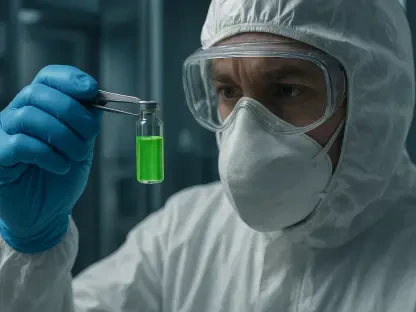

The initiative led by Professor Mo Maniruzzaman focuses on connecting disparate technological tools into a singular automated production ecosystem. This groundbreaking shift at the University of Mississippi represents a direct response to the stagnant timelines that have historically defined the pharmaceutical industry. Currently, the average duration for a new drug to move from a conceptual stage to the public market spans roughly eight and a half years, a delay that often costs lives when dealing with aggressive pathologies. By securing a robust seven-million-dollar grant from the Health Resources and Services Administration, the university has established a facility designed to bypass these traditional bottlenecks through high-level automation. This self-driving laboratory utilizes a sophisticated combination of artificial intelligence and robotics to streamline the discovery process. It transforms the laboratory from a series of manual stations into a continuous, data-driven engine of medical innovation that operates with a level of precision previously unattainable today.
Autonomous Systems and Personalized Medicine
The Mechanics of the Self-Driving Laboratory
At the center of this technological revolution is the seamless integration of various high-tech components that previously functioned in isolation within the department. The lab environment mimics an assembly line where 3D printers, bio-fabrication kits, and specialized automated liquid handlers communicate through a centralized AI brain. This interconnectedness allows the system to execute complex chemical reactions and formulation tests with minimal intervention from physical staff. Instead of waiting for a technician to move samples from one machine to another, the robotic interfaces handle the transition instantly, ensuring that the momentum of discovery remains constant throughout the night. This setup is particularly effective for testing the stability of new compounds, as the AI can adjust environmental variables in real-time based on the data it receives from embedded sensors. Such a high degree of integration effectively removes the margin for human error in repetitive tasks.
Targeted Treatment Through Advanced Bio-Printing
This automated precision is directed specifically toward solving the health crises most prevalent in the regional population, such as diabetes and various forms of cancer. One of the most promising applications of this new infrastructure is the development of complex polypills, which are single tablets engineered to hold multiple different medications. These pills utilize sophisticated timed-release mechanisms that are customized to the metabolic profiles of individual patients, a feat that is nearly impossible to achieve through mass-production techniques. For patients who are currently forced to manage a dozen different pills at varying times of the day, these AI-designed solutions represent a significant improvement in quality of life and treatment adherence. By utilizing bio-printing technology, the lab can create these multi-layered delivery systems that release active ingredients in a specific sequence, ensuring that each drug interacts with the body at the optimal moment.
Redefining Research Roles and Scalability
Synergy Between Human Intelligence and Automation
The introduction of this high-level automation does not signal the end of human scientific inquiry but rather serves as a catalyst for more profound intellectual engagement. By delegating the mundane and physically taxing aspects of lab work to robotic systems, researchers are finally free to dedicate their energy to high-level conceptual breakthroughs and complex problem-solving. This machine-human partnership allows the AI to sift through millions of molecular data points to identify promising candidates, while the human scientists interpret these findings to guide the next phase of the research strategy. The facility operates on a twenty-four-hour cycle, meaning that experiments continue to run and generate data even when the staff is not on the premises. This ensures that the university remains at the forefront of pharmaceutical development, maximizing the utility of its expensive equipment and accelerating the overall timeline from the initial hypothesis to clinical testing.
Future Implementation at the Research Incubator
The development of this infrastructure at Insight Park necessitated a reimagining of how academic research supported industrial application and patient care. Graduate students took the lead in constructing remote monitoring frameworks and specialized AI models that tracked every variable during the 3D printing process in real-time. These systems provided immediate feedback and data streams to portable devices, allowing for a decentralized approach to laboratory management that increased operational flexibility. As the facility transitioned into a fully functional state, it became clear that the integration of automated drug discovery was the only viable path to addressing the rising costs of healthcare. Stakeholders focused on scaling these automated systems to include a wider array of rare diseases, ensuring that the technology reached the most vulnerable populations. This effort solidified a new standard for medical research where the primary objective was the rapid translation of digital data into tangible treatments.