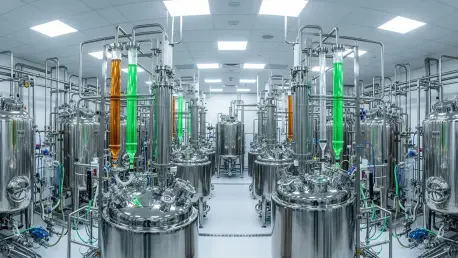

The modern medical landscape faces a critical inflection point as the effectiveness of traditional antibiotics continues to wane against increasingly resilient microbial threats that claim millions of lives annually. In response to this mounting crisis, the Gladstone Institutes has established the

The pursuit of absolute control over the microscopic machinery of life has long been a defining challenge for synthetic biologists seeking to engineer microorganisms for industrial and medical purposes. While traditional CRISPR-Cas9 systems have fundamentally altered the landscape of genomic

The global escalation of antimicrobial resistance has transformed once-manageable bacterial infections into life-threatening medical emergencies that frequently defy the standard protocols of modern intensive care units. As traditional antibiotics lose their efficacy against virulent strains of

The quest to replicate the intricate machinery of biological life has moved beyond mere observation into the realm of precision engineering with the development of synthetic cell microreactors. Researchers at the University of Stuttgart have successfully demonstrated a "double-necked" platform that

For the past ten years, the Northwestern University Center for Synthetic Biology has fundamentally altered how researchers perceive the inherent capabilities of living systems by treating genetic code as a programmable substrate for engineering solutions. Since its establishment, the center has

The global medical landscape currently faces an unprecedented surge in drug-resistant infections, with the fungal pathogen Candida albicans emerging as a particularly formidable adversary in healthcare settings. At the University of Guelph, a research team led by Dr. Rebecca Shapiro has developed a