
The landscape of modern oncology is undergoing a dramatic transformation as clinicians and researchers move away from the systemic toxicity of traditional chemotherapy toward highly localized, minimally invasive interventions. Photothermal therapy represents one of the most promising frontiers in this evolution, utilizing near-infrared laser light to excite specialized particles that convert light energy into lethal thermal energy within a tumor. Despite the theoretical elegance of this approach, practical implementation has long been hindered by the aggressive nature of the human immune system and the physical limitations of light itself when traveling through dense biological tissue. Current efforts are now focused on bridging these gaps through the integration of computational biology and advanced hardware engineering to create a seamless therapeutic platform. This convergence of technologies aims to ensure that life-saving treatments are not only powerful enough to eradicate malignant cells but also precise enough to spare healthy tissue and bypass the body’s natural defenses effectively.
Rethinking Drug Delivery: The Role of Artificial Intelligence
Designing Stealth Proteins: The AlphaFold Approach
Researchers at Tohoku University have recently turned to the revolutionary AI tool AlphaFold to address the persistent challenge of immune clearance in drug delivery systems. By utilizing sophisticated deep learning models to predict and manipulate protein folding, the team redesigned human serum albumin, which is a protein naturally found in the bloodstream that the body already recognizes and accepts as its own. The goal was to modify its secondary structure to create a specialized, water-attracting material that could effectively cloak therapeutic nanoparticles. This newly engineered protein, designated as IDP1, functions as a biomimetic stealth coating that prevents the body’s defensive mechanisms from identifying the medication as a foreign invader. By leveraging the predictive power of artificial intelligence, the scientists were able to simulate thousands of structural variations to find the optimal configuration that maintains biological compatibility while enhancing circulatory stability.
The creation of IDP1 represents a significant milestone in synthetic biology, as it provides a robust solution to the limitations of traditional polymer-based coatings that often trigger mild immune responses themselves. This AI-designed material creates a hydrated barrier around the therapeutic agent, making it virtually invisible to the macrophages in the liver and spleen that usually filter out foreign substances. Unlike previous iterations of stealth technology that relied on trial-and-error chemistry, this computational approach allows for a level of structural precision that ensures the coating does not interfere with the laser-activated properties of the underlying particles. The resulting substance is not only highly effective at evading detection but also remains remarkably stable under the varying physiological conditions found within the human vascular system. This technical breakthrough ensures that a much higher percentage of the administered dose actually reaches the malignant tissue, rather than being wasted.
Improving Bloodstream Longevity: A Shift in Performance
Experimental validation of these AI-designed coatings revealed a performance gap that fundamentally changes the outlook for photothermal interventions. In controlled laboratory settings, researchers compared the longevity of IDP1-coated particles against current industry standards that typically utilize polyethylene glycol or similar synthetic stabilizers. While these conventional materials often saw therapeutic agents cleared from the bloodstream in less than twenty minutes, the new IDP1 particles demonstrated an extraordinary ability to remain active and circulating for over two and a half hours. This extended window of opportunity is critical because it allows for multiple passes through the circulatory system, increasing the probability that the particles will accumulate within the tumor through the enhanced permeability and retention effect. The drastic improvement in circulation time provides oncologists with a much larger therapeutic window, allowing for more flexible treatment scheduling.
Beyond simply staying in the blood longer, the IDP1 coating ensures that the medication remains concentrated at the site of the tumor once it arrives. This high-density accumulation is a prerequisite for photothermal therapy, as the effectiveness of the treatment is directly proportional to the number of light-absorbing particles present within the malignant mass. Because the AI-engineered protein is derived from human albumin, the risk of an adverse allergic reaction or systemic inflammation is significantly reduced compared to synthetic alternatives. The success of this delivery mechanism highlights the transformative potential of combining machine learning with molecular biology to solve problems that have plagued pharmaceutical science for decades. By ensuring that the therapeutic payload survives the journey through the body, the research team has cleared one of the most difficult hurdles in the path toward making light-activated cancer treatments a standard part of clinical care.
Overcoming Physical Barriers: The Limits of Light Penetration
Internal Laser Delivery: Precision Through Needle Endoscopy
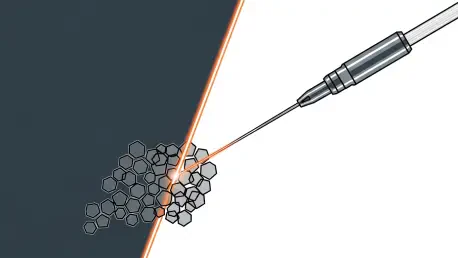
The second major obstacle to the adoption of photothermal therapy involves the physical reality that near-infrared light cannot easily penetrate deep into human tissue without significant scattering. To overcome this, the research team developed a groundbreaking ultra-thin endoscope designed to fit inside a standard medical needle, allowing for the direct delivery of laser energy. This device utilizes specialized plastic optical fibers that are flexible enough to navigate through the body but robust enough to transmit high-intensity light without losing power. By inserting this needle-based endoscope directly into the heart of a tumor, the system bypasses the skin and fatty tissue that typically absorb and reflect external laser beams. This internal approach ensures that the maximum amount of energy is delivered to the target site, effectively treating cancers that were previously considered unreachable by light-based methods due to their depth or location within internal organs.
The integration of this endoscopic technology with photothermal therapy represents a departure from traditional external irradiation methods that often require high-power lasers to compensate for energy loss. When a laser is fired from outside the body, a substantial portion of the light is dispersed by the skin, necessitating higher intensity levels that can inadvertently burn healthy surrounding tissue. In contrast, the internal delivery system provides a concentrated source of heat from the inside out, allowing the therapeutic effect to radiate through the tumor mass more efficiently. This focused delivery method significantly lowers the risk of collateral damage, as the thermal energy is contained within the boundaries of the malignancy. The development of such a miniature and precise instrument demonstrates the recent advancements in fiber-optic engineering, providing a tool that is both powerful enough for treatment and small enough for minimally invasive use.
Validating Clinical Outcomes: Results and Future Expansion
The clinical validity of this integrated AI and endoscopic platform was demonstrated through rigorous laboratory studies involving aggressive forms of colon cancer. The findings indicated that the combination of the IDP1-coated particles and internal laser delivery produced a complete therapeutic response in all subjects. In these trials, researchers observed that the tumors began to shrink immediately following the application of the laser, with the malignant masses vanishing entirely within a 14-day window. Following this initial success, the subjects were monitored for an additional month to check for any signs of recurrence, but no cancer returned in any of the treated cases. This level of efficacy suggested that the treatment was capable of not just slowing the progression of the disease but actually eradicating it. The speed and thoroughness of the recovery highlighted the power of combining advanced drug delivery with direct, internal energy application.
Safety and biocompatibility were also prioritized throughout the validation process, and the results showed a total absence of toxic side effects. Detailed post-treatment evaluations confirmed that neither the AI-designed protein coating nor the laser procedure caused systemic harm to the subjects. This is a crucial distinction from traditional therapies like chemotherapy, which often leave patients with long-lasting damage to their immune systems. These findings provided a clear roadmap for future clinical trials and highlighted the necessity of adopting computational tools like AlphaFold in the early stages of drug development. Furthermore, the study concluded that the miniaturization of optical hardware was a vital component in making localized therapies accessible for internal organs like the pancreas or esophagus. This research ultimately paved the way for a more sophisticated approach to oncology, where technology and biology are combined to improve outcomes.