
The shift toward AI for Science has transformed the biotechnology sector into a high-intensity industrial chain spanning from upstream computing power to downstream vertical applications. This massive transformation has manifested most clearly in the Chinese market during the first ten months of 2026, where the intersection of artificial intelligence and life sciences—commonly known as AI4LS—secured approximately $3.5 billion in funding across 124 verified financing rounds. Unlike previous waves of speculative investment, the current landscape represents a transition toward structural implementation, where capital acts as a barometer for the maturity of foundational models and their practical utility in the lab. This period is now widely recognized as the threshold of the first year of realization, a phase where the theoretical potential of scientific intelligence begins to yield tangible industrial outputs. The surge in capital has not been distributed evenly but has instead targeted strategic nodes within the supply chain, indicating a shift away from abstract platform narratives toward concrete use cases. By establishing these technical closed loops, the industry has managed to attract high-quality scientists and long-term capital, effectively bridging the gap between computational prediction and biological reality.
Capital Distribution: The Strong Early-Stage Orientation
The current primary market for AI for Life Sciences in China is characterized by a distinct early-stage focus, with the majority of financing activities concentrated in the earliest phases of corporate development. Statistical analysis of the 124 recorded deals reveals that roughly 65 percent of the total capital has been directed toward Seed, Angel, and Series A rounds, reflecting an intense search for paradigm innovation among emerging startups. This concentration suggests that investors are aggressively scouting for the next generation of industry pioneers who can fundamentally alter the scientific discovery process through novel algorithmic approaches. However, this focus on the early stage has created a pronounced Series B gap, where only about 11 percent of financing deals have progressed to later growth stages. This bifurcation indicates a market where ideas and initial demonstrations are plentiful, but the capital required to scale these operations into industrial-level commercial teams is far more selective. Late-stage projects often necessitate significantly larger injections of capital, often in the hundreds of millions, requiring investors with deep industrial backgrounds who can provide the long-term support needed for full-scale commercialization.
Despite the proliferation of early-stage deals, the actual volume of capital remains heavily concentrated among a select group of market leaders. Specifically, eleven high-profile financing deals, each exceeding $100 million, accounted for more than $2 billion of the sector’s total funding—representing over half of the entire investment for the first ten months of the year. This “invest early, but with focus” strategy demonstrates that capital is rapidly locking in potential industry leaders at the earliest possible juncture rather than spreading risk across dozens of smaller players. These leading enterprises are generally distributed across three critical industrial tiers: upstream infrastructure providers building the digital bedrock, midstream platform manufacturers developing proprietary foundational models, and downstream vertical application firms focusing on specific therapeutic or material outputs. The threshold for securing these massive investments has moved beyond simple technical claims; investors now demand clear practical applications that provide short-term cash flow potential alongside a long-term transformative value for the broader life sciences ecosystem.
Valuation Metrics: Shifting Toward Scalable Platform Potential
The logic governing the valuation of AI4LS companies has undergone a fundamental shift from traditional pharmaceutical models to a more dynamic framework rooted in option pricing. Historically, healthcare and biotechnology firms were valued using discounted cash flow models based on linear pipeline milestones and clinical trial progression. In 2026, however, the valuation anchor has moved toward non-linear metrics that prioritize the underlying capability of the technology platform rather than a single drug candidate. Core variables now include talent density—the quality and interdisciplinary nature of the scientific team—and the proprietary nature of the standardized experimental data assets held by the firm. Valuations are increasingly calculated based on the total addressable market multiplied by the expected penetration rate of the platform across multiple biological or chemical domains. This shift acknowledges that artificial intelligence is not merely an incremental improvement in research and development but a platform-level disruption that can be applied to everything from anti-aging research to metabolic therapies, significantly expanding the theoretical upside for successful firms.
Within this evolving landscape, four specific sub-tracks have emerged as the primary beneficiaries of the current capital influx. AI pharmaceuticals remains the cornerstone of the market, though the focus has shifted upward in the modeling hierarchy to address disease mechanisms and translational verification rather than just molecule generation. Simultaneously, AI bio-manufacturing has experienced a rapid increase in investor interest due to its shorter verification cycles and the massive existing industrial base in China. Companies in this space are integrating artificial intelligence with industrial-scale production to create a full-stack capability that spans from enzyme design to global supply chain management. AI materials and AI foundational models also attract significant attention for their ability to simulate complex systems and create high-quality, standardized data sets. These firms are building long-term exclusive barriers by producing reliable, proprietary experimental data that public databases cannot match, ensuring that their models remain at the cutting edge of scientific accuracy and industrial utility across diverse manufacturing sectors.
Technological Integration: Establishing the Dry and Wet Loop
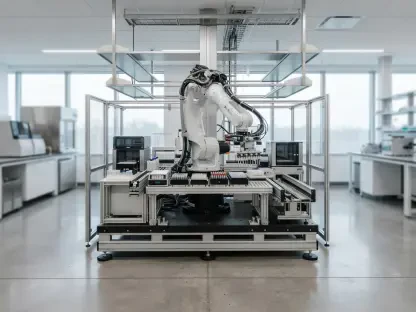
A defining technical trend of 2026 is the mandatory integration of computational modeling and physical laboratory verification, commonly referred to as the dry-lab and wet-lab closed loop. In the current competitive environment, a standalone computational model is no longer considered a viable product; instead, the industry standard requires a system where models guide experimental design and receive structured feedback from actual laboratory results to iterate effectively. This integration ensures that AI-driven designs are grounded in biological and chemical reality, significantly reducing the failure rate during the transition from digital simulation to physical application. For a model to maintain its predictive power, it must be continuously fed with high-fidelity experimental data generated under standardized conditions. Consequently, firms that have built their own automated or high-throughput laboratory facilities are seeing a significant advantage in both technical accuracy and investor confidence. This closed-loop approach has transformed data from a simple byproduct of research into the most valuable strategic asset within a company’s infrastructure, acting as the fuel for model optimization.
As these models advance toward simulating highly complex systems, such as organ-on-a-chip or multi-omics environments, the limitations of public data have become increasingly apparent. This scarcity of high-quality data has led to a split in business models within the sector, as companies choose between acting as platform providers or asset developers. The Platform-as-a-Service model focuses on the replicable deployment of software tools and subscription-based revenue from academic and industrial researchers who need advanced simulation capabilities. Conversely, the asset-based model focuses on hitting specific pipeline milestones and realizing value through equity growth or deep collaborations with established pharmaceutical giants. Both models require a robust technical foundation that can handle massive datasets and perform complex simulations at scale. The emergence of these distinct paths allows for a more specialized market where firms can focus on their core strengths—whether that involves building the underlying world models for life sciences or applying those models to solve specific, high-value problems in drug delivery and synthetic biology.
Investor Perspectives: Navigating Financial and State Interests
The investment landscape for AI for Life Sciences is currently shaped by three distinct categories of capital, each operating with different objectives and risk tolerances. Financial capital, primarily from aggressive venture capital firms, remains the most active force in the market, focusing on high-risk, high-reward opportunities at the Seed and Series A stages. These investors are essentially betting on the future by trying to identify and support the scientists who will become the market leaders of the next decade. Their involvement is crucial for fostering paradigm innovation and providing the initial momentum for concepts that have not yet reached commercial maturity. These venture firms often prioritize talent density and the novelty of the algorithmic approach, seeking to lock in early positions in companies that promise to redefine how biotechnology is practiced. By supporting a wide array of innovative concepts, financial capital ensures a steady stream of new ideas that can be tested and eventually scaled by more conservative institutional players.
In contrast, state-owned capital and corporate venture capital provide different forms of strategic support that emphasize infrastructure and synergy. State-backed funds in China have prioritized the digital bedrock of the industry, making heavy investments in regional computing platforms and large-scale data facilities that serve as a national strategic resource. These investors are more tolerant of long research and development cycles because their primary goal is to foster industrial clusters and strengthen the national supply chain. Meanwhile, corporate venture capital from technology giants and established pharmaceutical firms focuses on synergy and market application. These investors provide startups with more than just money; they offer access to internal proprietary data, massive computing resources, and a direct path to the global market. For example, spin-offs from major tech companies often secure the largest single-round financings because they come with a built-in endorsement of their engineering talent and technical infrastructure. This diversity in the investor pool ensures that the sector has access to both the risk-tolerant capital needed for discovery and the stable, strategic capital needed for long-term industrialization.
Industry Milestones: Real-World Evidence of Commercial Success
Several landmark events during the first ten months of the year have provided concrete evidence that the AI4LS sector has moved into a phase of mature commercialization. One of the most significant benchmarks was the successful listing of Materia Tech on the Hong Kong Stock Exchange, which was widely celebrated as the first global AI drug delivery stock. The fact that the company opened significantly higher on its first day of trading proved that the public markets are ready for AI-driven life science IPOs and have a strong appetite for companies that can demonstrate a clear path to revenue. This listing served as a validation for the entire sector, showing that the transition from a research-heavy startup to a publicly traded entity is achievable for firms with robust technical and commercial logic. It also set a precedent for valuation that other late-stage companies can use as they prepare for their own exits, providing a much-needed roadmap for institutional investors who have been waiting for signs of liquidity in the market.
Other market leaders have demonstrated the power of industrial integration through strategic acquisitions and specialized platforms. Meta Synthesis, for instance, signaled a shift toward total supply chain control by acquiring established manufacturing giants, allowing the firm to integrate its AI-driven enzyme designs directly into large-scale production. This move from molecule design to full-scale manufacturing represents a significant evolution in the business model of AI4LS firms, where the digital and physical worlds are seamlessly combined. Similarly, the emergence of spin-offs like NewPath, which leveraged existing high-level engineering talent from the tech sector to tackle biological puzzles, showed how quickly mature AI infrastructure can be repurposed for scientific discovery. These examples illustrate that the winners of the 2026 growth spurt were not just those with the best algorithms, but those who could bridge the gap between digital innovation and industrial execution. By focusing on vertical integration and strategic partnerships, these firms established a dominant market position that is difficult for smaller, less-integrated competitors to challenge.
Strategic Evolution: Actionable Lessons from the Realization Phase
The most successful participants in the 2026 market focused their efforts on three specific actionable pillars that redefined their survival. First, the move to secure proprietary experimental data became the primary defensive moat, as firms recognized that public databases no longer provided a competitive edge in high-fidelity simulation. Second, companies prioritized the vertical integration of their workflows, ensuring that dry computational designs were immediately validated in wet laboratory environments to create a self-correcting feedback loop. Finally, the strategic acquisition of traditional manufacturing assets allowed these AI-native firms to control the full production cycle, rather than remaining purely as software service providers. These steps were not merely suggestions but proved to be the essential requirements for securing the massive Series B and C rounds that characterized the late-year market landscape. By adopting these approaches, enterprises transformed from experimental startups into industrial powerhouses capable of delivering real-world therapeutic and material solutions that addressed urgent market needs.
Ultimately, the evolution of the AI4LS sector throughout the first ten months of the year demonstrated that the most effective strategies were those that balanced technical ambition with commercial pragmatism. Investors prioritized firms that moved beyond general-purpose models to develop specialized solutions for interpreting disease mechanisms and optimizing bio-manufacturing processes. This maturation was supported by a diverse ecosystem of capital, where state-backed funds provided the necessary long-term infrastructure and corporate investors offered direct pathways to market adoption. As the industry moved toward the end of this high-growth period, the focus shifted from proving that AI could work to optimizing the speed and scale at which it delivered results. This shift ensured that the groundwork was laid for a sustainable industrial model where scientific discovery was no longer a matter of chance, but a systematic, data-driven engineering process. The lessons learned during this realization phase established a new set of standards for how technology and biology must cooperate to achieve meaningful global impact.