
Biological hydrogen generation is often considered economically unfeasible because of the high costs associated with synthetic growth media and feedstocks. Despite this, the global push for a decarbonized energy grid has turned hydrogen into a critical focal point, primarily because its energy density is nearly three times that of standard gasoline. While the industry has historically relied on steam methane reforming, which taints the environmental profile of the fuel by emitting significant carbon dioxide, the shift toward truly green hydrogen requires a move away from fossil-based precursors. In the current landscape of 2026, researchers are increasingly looking toward biological solutions that utilize existing waste streams rather than refined sugars or expensive chemicals. By employing specific strains of purple non-sulfur bacteria, it is now possible to convert the nutrient-rich, often problematic wastewater from food processing into high-purity hydrogen gas. This innovation represents a major step toward a circular economy, transforming what was once a costly disposal burden into a localized source of renewable energy. The integration of advanced microbial science with industrial waste management offers a pathway to produce fuel that is not only carbon-neutral but also derived from resources that would otherwise pollute the environment or require energy-intensive treatment processes.
The Upcycling Process: From Food Residues to Liquid Gold
The transformation of organic materials into a usable energy substrate relies on a sophisticated thermochemical technique known as hydrothermal carbonization. This process uses high heat and pressure to mimic the geological formation of coal but accelerates the timeline from millions of years to just a few hours. When mixed food waste—including a diverse blend of tomatoes, apples, lettuce, and grapes—is subjected to temperatures around 180°C in a pressurized environment, it breaks down into two distinct products. The first is a solid, carbon-rich material called hydrochar, which can be used as a soil amendment or solid fuel. The second is a liquid byproduct known as process water. In 2026, managing this liquid is a priority for industrial facilities because it is naturally highly acidic and contains an overwhelming concentration of organic compounds, which makes it unsuitable for direct disposal into municipal sewer systems without extensive and expensive purification.
Rather than viewing this acidic liquid as a liability, scientists have identified it as a dense, nutrient-heavy “soup” that can support microbial life. The process water is characterized by a high chemical oxygen demand, indicating a significant presence of soluble carbohydrates and proteins that bacteria can metabolize. While the liquid contains potentially inhibitory compounds like phenols or furan derivatives formed during the heating process, its overall richness in organic carbon makes it a more cost-effective alternative to the refined synthetic media traditionally used in laboratories. By reframing this difficult waste stream as a high-value growth medium, the research demonstrates how industrial circularity can lower the financial barriers to sustainable fuel production. This approach effectively offsets the costs of wastewater treatment while providing the essential building blocks for a renewable hydrogen supply, proving that the most difficult waste products often hold the greatest untapped potential for energy recovery.
Genetic Precision: Engineering the Ultimate Hydrogen Factory
To unlock the maximum energy potential of food wastewater, the focus has shifted to the metabolic capabilities of Rhodobacter capsulatus. This specific bacterium is a purple non-sulfur organism that thrives in anaerobic environments and can use light as its primary energy source through a process called photofermentation. Under these conditions, the bacteria utilize an enzyme called nitrogenase to facilitate their internal chemical reactions, a process that naturally releases hydrogen as a byproduct. However, in their wild state, these bacteria are not optimized for industrial fuel production because they also possess a specialized enzyme known as uptake hydrogenase. This enzyme allows the organism to reabsorb and oxidize the hydrogen it has just produced, essentially recycling the gas to regain energy for its own growth. For a commercial energy system, this self-consumption is a major efficiency hurdle that must be overcome to ensure that the gas is available for collection and use.
The solution to this biological inefficiency was found in targeted genetic engineering, where researchers successfully deleted the specific genes responsible for the hydrogen-reabsorption pathway. By removing the genetic instructions for the uptake hydrogenase subunits, the engineered strain is effectively forced to release all the hydrogen it generates directly into the surrounding environment. This modification transforms the bacterium into a one-way hydrogen factory, ensuring that none of the valuable gas is wasted on internal cellular maintenance. In the comparative studies conducted throughout 2026, this engineered strain consistently outperformed wild-type varieties, demonstrating that precise genetic “knockouts” are essential for making biological systems competitive with traditional chemical fuel production. The resulting organism is not only more productive but also more stable, as it no longer fluctuates between producing and consuming its own output, allowing for a steady and predictable flow of high-purity hydrogen gas.
Industrial Endurance: Testing the Limits of Photobioreactors
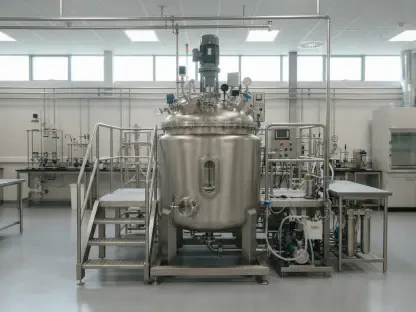
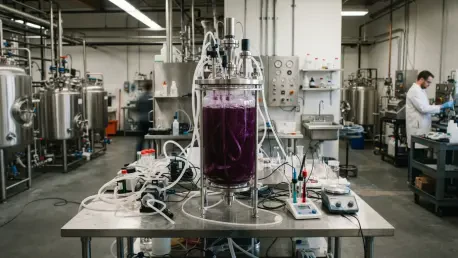
Transitioning microbial technology from the laboratory bench to a functional industrial setting required rigorous testing in a continuous photobioreactor. In these experiments, which spanned over 600 hours of uninterrupted operation, the engineered bacteria were maintained in a three-liter jacketed glass vessel under constant infrared illumination. The use of infrared light is strategic, as it provides the necessary energy for photosynthesis without competing with the visible light spectrum used by other organisms, further reducing the risk of contamination. During this extended run, the system was fed a steady supply of food wastewater, allowing the microbial population to adapt to the complex chemical landscape of the substrate. This long-term stability is a critical metric for 2026 energy standards, proving that the bacteria can survive and remain productive even when exposed to the fluctuating concentrations of nutrients and inhibitors common in industrial waste streams.
A notable observation during these continuous runs was the impact of residual ammonium within the food waste liquid. Nitrogenase, the enzyme responsible for hydrogen production, is naturally sensitive to the presence of ammonium, as the bacteria prefer to use that nitrogen for building their own biomass rather than generating gas. Initially, this led to a brief delay in hydrogen output while the bacteria consumed the available ammonium. However, once this nutrient was depleted, the metabolic machinery of the engineered strain switched seamlessly into high-gear hydrogen production. This adaptive behavior highlights the robustness of the system; the bacteria effectively “clean” the water of certain nutrients before beginning their primary role as fuel producers. The ability of the microbial community to maintain its genetic integrity and high output over several weeks of operation confirms that this technology is ready to move beyond controlled environments and into the unpredictable realities of waste processing facilities.
Metabolic Redirection: Prioritizing Gas over Growth
The high efficiency of this biological process is driven by a phenomenon known as metabolic redirection, where the bacteria adjust their internal priorities based on their environment. In a typical laboratory setting with a perfectly balanced nutrient diet, bacteria often focus their energy on rapid reproduction, leading to high levels of biomass but relatively low gas production. In contrast, when placed in the challenging environment of food wastewater, the engineered Rhodobacter capsulatus redirected its carbon resources away from building new cellular structures and toward the production of hydrogen. Even though the overall concentration of bacteria was lower in the waste-based medium compared to synthetic controls, the individual productivity of each cell was significantly higher. This indicates that the stress of the waste environment, combined with the genetic modifications, successfully funneled the energy from the organic acids directly into the fuel output.
Further analysis of the carbon partitioning showed that the bacteria were highly effective at processing volatile fatty acids like acetate and butyrate, which are the primary carbon sources in the process water. Throughout the cultivation period, the microbes constantly adjusted their internal redox balance to handle the diverse mixture of these organic compounds. As the bacteria consumed these acids, they generated hydrogen with a purity level that exceeded standard requirements for fuel cell applications. This is a significant advantage, as traditional “gray” hydrogen often requires expensive post-production scrubbing to remove carbon monoxide and other contaminants that can damage fuel cell catalysts. By achieving high purity and high yields through metabolic redirection, the system proves that microbial efficiency can be fine-tuned to extract the maximum possible value from every gram of organic waste, making the most of the complex carbon molecules found in our food system.
Scaling the Solution: Navigating Economic and Technical Barriers
The final evaluation of this technology established that while the biological foundations are sound, the path toward wide-scale adoption involves solving specific engineering challenges related to light and cost. One primary hurdle identified was the “self-shading” effect, where a high density of bacteria near the surface of a large-scale reactor prevents light from reaching the organisms in the center. To address this, future designs must focus on maximizing the surface-to-volume ratio or implementing internal lighting systems that ensure even energy distribution. Furthermore, the economic viability of the system was found to be dependent on the cost of the hardware and the energy used for infrared lighting. The researchers established that by locating these bioreactors at sites where waste heat or renewable electricity is already available, the operational expenses could be lowered enough to compete with fossil-fuel-derived hydrogen.
Ultimately, the project demonstrated that the engineered bacteria remained stable throughout the entire production cycle, with genomic sequencing confirming that no significant contamination or genetic drift occurred. This stability was a major milestone, as it proved that a specialized microbial strain could dominate a non-sterile waste environment for an extended period. The actionable insights gained from these experiments suggested that the next phase of development should involve modular reactor designs that can be easily integrated into existing food processing plants. By treating the wastewater on-site, companies could eliminate disposal fees while simultaneously generating the fuel needed for their own transport fleets or industrial heaters. The research concluded that the marriage of genetic engineering and process water valorization provided a technically viable and environmentally superior method for producing green hydrogen, successfully turning a massive waste problem into a strategic energy asset that serves the modern circular economy.