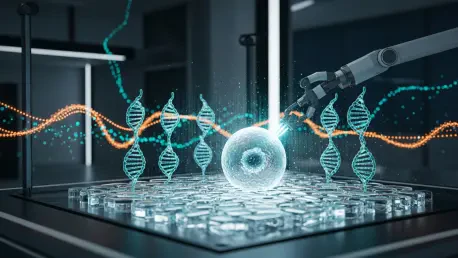

The recent emergence of SpudCell represents a profound shift in biotechnological history, effectively moving beyond the mere observation of life to the construction of a self-sustaining autonomous entity. Developed by dedicated researchers at the University of Minnesota, this first-of-its-kind synthetic cell possesses a complete life cycle, replicating essential survival behaviors such as resource acquisition and consistent physical growth. By demonstrating that life-like behavior can emerge from a combination of non-living chemical components, the project effectively demystifies the biological mechanics previously thought to require an elusive “magical spark.” This breakthrough provides an entirely new framework for understanding the minimum requirements for life and sets the stage for a new era of biological engineering. Scientists now observe a synthetic platform that behaves with the autonomy of a natural organism, bridging the gap between inert matter and complex biological systems while offering a glimpse into the potential of fully programmable living machines.
Technical Foundations: Molecular Engineering
Mechanical Division: Structural Simplification
One of the most significant technical achievements of SpudCell is its simplified approach to cell division, which sidesteps the extreme complexity found in natural cells. In standard biological systems, organisms rely on a sophisticated internal scaffolding known as a cytoskeleton to orchestrate division, a feature that has remained notoriously difficult to replicate in laboratory settings. Instead of attempting to recreate this intricate protein structure, the research team employed specific proteins that cluster on the cell membrane to generate directed mechanical stress. This physical pressure causes the membrane to split naturally into two daughter cells, allowing for successful division without the need for complex, energy-intensive internal machinery. This innovative mechanical workaround removes a major bottleneck in the field of synthetic biology, making the cellular “chassis” significantly easier for scientists to manage, manipulate, and modify for specific industrial or medical purposes.
Genomic Modularity: Programmable DNA Architecture
The genetic makeup of the SpudCell further distinguishes it from natural organisms through a modular and highly efficient architecture that mimics modern computer programming. While natural cells often contain millions of base pairs and redundant genetic sequences, SpudCell operates on a minimal genome of only 90 kilobase pairs organized across seven distinct DNA plasmids. This modular framework functions much like interchangeable software components, allowing engineers to program and fine-tune specific cellular behaviors independently without disrupting the entire system. By treating the genome as a set of distinct modules, the research team gained the ability to update or modify specific traits, such as growth rates and metabolic efficiency, with unprecedented precision. This “programmable” nature makes the cell an ideal platform for future biological applications where predictable behaviors and rapid iteration are essential for successful deployment in complex environments.
Validation and Standardization: Global Impact
Evolutionary Competition: Demonstrating Adaptability
To confirm that SpudCell functions as a truly living system rather than a static chemical reaction, the research team observed its performance under direct evolutionary pressure. By introducing a deliberate genetic modification that allowed for faster growth, they created a specific variant that successfully outcompeted the original strain for limited nutrients over several consecutive generations. This successful demonstration of Darwinian selection and competition within a synthetic chemical system confirms that these cells are capable of adapting and evolving just like natural organisms. This proof of adaptability is crucial because it demonstrates that synthetic life can survive and improve in competitive or resource-strained environments, rather than remaining fragile and prone to failure outside the laboratory. It suggests that synthetic systems can eventually be deployed in the field, where they must interact with natural ecosystems or changing environmental conditions over long periods.
Biotic Institution: Establishing Shared Standards
Despite the success of this laboratory model, transitioning synthetic biology into a global industry requires a standardized infrastructure that is currently being built from the ground up. To address this need, the research team launched “Biotic,” a public-benefit institution designed to create shared technical protocols and a foundational chassis for researchers around the world. By establishing open standards and a common engineering pipeline, Biotic aims to ensure that synthetic cell technology is accessible and scalable across diverse laboratories and industries. This collaborative approach is essential for moving past isolated breakthroughs toward a unified field where scientists can build upon each other’s work to solve massive global challenges. Through the democratization of these biological tools, the goal is to create a reliable ecosystem where synthetic biology can flourish, much like the standardized components used in traditional software development or mechanical engineering.
Strategic Goals: Future Applications in Medicine
The long-term implications for this technology transformed the landscape of medicine and industrial manufacturing by offering efficient alternatives to traditional chemical processes. Unlike previous industrial methods that relied on extreme heat or harsh chemical catalysts, synthetic cells performed complex molecular transformations at standard biological temperatures. This capability fostered the development of precise new drugs and sustainable materials that were grown in specialized bioreactors rather than synthesized in high-emission factories. Ultimately, the SpudCell provided a versatile and highly engineerable platform that replaced high-energy manufacturing with high-precision biological tools. Moving forward, the focus shifted toward establishing ethical frameworks and safety protocols to ensure these programmable technologies remained secure. By prioritizing transparency and international cooperation, the scientific community prepared for a future where life itself functioned as a controllable and beneficial technology for all.