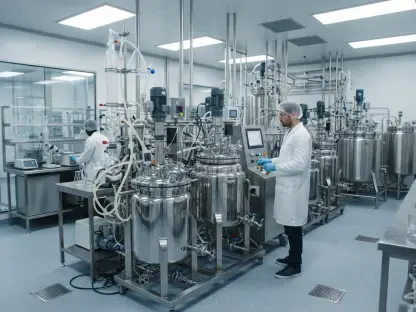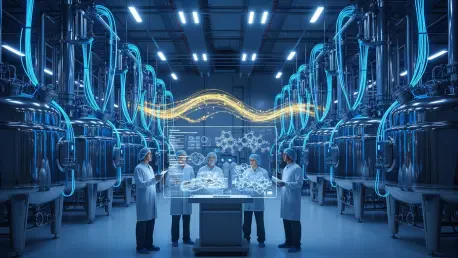

The global manufacturing landscape is currently undergoing a radical transformation as industries seek to replace traditional petroleum-dependent processes with sustainable, bio-based alternatives that utilize engineered microorganisms. This paradigm shift, often referred to as biomanufacturing, promises a world where essential chemicals, textiles, and pharmaceuticals are produced through biological fermentation rather than chemical synthesis. However, a significant hurdle remains for researchers and investors alike: the notorious “valley of death” where high-performing laboratory breakthroughs often fail to survive the transition to large-scale industrial environments. Professor Sang Yup Lee and his team at KAIST have identified that the primary issue lies in the loss of microbial productivity when cells are moved from a controlled, small-scale lab setting into massive industrial fermenters. The inherent volatility of large-scale production creates a gap that current engineering methods struggle to close effectively.
Analyzing Market and Material Constraints
Overcoming Economic Hurdles: Bio-based Production Strategies
The economic viability of biomanufacturing depends on far more than just the efficiency of a specific microbe; it requires a deep understanding of raw material costs and energy consumption during the downstream processing phase. Succinic acid serves as a compelling case study for this challenge, as it is a vital precursor for eco-friendly plastics and resins but continues to struggle with price competitiveness against petroleum-derived versions in high-volume markets. To mitigate these financial risks, producers are increasingly looking toward a strategy of targeting high-value niche markets, such as specialized cosmetics and food ingredients, where consumers are less price-sensitive and more willing to pay a premium for sustainable sourcing. This targeted approach allows companies to build stable revenue streams and establish a brand presence before they attempt the more difficult task of scaling up to compete in the cutthroat commodity plastics sector.
Moving beyond initial market entry, the long-term success of bio-based chemicals requires a sustained effort to reduce operational expenditures and optimize the entire supply chain. Integrating side-stream utilization and renewable energy sources into the production facility can significantly lower the carbon footprint and overall costs, making bio-based products more attractive to global buyers. Furthermore, the development of robust microbial strains that can thrive on non-food biomass or industrial waste can decouple production from food crop prices, providing a more stable economic foundation for industrial growth. As the technology matures, the lessons learned from niche applications will provide the necessary data and technical refinements to tackle larger markets. This phased expansion is not merely a survival tactic but a strategic necessity for any organization looking to displace well-entrenched petrochemical giants in the global trade arena.
Engineering Polymers for Specific Industrial Applications
Physical limitations often represent the final barrier to the widespread adoption of bio-based materials, as seen with the biodegradable plastic polyhydroxyalkanoate, or PHA. While PHA offers incredible potential as a truly compostable alternative to conventional plastics, its high production costs and naturally brittle physical properties make it a difficult direct replacement for versatile polymers like polyethylene or polypropylene. Researchers are now focusing on simplifying the extraction and purification techniques for PHA to make the process more cost-effective for large-scale operations. By altering the microbial metabolic pathways, scientists are also attempting to create copolymers with improved flexibility and strength, which would broaden the material’s utility across different industries. Addressing these material science challenges is critical because even the most sustainable product will struggle to find a market if its performance does not match or exceed existing standards.
To bridge the performance gap, the industry is increasingly prioritizing specialized applications where the unique benefits of PHA, such as biocompatibility and rapid biodegradability, provide a distinct advantage. Medical devices, such as absorbable sutures or tissue scaffolds, and high-end food packaging are prime examples of sectors where these properties are highly valued and can justify the higher production costs associated with the material. By focusing on these high-performance sectors first, the biomanufacturing industry can refine its production methods and gradually achieve the economies of scale necessary to lower prices for general-purpose use. This strategic focus ensures that the technology remains commercially viable while it undergoes the necessary technical evolution. Eventually, these refinements will allow bio-based polymers to move out of the laboratory and into the everyday lives of consumers, effectively reducing the world’s reliance on non-biodegradable, petroleum-based plastic waste.
Modernizing the Biomanufacturing Lifecycle
Integrating AI Simulations and Strategic Planning
Artificial intelligence is emerging as the essential tool required to navigate the staggering complexities of industrial-scale microbial design and day-to-day factory operations. By utilizing advanced digital twins, researchers can now create sophisticated virtual simulations of the entire production process to predict exactly how a specific microbe will perform when placed in a 100,000-liter fermentation tank. This AI-driven modeling approach allows for the simultaneous evaluation of thousands of variables, including oxygen transfer rates, nutrient distribution, and heat accumulation, which are nearly impossible to replicate perfectly in a laboratory setting. These simulations provide a safety net for developers, allowing them to identify potential failures or bottlenecks during the design phase before any physical resources are spent. By narrowing down the most promising candidates in a virtual environment, companies can significantly reduce the time and capital required to bring a new bio-based product to the commercial market.
Beyond simple simulation, artificial intelligence is also being used to optimize the real-time monitoring and control of industrial fermenters, ensuring that conditions remain within the narrow range required for peak microbial productivity. Machine learning algorithms can analyze data from sensors to detect subtle changes in the fermentation broth, allowing the system to make autonomous adjustments to feed rates or temperature settings. This level of precision helps to prevent the sudden crashes in yield that often plague large-scale operations when they are transitioned from the lab. Moreover, AI can integrate market data and logistics information to help managers decide when to ramp up production or switch to different feedstocks based on current economic conditions. This holistic integration of digital intelligence into the physical manufacturing process represents a fundamental shift in how bio-based chemicals are produced, moving the industry away from trial-and-error methods toward a more predictable and reliable engineering discipline.
Transforming Scientific Research into Scalable Engineering
A fundamental change in the research and development framework is necessary to ensure the long-term success of the bio-based economy and its ability to compete globally. Rather than evaluating economic and environmental impacts at the end of a multi-year project, these critical assessments must be fully integrated into the initial design phase of every new microbial strain. This design-for-manufacturing philosophy ensures that scientists are only pursuing pathways that have a realistic chance of achieving commercial viability at scale. Furthermore, building supply chain resilience into the process helps the industry withstand fluctuations in raw material availability or sudden geopolitical shifts that could disrupt traditional manufacturing. By considering factors like feedstock diversity and regional production hubs from the very beginning, biomanufacturing companies can create a more robust and adaptable business model that is less vulnerable to external shocks and market volatility.
The transition toward a fully integrated bio-economy relied on the successful implementation of multi-scale modeling and a pragmatic approach to market entry. By prioritizing high-value sectors and utilizing AI-driven simulations, the industry was able to overcome the traditional barriers that had long relegated biomanufacturing to the laboratory. Leaders in the field successfully advocated for the adoption of standardized engineering principles that balanced scientific innovation with economic reality. This strategic shift allowed bio-based processes to finally achieve the stability and cost-competitiveness required to displace legacy petrochemical infrastructures. Moving forward, the focus shifted toward expanding these methodologies to encompass a broader range of sustainable products and feedstocks. The integration of advanced digital tools and resilient supply chain strategies ensured that the bio-based sector remained a pillar of the circular economy while fostering a new generation of interdisciplinary talent.