
Federal research institutions face a five-year ban on government funding if they fail to procure synthetic DNA from certified providers under the new biosecurity directive. This high-stakes ultimatum serves as the cornerstone of Memorandum NSTM-6, issued on November 5, 2026, by the White House Office of Science and Technology Policy and the National Security Council. The directive, known formally as the “2026 National Policy for Nucleic Acid Synthesis Screening,” represents a massive shift in how the United States approaches the intersection of biotechnology and national defense. By moving beyond the previous era of voluntary self-attestation, the administration has established a centralized, rigorous framework designed to oversee the acquisition of synthetic genetic material. The primary goal is to ensure that synthetic DNA and RNA do not become the building blocks for engineered pathogens, particularly those that could be designed using sophisticated computational models that are now a daily reality in modern laboratories.
The Evolution of Federal Biosecurity Frameworks
The transition to NSTM-6 was not an overnight development but rather a necessary response to the visible shortcomings of the 2024 Framework for Nucleic Acid Synthesis Screening. Critics of the earlier system pointed out that relying on providers to voluntarily verify their own screening processes left dangerous gaps in the national biosecurity net. Although a May 2025 executive order demanded a swifter replacement, the complexity of modern genetic engineering delayed the final policy by over a year. During this interval, the emergence of highly capable generative artificial intelligence models changed the risk profile of synthetic biology entirely. These tools demonstrated that even individuals without deep expertise could potentially design functional viruses, making the old voluntary system obsolete. The new policy finally codifies the requirements that security experts have long championed, acknowledging that the speed of innovation has surpassed the capabilities of informal oversight.
Beyond simply replacing an outdated set of guidelines, the new policy represents a philosophical shift in how the government interacts with the biotechnology sector. For several years, the dialogue between federal agencies and private labs was characterized by a preference for light-touch regulation to avoid stifling innovation. However, the rapid advancement of automated synthesis platforms and digital protein design changed that calculus for national security planners. The potential for a catastrophic biological event, whether accidental or intentional, required a move toward mandatory standards that provide a clear paper trail for every sensitive genetic sequence produced in the country. By establishing these hard requirements now, the administration aims to create a stable regulatory environment where researchers can continue their work with the confidence that the materials they use are not being diverted toward illicit purposes or contributing to a burgeoning global arms race.
Core Mandates and Implementation Timelines
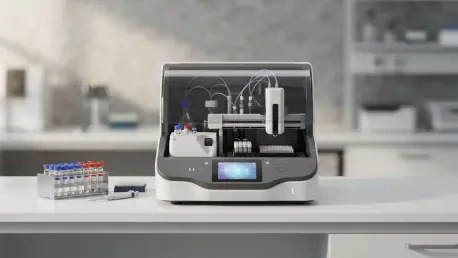
Under the strict guidelines of the 2026 policy, every order of synthetic material containing 50 or more nucleotides must undergo a thorough computational screening process. This requirement applies to all researchers receiving federal support, who are now legally obligated to source their genetic sequences from a pre-approved list of certified suppliers. These suppliers must utilize screening software and protocols that have been independently verified by the National Institute of Standards and Technology to ensure they can detect problematic sequences effectively. Furthermore, the directive extends to the burgeoning field of benchtop DNA synthesizers, which allow researchers to print material in-house. These machines must now be equipped with built-in safeguards that require a digital handshake with an authorized screening system before they can function. This ensures that whether a sequence is ordered or printed on a lab bench, it remains subject to federal biosecurity scrutiny and verification.
The timeline for implementing these mandates is carefully choreographed to allow the scientific community to pivot without derailing critical medical research. Following the policy release in late 2026, the National Institute of Standards and Technology is tasked with finalizing the technical screening standards by early February 2027. This milestone will provide the necessary blueprint for suppliers to update their algorithms and for institutions to review their procurement chains. By July 13, 2027, the mandate for federally funded researchers to use only certified providers will become fully active, marking the end of the transition period. The final phase of the rollout concludes in October 2027, when the regulations regarding benchtop synthesis equipment take full effect. Oversight of this process is shared between the Department of Health and Human Services and the Department of Agriculture, reflecting a holistic view of biosecurity that encompasses human, animal, and plant health.
Countering Risks Through Dynamic Screening
One of the most significant advancements in NSTM-6 is the move from traditional list-based screening to a more dynamic risk-based approach. In the past, screening tools were primarily designed to look for exact matches or close similarities to known pathogens like smallpox or anthrax. However, the rise of generative AI has enabled the creation of de novo genetic sequences—sequences that have never existed in nature but are still capable of producing lethal biological effects. To combat this, the new policy directs the development of AI-enhanced screening tools that evaluate the functional potential of a sequence rather than just its name or historical record. This allows authorities to identify parts of a sequence that might code for toxicity or infectivity, even if the sequence is entirely novel. This shift recognizes that the next generation of biological threats will likely be digitally designed, requiring a defense system that is as technologically advanced as the tools used by adversaries.
The transition necessitates that university biosafety officers immediately audit their procurement chains to align with the new NIST standards. By prioritizing these internal reviews, organizations effectively mitigate the risk of funding disruptions while contributing to a more secure biological landscape. These actions serve as a model for private-sector entities, which are beginning to voluntarily adopt certified screening protocols to maintain eligibility for future public-private partnerships. The successful implementation of the policy will demonstrate that proactive technical oversight is the most effective defense against the dual-use risks inherent in generative biology. Stakeholders throughout the biotech sector utilize these frameworks to redefine scientific responsibility in the digital age, ensuring that the blueprints for life remain under vigilant protection. This collective effort significantly reduces the probability of accidental or malicious misuse of synthetic genetic data.