
Intracellular synthesis pathways require metal cations to be transported across microbial cell envelopes where they are reduced by specific enzymes like nitrate reductase and cofactors like NADH. This biological approach represents a stark departure from traditional chemical synthesis, which has long relied on harsh reducing agents, high energy consumption, and toxic organic solvents that often leave hazardous residues on the resulting nanoparticles. As the global push for sustainable manufacturing intensifies in 2026, the shift toward green nanotechnology is no longer a peripheral interest but a central industrial objective. Microbial biosynthesis leverages the natural metabolic processes of various organisms to produce functional materials under mild, ambient conditions, offering a level of biocompatibility that traditional methods struggle to match. However, the inherent complexity and erratic nature of living systems have historically made it difficult to maintain the consistency required for large-scale industrial deployment. To bridge this gap, artificial intelligence is being integrated into the fabrication process, providing the predictive power necessary to transform unpredictable biological reactions into a standardized manufacturing framework. By utilizing machine learning algorithms, researchers can now decode the intricate relationships between microbial metabolism and nanoparticle formation, ensuring that these bio-based materials meet the rigorous performance standards demanded by modern electronics, medicine, and environmental engineering.
Biological Pathways for Generating Nanostructures
The biochemical routes through which microorganisms synthesize nanomaterials are broadly classified based on where the nucleation and growth of the particles occur. In the intracellular synthesis pathway, metal ions are actively or passively transported across the cell membrane, where they interact with various intracellular components. Once inside, these ions are reduced to their elemental form by redox enzymes and stabilized by thiol-bearing molecules like glutathione. While this method typically yields smaller and more uniform nanoparticles due to the confined environment of the cell, it presents significant logistical hurdles for industrial scaling. The primary challenge lies in the extraction process, which requires the physical or chemical disruption of the cell wall to release the synthesized particles. This additional processing step increases production costs and introduces potential contamination, making the refinement of these techniques a major focus for current research.
In contrast, extracellular synthesis offers a more streamlined approach that is increasingly favored for commercial applications. During this process, microorganisms secrete a variety of reductive enzymes, extracellular polymeric substances, and redox-active metabolites into their surrounding environment. These secreted molecules facilitate the reduction of metal precursors and subsequent particle capping outside the cell, allowing for much simpler harvesting and purification. Beyond these general pathways, specialized biomineralization processes observed in organisms like magnetotactic bacteria provide an even higher level of structural control. These bacteria utilize strict genetic regulation to synthesize single-domain magnetic crystals within membrane-bound organelles called magnetosomes. This level of biological precision results in nanoparticles with nearly perfect size distributions and specific magnetic properties that are nearly impossible to replicate through conventional chemical means. By analyzing these diverse biological mechanisms, AI models can begin to predict how different species will react to various precursor concentrations and environmental stressors.
Taxonomic Diversity and Morphological Control
The selection of a specific microorganism serves as the foundational blueprint for the size, shape, and catalytic activity of the resulting nanomaterial. Bacteria remain a primary choice for researchers due to their rapid growth rates and the ease with which they can be genetically modified to enhance specific metabolic pathways. Species such as Bacillus and Shewanella have proven exceptionally effective at producing metallic and metal oxide architectures through their complex redox enzyme networks. These microorganisms can be engineered to overexpress certain proteins, further increasing the yield and uniformity of the particles. However, the versatility of bacteria is matched by the robust capabilities of fungi, which are recognized for their high biomass and superior extracellular secretion potential. Fungi release vast quantities of enzymes and secondary metabolites that not only drive the synthesis process but also act as natural capping agents, preventing the nanoparticles from aggregating and maintaining their long-term stability.
Expanding the scope of microbial synthesis, photosynthetic organisms like algae and cyanobacteria offer a unique, carbon-neutral path toward nanoparticle production. These organisms utilize solar energy and carbon dioxide to drive the reduction of metal ions, requiring very few external chemical additives. This “phyco-nanotechnology” is particularly efficient for generating crystalline structures that are useful in optoelectronics and solar energy conversion. Meanwhile, actinomycetes, specifically from the Streptomyces genus, utilize their diverse secondary metabolism to assemble nanoparticles that possess inherent antimicrobial properties. This taxonomic diversity provides a vast library of biological templates, but selecting the right candidate for a specific industrial application remains a complex task. In 2026, AI-driven databases are increasingly used to scan genomic and proteomic profiles of thousands of microbial species, identifying the most efficient biological factories for targeted nanomaterial production based on desired physical and chemical characteristics.
Overcoming Sensitivity With Predictive Modeling
One of the most persistent hurdles in microbial nanotechnology is the sensitivity of biological systems to fluctuating environmental parameters. Small variations in pH, temperature, dissolved oxygen levels, or the concentration of metal precursors can lead to significant batch-to-batch inconsistencies. Traditional experimental designs often fail to capture the nonlinear interactions between these variables, leading to a long and costly trial-and-error optimization process. Artificial intelligence is fundamentally changing this dynamic through supervised learning algorithms like Random Forest and support vector machines. These tools can analyze historical synthesis data to identify the exact tipping points where environmental changes will alter the size or shape of a nanoparticle. By creating these predictive maps, researchers can stabilize the production environment and virtually eliminate the biological “drift” that often compromises the quality of biogenic materials.
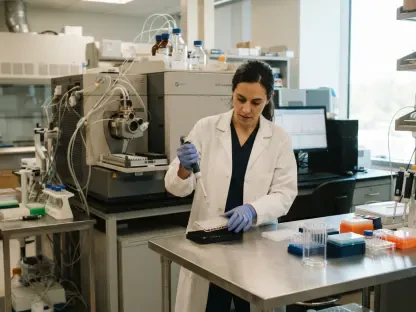
The integration of advanced computer vision and multi-omics data further enhances this level of control. Convolutional neural networks are now employed to automate the characterization of synthesized materials by processing thousands of electron microscopy images in seconds. This allows for real-time quantitative assessments of structural properties, removing the subjectivity associated with manual analysis. Furthermore, by linking these physical outcomes to the internal genetic and metabolic state of the microbe, AI models can offer a holistic view of the synthesis process. For instance, if a transcriptomic analysis reveals that a specific set of stress-response genes is being activated, the AI can proactively adjust the bioreactor’s temperature or nutrient feed to maintain optimal physiological conditions. This closed-loop feedback system ensures that the microorganisms remain in a peak state for synthesis, leading to consistent, high-purity yields that meet the strict requirements of industrial and clinical sectors.
Surface Functionalization and Smart Materials
While biogenic nanoparticles naturally possess a biomolecular “corona” that provides initial stabilization, most high-tech applications require more specialized surface modifications. The natural layer of proteins and metabolites surrounding these particles can be used as a scaffold for further functionalization, but achieving the correct orientation and density of these molecules is a complex engineering challenge. Machine learning algorithms are currently being utilized to optimize the attachment of synthetic polymers, such as polyethylene glycol, which is essential for preventing the human immune system from identifying and clearing nanoparticles in medical applications. By simulating the molecular interactions between the particle surface and the coating, AI can predict the most stable configurations, ensuring that the particles remain effective for longer periods within the bloodstream. This predictive approach significantly reduces the time required to develop effective drug delivery vehicles and diagnostic imaging agents.
The true frontier of this integration is the development of stimuli-responsive or “smart” nanomaterials that can adapt to changes in their environment. These materials are engineered to remain inert under normal physiological conditions but release a therapeutic payload or change their catalytic activity when exposed to specific triggers like acidic pH levels in a tumor or a shift in local temperature. AI platforms are instrumental in this development by screening vast libraries of chemical linkers and polymers to identify the candidates most likely to achieve these precise triggering thresholds. By combining biological synthesis with digitally optimized coatings, researchers are creating materials that are not merely passive tools but active, responsive systems. This synthesis of biology and intelligence allows for the creation of targeted therapies that can seek out specific pathogens or diseased cells with high precision, representing a significant advancement in the capabilities of modern nanomedicine.
Enhancing Healthcare and Environmental Safety
The practical utility of AI-enhanced microbial nanotechnology is perhaps most evident in the fields of medicine and environmental protection. Biogenic metallic nanoparticles, particularly those synthesized by fungi and certain bacteria, have demonstrated a multi-target mechanism for neutralizing antibiotic-resistant pathogens. These particles can simultaneously disrupt microbial DNA and inhibit vital respiratory enzymes, making it difficult for bacteria to develop resistance. In the realm of oncology, fungal-derived gold nanoparticles are being used to trigger selective apoptosis in cancer cells without harming healthy tissue. Because AI can optimize the size and surface charge of these particles, their penetration into tumor masses is significantly improved compared to earlier versions. Furthermore, cyanobacteria-derived silver particles have shown great promise in accelerating wound healing in diabetic models, highlighting the potential for these materials to address chronic healthcare challenges.
Environmental applications are equally transformative, with biogenic iron oxides and titanium dioxide serving as high-capacity adsorbents for heavy metals and organic pollutants. These nanoparticles can be engineered to specifically target contaminants like lead, mercury, and arsenic in water systems, providing a sustainable alternative to traditional chemical remediation. Under light illumination, many of these biogenic structures act as powerful photocatalysts, mineralizing pesticides and synthetic dyes into harmless byproducts. In the industrial sector, these materials are facilitating a transition toward a circular economy. For example, silver nanoparticles stabilized by natural bacteriocins are now being integrated into biodegradable cellulose films for food packaging. These active packaging materials provide essential UV protection and reduce oxygen permeability, significantly extending the shelf life of fresh produce while reducing the reliance on single-use plastics. As AI continues to refine these processes, the cost-effectiveness of these sustainable solutions will likely lead to their widespread adoption across various global industries.
The Road Toward Autonomous Nanofactories
For microbial synthesis to fully realize its potential and compete with established chemical manufacturing, several hurdles related to data transparency and regulatory standards must be addressed. A significant portion of the current AI models used in this field are considered “black boxes,” meaning their internal decision-making processes are not always clear to human researchers. To gain the trust of regulatory bodies like the FDA, the industry is moving toward the adoption of “explainable AI” frameworks. These systems provide a clear rationale for why a model predicted a specific outcome, which is crucial for ensuring the safety and consistency of nanomedicines intended for human use. Additionally, the establishment of global manufacturing standards and rigorous endotoxin removal protocols is necessary to ensure that biogenic materials do not cause adverse reactions in patients or negative impacts on natural ecosystems.
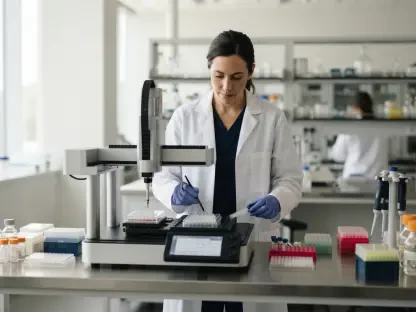
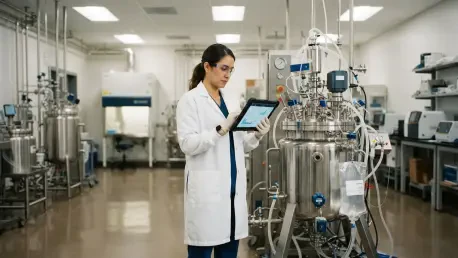
The ultimate vision for this technological convergence is the creation of fully autonomous microbial nanofactories. These systems integrate active-learning loops where robotic platforms and AI work together to refine synthesis parameters without continuous human intervention. By 2026, the use of digital twins—virtual replicas of the biological synthesis process—allowed researchers to simulate thousands of growth cycles in a matter of hours, identifying the most efficient production strategies before a single microbe was even cultured. This transition toward autonomous, self-correcting systems represented a major leap forward in the efficiency and sustainability of nanomanufacturing. By combining the precision of synthetic biology with the adaptive power of reinforcement learning, these nanofactories demonstrated that high-performance materials could be produced in total harmony with the environment. This interdisciplinary shift not only provided a solution to the limitations of traditional chemistry but also established a new paradigm for industrial production that prioritized ecological health alongside technological advancement.