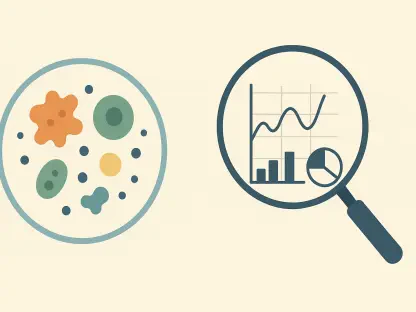

The sheer velocity of genetic engineering has shifted from basic DNA modification to a comprehensive biological operating system capable of rewriting the code of life with unprecedented accuracy and scale. This transition marks a departure from experimental science toward a period of industrial application, where the primary focus is no longer just whether we can edit a genome, but how we can do so reliably across entire populations. CRISPR-Cas9 has emerged as the definitive tool in this movement, distinguishing itself from predecessors like TALENs through its modularity and cost-effectiveness. By utilizing a guide RNA to direct the Cas9 enzyme, the system provides a programmable interface that allows researchers to target almost any genetic sequence with minimal reconfiguration.
This technological maturity has necessitated a shift in organizational strategy, moving away from isolated laboratory experiments toward massive multi-campus consortiums. The Innovative Genomics Institute (IGI) serves as the primary engine for this transition, acting as a bridge between foundational discovery and scalable implementation. This model is unique because it integrates diverse scientific disciplines—ranging from oceanography to clinical medicine—into a single collaborative framework. The objective is to move beyond the “one-off” success of curing a single patient and toward creating platforms that can address systemic issues like global food security and antibiotic resistance on a planetary scale.
The Evolution of CRISPR-Cas9 and the Genomic Landscape
Since the initial breakthrough in 2012, the CRISPR landscape has evolved from a simple “molecular scissors” concept into a sophisticated suite of gene-editing technologies. Early iterations were often plagued by off-target effects, where the Cas9 enzyme would unintentionally cut DNA at sequences similar to the target. However, the development of high-fidelity variants and base editors has significantly sharpened this precision. These advancements have allowed the technology to move from the periphery of science into the center of therapeutic development, enabling researchers to treat complex conditions by making single-nucleotide changes without breaking the DNA backbone.
The current landscape is defined by its ability to address the “undruggable” portions of the human genome. Unlike traditional pharmaceuticals that often target proteins, CRISPR intervenes at the source of the biological instruction manual. This fundamental shift means that instead of managing chronic symptoms, medicine is moving toward permanent curative interventions. Moreover, the open-source nature of much of the early CRISPR research has fostered a competitive yet collaborative environment, leading to a rapid diversification of Cas proteins that can function in extreme environments or target different types of nucleic acids, such as RNA.
Core Pillars of the IGI and UC San Diego Research Partnership
Applied Microbiology and Phage Therapy Advancements
A central component of the current research expansion involves the engineering of “jumbo phages” to combat the escalating threat of antimicrobial resistance. These large-scale viruses are distinct because their expansive genomes provide enough “real estate” to carry complex CRISPR payloads, effectively turning the phage into a programmable antibiotic. By precision-tuning these phages to recognize and eliminate specific bacterial strains while leaving beneficial flora intact, researchers are moving away from the “carpet bombing” approach of traditional antibiotics. This methodology is particularly relevant in clinical settings where multi-drug resistant “superbugs” have rendered conventional treatments obsolete.
Furthermore, the partnership between engineering-heavy institutions like UC San Diego and the IGI has allowed for the creation of stabilized delivery mechanisms for these therapies. One of the primary limitations of earlier phage research was the instability of the viruses when introduced into the human body. By applying advanced molecular engineering, scientists can now “shroud” these phages or modify their capsids to ensure they reach the site of infection without being neutralized by the immune system. This implementation is unique because it treats the phage not just as a biological entity, but as a sophisticated delivery vehicle for genetic instructions.
Microbiome Engineering and Synthetic Biology
Microbiome research has shifted from simple cataloging of species to the active manipulation of microbial communities through synthetic biology. By deploying CRISPR tools directly into complex ecosystems, such as the human gut or the digestive systems of livestock, researchers can modulate metabolic pathways to achieve specific outcomes. For example, editing the microbes responsible for methane production in cattle provides a direct, scalable solution to agricultural greenhouse gas emissions. This approach is superior to dietary changes because it addresses the root cause of the emissions at the microbial level, ensuring long-term environmental benefits without constant intervention.
In the realm of human health, this engineering capacity is being used to address inflammatory conditions and chronic diseases like asthma. Instead of treating the host’s immune system, scientists are editing the microbiome to prevent the production of pro-inflammatory metabolites. This represents a paradigm shift in preventative medicine; by managing the “microbial organ,” it becomes possible to maintain systemic health through subtle genetic nudges. The integration of UC San Diego’s medical infrastructure allows these microbial edits to be tested in rigorous clinical environments, bridging the gap between a lab-grown culture and a living patient.
Integration of Artificial Intelligence and Computational Modeling
The marriage of CRISPR technology with Artificial Intelligence (AI) and Machine Learning (ML) has solved one of the most persistent bottlenecks in genomic research: the prediction of editing outcomes. AI models are now capable of analyzing billions of potential guide RNA sequences to identify the ones with the highest efficiency and the lowest risk of off-target mutations. This computational layer transforms CRISPR from a trial-and-error process into a predictive science, significantly reducing the time and cost associated with drug discovery. By simulating how different genetic backgrounds react to an edit, researchers can personalize treatments before a single cell is ever touched in a laboratory.
Moreover, ML algorithms are being utilized to design entirely new CRISPR proteins that do not exist in nature. These “synthetic” enzymes can be optimized for specific tasks, such as operating at higher temperatures or recognizing shorter DNA sequences. This is a critical departure from the early days of the technology, which relied solely on repurposing proteins found in bacteria. The ability to computationally design the tools of the trade ensures that the next generation of genomic interventions will be far more versatile and specialized than the current standard, enabling the engineering of complex genetic circuits that can respond to environmental cues in real-time.
Multidisciplinary Applications in Health and Ecology
CRISPR’s versatility has allowed it to permeate sectors far beyond human medicine, notably in the protection of marine ecosystems and the enhancement of agricultural resilience. In the oceans, researchers are exploring the use of genomic tools to bolster the heat tolerance of coral reefs, providing a biological defense against rising sea temperatures. This application highlights a unique use case where the technology is deployed not for extraction or profit, but for the preservation of biodiversity. By identifying and propagating the genes responsible for thermal stability, scientists can potentially prevent the total collapse of vital underwater habitats.
In the agricultural sector, the focus has shifted toward “gene drives”—genetic systems that bypass traditional inheritance rules to spread a specific trait through an entire population. This is being used to manage crop pests and eliminate disease vectors, such as the mosquitoes that carry malaria or Zika. While traditional pesticides are often toxic to the broader environment, a CRISPR-based gene drive is highly specific, targeting only the intended species. This precision reduces the ecological footprint of pest management while providing a permanent solution that does not require the continuous application of chemicals.
Scaling Hurdles and Ethical Implementation Protocols
Despite the technical prowess of CRISPR, the technology faces significant “delivery” hurdles that prevent its widespread adoption. Getting the editing machinery into the specific tissues of a living organism remains the most difficult challenge in the field. Current methods, such as viral vectors or lipid nanoparticles, often struggle with efficiency or trigger immune responses that limit their use. Ongoing research is focused on developing “targeted” delivery systems that can navigate the bloodstream and deposit their genomic payload into specific cells, such as those in the brain or heart, without affecting other organs.
Ethical and regulatory frameworks also present a complex barrier to the deployment of gene drives and environmental edits. The prospect of permanently altering a wild population carries inherent risks, including the potential for unintended ecological consequences. Consequently, the development of “reversal drives” or “kill switches”—which can neutralize a gene drive if something goes wrong—has become a mandatory component of research protocols. Navigating the legal landscape of different nations while ensuring that these high-tech solutions remain accessible to the Global South is a primary concern for institutions like the IGI, which seek to prevent a “genomic divide.”
The Future Trajectory of Scalable Genomic Solutions
The trajectory of CRISPR research is moving toward a more decentralized and democratized model where genomic interventions are no longer confined to elite Western institutions. The next phase of development will likely see the rise of “field-ready” genomic tools that can be deployed in remote areas to diagnose and treat diseases or manage local agricultural challenges. This shift requires not only technical innovation but also a commitment to building local scientific capacity. By sharing protocols and computational tools, the central UC hubs are creating a global network of researchers capable of tailoring CRISPR solutions to their specific regional needs.
Long-term impact will be measured by the ability of these technologies to provide “climate-proof” solutions for the planet. This includes engineering crops that can thrive in saline soils or developing carbon-sequestering plants that can draw massive amounts of CO2 from the atmosphere and store it in their root systems. These projects represent a move toward “macro-engineering,” where the microscopic precision of CRISPR is used to achieve global-scale results. The ultimate goal is to move the technology from a state of emergency response toward a state of proactive stewardship, where we can actively maintain the health of both the human population and the biosphere.
Synthesis of Current Research and Strategic Outlook
The strategic expansion of the Innovative Genomics Institute successfully integrated the multidisciplinary strengths of the University of California system to address the most pressing scientific challenges of the decade. By moving beyond the initial discovery of CRISPR-Cas9, the partnership established a robust framework for translating molecular biology into practical, societal-wide solutions. The focus on jumbo phages and microbiome engineering demonstrated a sophisticated understanding of biological complexity, favoring targeted interventions over the broad-spectrum approaches of the past. These developments proved that the future of biotechnology was not just in the “cut” of a gene, but in the intelligent design of entire biological systems.
Actionable progress was achieved through the rigorous application of AI to genomic data, which effectively removed the guesswork from precision editing. This transition allowed for the development of safer, more predictable therapies that paved the way for clinical approvals in areas previously thought to be unreachable. To maintain this momentum, future efforts had to prioritize the standardization of delivery mechanisms and the establishment of international ethical norms for environmental editing. By consolidating resources and expertise, the consortium ensured that CRISPR technology remained a public good, providing a blueprint for how scientific collaboration could solve the existential crises of the modern age.