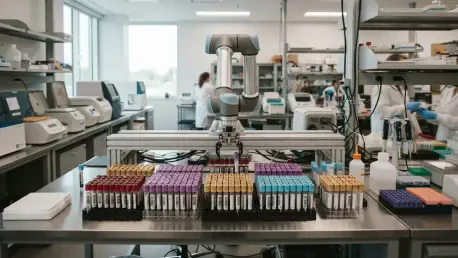

Automated systems download requested analyses directly from internal laboratory information systems to ensure each blood sample follows the correct workflow. This technological integration has become a vital response to the critical shortage of skilled laboratory technicians facing medical facilities in Germany and beyond. At MVZ Medizinische Labore Dessau Kassel GmbH, the pressure of operating three continuous shifts while maintaining absolute diagnostic accuracy led to the adoption of sophisticated robotic intervention. The primary challenge involved automating the pre-analytical and post-analytical phases, which traditionally relied on tedious manual labor. By standardizing these workflows, the laboratory successfully reduced human error and improved the overall speed of service for clinicians. The shift toward automation represents a strategic move to insulate the healthcare system against workforce volatility while ensuring that patients receive life-critical test results without the delays associated with manual processing bottlenecks or staff fatigue.
1. Streamlining Manual Loading and Initial Specimen Selection
The integration of Lab Table II begins with a carefully orchestrated manual loading phase where laboratory technicians position blood specimens into designated racks. These racks serve as the primary interface between human staff and the cleanroom-certified ABB IRB 1300 robots. This initial step allows skilled technicians to focus on higher-level quality control tasks rather than the repetitive motion of sorting individual tubes. By placing the samples in defined areas on the robotic workbench, the staff provides the raw data the system needs to begin its high-speed processing cycle. This collaborative approach ensures that the laboratory maintains a steady throughput of up to 160 samples per hour, which is essential for meeting the demands of modern hospital departments. The reliability of this initial hand-off dictates the efficiency of the entire workflow, as the robotic system is designed to pick up exactly where the human operator leaves off, maintaining a consistent and predictable pace throughout the workday.
Once the specimens are positioned, the first robot identifies the correct tube using sophisticated vision technology and moves it toward the appropriate next step. Depending on the specific diagnostic requirements dictated by the laboratory information system, the robot may place the sample into a centrifuge container or directly into an analysis rack. This decision-making capability is critical for labs handling various test types, such as clinical chemistry or hematology, where not every sample requires spinning. The precision with which the robotic arm maneuvers these delicate glass and plastic tubes minimizes the risk of breakage or cross-contamination that can occur during manual handling. This phase of specimen selection effectively removes the “decision fatigue” often experienced by technicians working long hours, as the automated system follows pre-programmed logic to route each tube through the most efficient path. The seamless transition from selection to processing highlights the robot’s role as a tireless assistant capable of maintaining peak performance.
2. Enhancing Stability Through Centrifuge Balancing and Spinning
The second phase of the automated workflow focuses on the mechanical preparation of samples through centrifugation, a process requiring extreme balance and precision. To achieve this, a second ABB robot is employed to manage weight distribution within the centrifuge beakers. It inserts compensation tubes into the centrifuge cups to ensure that the internal rotor remains perfectly balanced during its high-speed rotation. This meticulous attention to detail is necessary to prevent mechanical wear on the centrifuge and to ensure the integrity of the blood samples as they are separated into their various components. In a manual setting, this balancing act is a frequent source of delay and potential error, as technicians must weigh and match tubes carefully. By automating this task, the Lab Table II ensures that the centrifuge can operate at its maximum efficiency without the risk of vibration-induced shutdowns. The robot’s ability to calculate and execute these weight adjustments in seconds significantly contributes to the overall increase in processing speed.
Following the balancing procedure, the system initiates the spinning cycle, which takes place in an under-table centrifuge designed to save valuable floor space. The robotic system securely loads the containers, closes the heavy lid, and monitors the spinning process to completion. This subterranean placement of the centrifuge not only improves the ergonomics of the workspace but also enhances safety by containing the high-speed mechanical activity within a reinforced housing. Once the separation process is finished, the robotic arm retrieves the samples with a high degree of repeatability, ensuring that the freshly separated plasma or serum is not disturbed by jerky movements. This automated handling of the centrifuge cycle is particularly beneficial during night shifts when fewer staff members are available to monitor the equipment. The system’s constant availability means that samples received in the early morning hours are processed immediately, allowing doctors to receive diagnostic insights during their morning rounds, thereby improving patient outcomes.
3. Automated Equipment Feeding and Real-Time Notification Systems
After the centrifuge cycle finishes, the robotic system meticulously returns the blood specimens to their designated racks to prepare for the analytical phase. This transition requires the robot to handle the tubes with a specific orientation to ensure that labels remain visible for secondary verification by the analytical instruments. The second robotic arm takes the lead here, transferring all processed samples, along with those that did not require spinning, into specialized instrument racks designed for medical testing. This systematic feeding of the diagnostic machines ensures that there are no idle periods for expensive laboratory equipment. In a traditional lab setting, technicians often have to wait for a batch to finish before loading the next, but the continuous motion of the robots allows for a constant-flow model of operation. This eliminates the peaks and valleys in workload that typically characterize manual processing, resulting in a more predictable and stable environment for both the machinery and the human staff overseeing the operation.
As the samples move through the various diagnostic tools, a sensor-driven notification system triggers the next stage of the robotic workflow. Once the analysis of a specific rack is completed, the sensors alert the robot to move the specimens from the instrument area into a collection zone. This real-time communication between the analytical hardware and the robotic arms is what makes the Lab Table II a truly integrated solution rather than a collection of isolated machines. Following the transfer, the automation system retrieves the samples, reseals them to prevent environmental contamination, and prepares them for archiving. This final storage step is crucial for compliance and follow-up testing, as it ensures that every tube is logged and placed in a retrievable location. By handling the archiving process automatically, the lab avoids the common problem of misplaced or poorly labeled samples that can occur during the hectic conclusion of a busy shift. The consistency of this storage method provides a clear audit trail that is essential for maintaining high standards.
4. Digital Verification Methods and Collaborative Safety Protocols
Throughout the entire sequence, a high-resolution camera system provides digital verification by scanning ID numbers and identifying sample types based on cap colors. This multi-layered identification process acts as a digital safeguard against the misidentification of patient data. For instance, the system can instantly distinguish between serum and anti-coagulated blood by recognizing the specific color codes used in medical labeling. If the system detects a discrepancy between the physical sample and the data provided by the laboratory information system, or if an ID number is unreadable, the robot immediately moves the tube to a dedicated error rack. This selective sorting prevents problematic samples from entering the main analytical stream where they could cause delays or incorrect reporting. This proactive error handling allows human technicians to focus their expertise specifically on resolving complex issues rather than spending time manually checking every single tube for labeling accuracy. It effectively filters the workload, ensuring that only verified samples proceed through the pipeline.
The implementation of this technology provided a clear blueprint for medical facilities aiming to modernize internal operations without a total overhaul of existing infrastructure. By prioritizing the integration of collaborative robotics, hospital administrators managed to stabilize their workforce and significantly reduce the burnout associated with high-volume diagnostic cycles. This transition demonstrated that smaller laboratories could achieve the same levels of efficiency as larger, centralized facilities by adopting modular and flexible robotic workcells. Moving forward, laboratories found that investing in such systems allowed them to reallocate their most expensive resource—human expertise—to complex interpretive tasks that machines could not replicate. The successful deployment at MVZ served as evidence that the strategic use of safety-certified industrial robots was the most viable path toward overcoming chronic labor shortages. These actions ensured that the laboratory remained competitive and capable of providing rapid care while maintaining a sustainable workload.