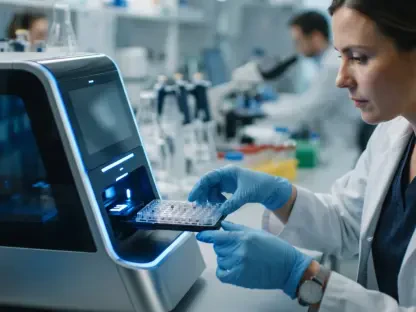

Regulatory initiatives for standardized organoid modeling emphasize the need for robust methodologies that minimize the impact of the human factor on cell health. While the landscape of modern cell biology has been transformed by sophisticated genetic engineering tools, the fundamental day-to-day maintenance of these cell lines has remained stubbornly manual. This reliance on human intervention creates a persistent and often invisible gap between the theoretical standard operating procedure and the actual physical reality at the laboratory bench. Even in 2026, researchers frequently encounter unexpected experimental outcomes that are difficult to replicate, leading to significant delays in drug discovery pipelines. This discrepancy is not typically the result of negligence but rather the inherent variability of manual labor. Addressing this requires a paradigm shift where the industry moves beyond simply documenting protocols to standardizing their physical execution through advanced automation systems. By bridging the distance between written intent and physical action, laboratories can finally achieve the level of reproducibility required for high-stakes clinical research and industrial applications.
The Human Element: Why Traditional Protocols Fall Short
The art of the laboratory bench is often celebrated, yet it serves as a primary source of variability that undermines scientific progress. A written protocol describes what should happen, but it cannot realistically capture the granular physical nuances of how every movement is performed. For example, two researchers following the same instructions for liquid handling might use slightly different pipetting speeds or angles, which can induce varying levels of shear stress on sensitive cell populations. These subtle differences in technique are rarely documented in official logs, yet they have a profound impact on cell morphology and gene expression. Because these manual actions are nearly impossible to quantify with the human eye, they remain hidden variables that complicate the interpretation of downstream data. Standardizing the wording of a protocol is only the first step; the challenge lies in the fact that human hands are simply not built for the mechanical repeatability that modern high-throughput cell biology demands for its most sensitive assays.
Environmental fluctuations during manual handling further exacerbate the consistency gap. Every time a cell culture flask is moved from the incubator to a biological safety cabinet for inspection or media exchange, the cells are exposed to shifts in temperature, humidity, and carbon dioxide levels. The duration of this exposure often varies depending on the researcher’s experience level or the complexity of the workflow on any given day. While a ten-minute delay might seem inconsequential to a human operator, to a living cell, it represents a significant physiological stressor. These environmental transitions are seldom tracked with precision in a manual environment, leaving a void in the historical record of the culture’s development. As long as the execution of cell maintenance remains subject to the inevitable variations of human timing and movement, the biological “noise” reported in many studies will likely remain an artifact of inconsistent handling rather than a true reflection of the underlying science.
Cumulative History: The Hidden Impact of Process Artifacts
Cells are not static reagents; they are dynamic, living systems that act as temporal sensors of their environment. Every interaction, from the vigor of a flask shake to the specific method of enzyme addition during detachment, leaves a physiological imprint on the population. This “cumulative history” of handling means that a cell line’s current state is a direct reflection of every passage it has undergone. In a manual workflow, small procedural deviations accumulate over several weeks, leading to a drift in cell behavior that is often only noticed when an experiment fails to meet its primary endpoint. By the time a researcher realizes that the cells are underperforming, it is almost impossible to trace the root cause back to a specific day or a particular handling event. This lack of transparency turns troubleshooting into an expensive and time-consuming process of trial and error, as scientists struggle to distinguish between genuine biological variation and artifacts introduced by the maintenance process itself.
The documentation crisis in manual cell culture further complicates the path toward reproducibility. Traditional lab notebooks and digital logs typically record that a media change was completed or that cells were passaged at a certain ratio, but they fail to capture the mechanical metadata of the event. They do not show the exact rate of aspiration, the precise temperature of the reagents at the moment of contact, or the total time the cells spent under ambient light. Without this level of detail, the scientific community lacks the necessary context to troubleshoot divergent results across different laboratories. As research moves toward 2027 and beyond, the inability to capture these “process artifacts” represents a fundamental weakness in scientific integrity. The industry requires a more sophisticated approach to data logging that connects biological outcomes directly to the physical parameters of their production, ensuring that every variable is accounted for in the final analysis of experimental results.
Automated Execution: Separating Judgment from Manual Labor
To address the reproducibility crisis, a strategic shift is required to separate expert scientific judgment from the physical execution of routine tasks. Automation should not be viewed as a way to replace the scientist, but rather as a tool to liberate them from the repetitive, error-prone movements that define modern cell maintenance. By delegating the physical handling of flasks and liquids to robotic systems, researchers can ensure that every cell population experiences an identical workflow, regardless of the operator or the location. This approach allows the scientist to focus their intellectual resources on experimental design, data interpretation, and complex troubleshooting, while the machine handles the mechanical parameters that demand high precision. This division of labor ensures that the researcher’s scientific intent is preserved while the variability of manual labor is eliminated, creating a more reliable foundation for drug discovery and personalized medicine applications.
Effective automation must be flexible enough to accommodate the researcher’s specific needs without forcing a total redesign of established biological workflows. High-quality systems are now designed to maintain the “logic” of traditional cell culture while performing tasks within a closed, controlled environment. This ensures that the transition from manual to automated work does not introduce a new set of variables that could confound historical data. By automating the “how” of a protocol—such as the exact speed of a swivel unit or the precise timing of a media exchange—laboratories can achieve a level of consistency that is physically impossible to reach at the bench. This mechanical repeatability is particularly vital when scaling up processes for commercial use or when working with rare cell lines where every passage is critical. As automation becomes more accessible, it is becoming the standard for any lab that prioritizes the long-term stability and reliability of its biological models.
Technical Solutions: Bridging the Gap with Precision Robotics
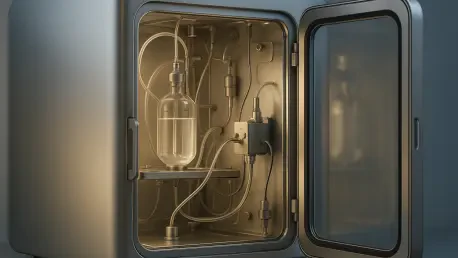
Modern technological innovations, such as the Hamilton Cell Care FLASK system, provide a concrete example of how automation can bridge the gap between protocol and performance. These systems utilize specialized hardware like the Swivel Unit and MagPearl Technology to handle T-flasks in a way that mimics manual movements but with absolute mechanical precision. In these closed environments, seeding, media exchange, and harvesting are performed with consistent force and timing, effectively removing the human factor from the equation. Such platforms can operate 24 hours a day without the fatigue or distraction that affects human researchers, ensuring that every cell passage is executed exactly as intended. Data from these automated runs indicates a significant reduction in process-induced variability, allowing scientists to have greater confidence that the observations in their assays are truly rooted in biology rather than procedural inconsistencies or environmental fluctuations.
Beyond improving the quality of the science, these automated solutions offer substantial operational benefits that enhance the overall efficiency of the research facility. By automating the most labor-intensive aspects of cell maintenance, labs can save between two and three hours of hands-on time per run, allowing staff to focus on higher-value activities. These systems also offer workflow templates that are easily adaptable to different cell lines, providing a balance between standardization and scientific flexibility. The digital audit trails generated by these platforms capture every mechanical detail of the process, providing a level of transparency that manual documentation can never achieve. This wealth of metadata is invaluable for regulatory compliance and for troubleshooting complex experiments, as it allows researchers to review the exact conditions under which their cells were maintained throughout their entire lifecycle.
Future Readiness: Standardizing Complex Biological Models
As the life sciences industry pivots toward New Approach Methodologies, such as organoids and complex 3D human-relevant models, the necessity for a consistent starting population has never been greater. These advanced models are highly sensitive to their initial conditions; if the upstream maintenance of the base cell lines is inconsistent, the resulting 3D structures will inherit that variability. This makes it virtually impossible to distinguish between a legitimate drug response and an artifact caused by improper handling. Regulatory bodies like the FDA and NIH are increasingly demanding robust and reproducible methodologies for these advanced systems. Automation provides the standardized foundation required to meet these rigorous standards, ensuring that complex models can be scaled up for high-throughput screening without losing their biological relevance. Consistency in the early stages of cell culture is the only way to ensure that the massive investments in 3D modeling yield reliable results.
The transition toward automated execution was the logical response to the growing complexity of modern drug discovery and the need for greater scientific transparency. Laboratories that prioritized the standardization of their physical workflows found themselves better positioned to meet the demands of global regulatory standards. By the end of the current research cycle, it became clear that the “hidden gap” in cell culture could only be closed through the integration of precision robotics and digital data capture. Scientists shifted their focus toward auditing their manual processes and identifying the most critical points of variability before implementing automated solutions. This proactive approach allowed organizations to build a more resilient research infrastructure that favored data integrity over traditional manual techniques. Ultimately, the successful adoption of these technologies ensured that biological understanding continued to grow on a foundation of trust, reliability, and reproducible evidence.