
Technology suppliers are currently focused on removing technical burdens to allow smaller biotech firms to access high-level efficiency and reproducibility. The biomanufacturing industry stands at a critical juncture where the simple accumulation of biological data no longer provides a competitive edge in developing life-saving therapies. At the recent Bioconvergence Forum hosted by imec, the dialogue shifted significantly toward the integration of specialty silicon as a primary driver of precision and automation. Experts noted that while the previous decade was defined by a rush to digitize every aspect of the lab, the current objective is to transform that digital noise into actionable intelligence. By embedding deep-tech solutions directly into the hardware, the sector is moving toward a model where the equipment itself manages the complexities of biological variability. This evolution ensures that every sensor serves a clear, automated purpose in the manufacturing workflow.
The Transition: Moving from Data Accumulation to Decision-Driven Automation
The historical obsession with raw data volume has led to the creation of vast repositories frequently described as “data graveyards.” These are enormous collections of information that remain largely inaccessible or functionally useless for operational improvements. To resolve this inefficiency, industry leaders are advocating for a “working backward” methodology. Instead of measuring every possible variable simply because the technology exists, developers are now encouraged to first identify which specific operational decisions they wish to automate. Once the desired outcome—such as a fully autonomous closed-loop control system—is defined, the industry can then pinpoint the exact data streams and specialty silicon sensors required to facilitate those precise actions. This paradigm shift ensures that every gigabyte of data collected is directly tied to a tangible improvement in yield or product quality, effectively ending the era of purposeless information gathering.
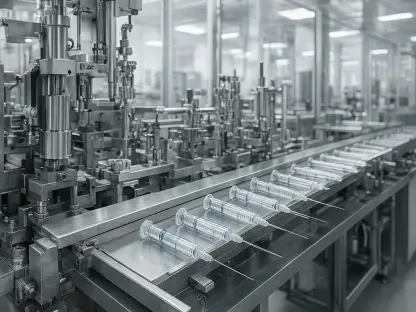
Building on this decision-oriented logic, the concept of “decision-compressed manufacturing” is gaining significant traction among major equipment manufacturers. This approach involves the deep integration of sensing capabilities and native computing power directly into manufacturing hardware, allowing the system to make real-time adjustments without the need for constant human oversight. By proving this closed-loop methodology in individual unit operations, developers can create a scalable and repeatable blueprint for entire production processes. This level of automation is particularly critical as manufacturing moves away from centralized, large-scale facilities toward more localized and agile production units. Specialized silicon plays a pivotal role here, providing the low-latency processing required to adjust metabolic parameters in a bioreactor instantaneously. This transition not only reduces the risk of human error but also ensures that the environment remains optimized.
Technical Hurdles: Contextualizing Data and Expanding Access
A significant barrier to the widespread implementation of artificial intelligence and predictive analytics in biomanufacturing has been the persistent lack of context surrounding raw data. Without accurate time-series alignment and curated relationships between disparate data points, information remains siloed and unready for consumption by advanced algorithms. Current efforts are now prioritizing the “contextualization” of data at the very point of its generation. By building environmental and operational context directly into the data as it is produced by silicon-based sensors, the resulting datasets become immediately searchable and actionable for deep analytical insights. This architectural change allows for the rapid identification of subtle deviations that could compromise a batch of specialized therapeutics. Consequently, the focus is shifting from simply having data to ensuring that the data is inherently meaningful and ready to drive automated responses.
In tandem with these technical improvements, there is a burgeoning movement to democratize high-level biomanufacturing capabilities across the entire life sciences ecosystem. Historically, only the largest pharmaceutical companies possessed the immense financial and technical resources required to implement highly connected, sophisticated workflows. However, modern technology suppliers are now focusing on removing the inherent technical burdens from their customers through intuitive, silicon-driven interfaces. The ultimate goal is to make complex biomanufacturing tools feel like second nature to the end-user, allowing smaller biotech startups to access the same level of efficiency and reproducibility as their larger counterparts. This leveling of the playing field is essential for fostering innovation, as it allows smaller research teams to focus on molecular discovery rather than mechanical intricacies, thereby accelerating the pipeline for novel treatments.
Strategic Evolution: Managing Therapeutic Complexity and Collaboration
The industry is currently navigating a significant shift in the types of molecules being produced, moving from standard monoclonal antibodies to more fragile and complex therapeutics. These new classes of drugs, including multi-specific molecules and viral vectors, require extremely stable growth conditions and a constant, precise supply of nutrients. Traditional batch processing tools often struggle to maintain the required consistency across global manufacturing facilities, leading to variations in product quality. To address these challenges, there is an industry-wide push toward continuous processing methods, such as perfusion systems, which rely heavily on specialty silicon for monitoring. These systems provide the robust analytical technology needed to maintain a “steady state” within the bioreactor for weeks or even months at a time. This level of stability is vital for ensuring that complex molecules are synthesized correctly and represents the only way to meet global demand.
The successful transition toward next-generation biomanufacturing was ultimately defined by a cultural shift that proved as vital as any technical advancement in silicon or automation. While the industry was traditionally characterized by a conservative and siloed approach, a new spirit of collaboration emerged to break down internal barriers and accelerate innovation. This evolution was particularly evident in the implementation of real-time parametric release for therapies like CAR-T, which required a unified regulatory and operational strategy. True progress was found in the convergence of disparate sectors, where R&D organizations and technology providers aligned their goals to create a resilient production framework. This synergy became the primary driver of excellence, ensuring that actionable insights were prioritized over raw data volume. By adopting these strategies, the sector turned complex biological production into a precise reality that delivered life-saving treatments.