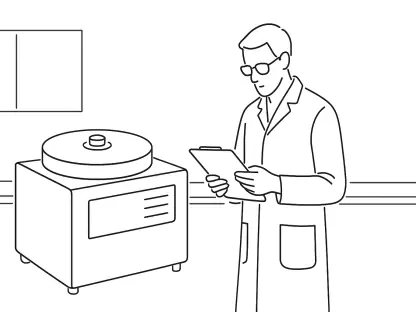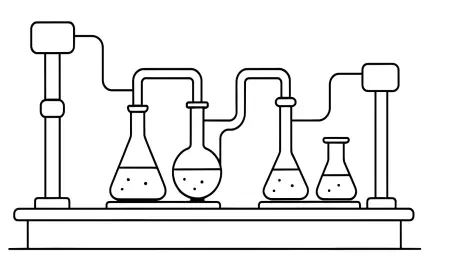

Reliability and standardization are the new metrics of success as the industry attempts to ensure that biological data is reproducible across different batches and global locations. This shift follows a decade of intense focus on the computational “dry lab” side of drug discovery, where artificial intelligence and machine learning models were refined to the point of near-perfect molecular prediction. By the middle of 2026, the primary challenge has moved from the digital realm to the physical laboratory, as the capacity to design novel drug candidates has exponentially outpaced the speed at which they can be synthesized and tested. For years, the industry celebrated the ability of algorithms to propose thousands of high-potential binders in mere hours, yet it ignored the growing friction at the laboratory bench. This disconnect has created a profound structural bottleneck, where the “curiosity” of AI is effectively stalled by the manual limitations of traditional biology.
The pharmaceutical landscape is no longer haunted by the ghost of failed molecules, but by the overwhelming abundance of theoretical ones that remain unverified. As generative models push drug design to the minute-level, the industry has reached a consensus: the design phase is no longer the rate-limiting step. The focus of Artificial Intelligence in Drug Discovery (AIDD) has undergone a strategic pivot from generative modeling to high-throughput, automated “wet lab” validation. Leaders in the field now recognize that smarter AI models do not decrease the need for physical experiments; instead, they act as a catalyst for an explosive increase in experimental demand. The goal is now to bridge the gap between silicon-based imagination and carbon-based reality, ensuring that the torrent of digital data is backed by high-fidelity physical evidence.
The Growing Divide Between Digital Design and Physical Testing
Addressing the High-Throughput Validation Mismatch: The Data Desert Challenge
The current research landscape is defined by a profound structural mismatch between the velocity of digital design and the reality of physical validation capacity. Leading AI platforms, such as those utilized by pioneers like Chai Discovery and Anthropic, can now propose thousands of high-potential candidate molecules within a single afternoon. This “design-at-scale” capability renders traditional manual laboratory processes effectively obsolete, as the fragmented nature of human-led testing cannot keep up with the sheer volume of hypotheses generated by autonomous agents. This discrepancy has led to what experts call a “data desert,” a state where generative models lack the high-quality, real-time feedback loops required to refine their predictions and move toward clinical trials. In a traditional framework, experimental validation—the phase where proteins are expressed and binding affinities are measured—remains a time-consuming hurdle that can take weeks for a single batch, creating a massive backlog that stalls the entire pipeline.
To resolve this imbalance, the industry is transitioning toward automated systems that treat biological testing as a high-speed industrial process rather than a bespoke artisanal craft. The bottleneck is no longer the “dry lab” software but the “wet lab” of physical reality, where the speed of pipetting and the throughput of screening must match the pace of GPU-accelerated computing. This transition requires a fundamental redesign of the laboratory environment, moving away from isolated experiments toward integrated, flow-based systems that can handle thousands of proteins simultaneously. Without this evolution, the most advanced AI models are essentially driving a high-performance engine into a brick wall of manual labor. The focus has shifted toward building the physical infrastructure necessary to handle the industrial-scale output of modern generative design, ensuring that every digital hypothesis is met with a corresponding physical result in near real-time.
The New Economic Reality: The Declining Cost of Curiosity
A counterintuitive but vital insight from industry leaders suggests that AI will not reduce the total volume of wet experiments, but rather increase them by orders of magnitude. This phenomenon mirrors the rise of AI coding assistants, which did not eliminate the need for programmers but instead made the development process more ambitious and efficient, thereby increasing the demand for complex software projects. In biology, because the “cost of curiosity”—defined as the time and resources required to design a plausible hypothesis—has dropped to near zero, the demand for “ground truth” validation has skyrocketed. When a scientist can generate a thousand variations of a protein in seconds, the appetite for seeing how those variations perform in a real-world biological assay becomes insatiable. This drive is moving the industry away from low-volume, high-touch research toward massive, integrated infrastructure ecosystems that act as the physical backend for AI.
This strategic reorientation ensures that the physical conduits of drug discovery can support the rapid-fire output of modern generative models without creating a permanent backlog. The economic implication is a shift in value from the “idea” of a molecule to the “validation” of that molecule. In an era where AI can dream up virtually anything, the only thing that retains significant market value is the proof that the molecule works as intended in a biological system. Consequently, the competition is no longer about who has the most creative algorithm, but who possesses the most efficient factory capable of converting digital designs into actionable, machine-readable data. This shift is forcing pharmaceutical companies to reconsider their capital allocation, moving money out of pure software licensing and into the heavy machinery of automated protein expression and high-throughput screening platforms that can keep pace with the 2026 standard of digital innovation.
Strategic Investments in the New R&D Infrastructure
Shifting Capital Toward Automated Laboratory Ecosystems: The Infrastructure Bet
Recognizing the physical bottleneck, major industry players are pivoting their capital away from pure software development and toward the construction of automated high-throughput facilities. For example, GenScript Biotech recently made waves by allocating hundreds of millions of dollars specifically to expand its AIDD platform’s physical infrastructure. The vast majority of these funds were dedicated to automated high-throughput wet laboratory facilities and equipment upgrades, signaling a definitive shift from providing disparate services to building an integrated “infrastructure ecosystem.” For a company rooted in gene synthesis and protein expression, this investment represents a strategic bet on the “shovels and picks” of the AI gold rush. By investing in automated workstations that can operate around the clock with minimal human intervention, these firms are positioning themselves as the essential gatekeepers of the next generation of drug discovery.
This trend is not limited to established giants; it is being driven by a new breed of startups that view the laboratory not as a traditional research organization, but as a digital service. These companies are redefining the relationship between software and hardware by delivering experimental results via APIs and structured JSON formats rather than the traditional PDFs and emails. This allows the data to be instantly machine-readable, enabling a seamless integration into the AI training loop. By focusing on rapid iteration and high-throughput protein testing, these firms have seen explosive revenue growth, proving that AI-native pharmaceutical companies are desperate for partners who can speak the language of automation. The goal is to create a closed loop where the synthesis, screening, and detection phases are fully integrated into the computational design phase, effectively turning the wet lab into a physical extension of the AI agent itself.
The Physical Backend: Integrating Wet Labs with AI Agents
The success of companies like Adaptyv Bio, which recently completed a massive funding round after validating thousands of protein sequences for advanced models like Anthropic’s Claude, underscores the demand for a “physical backend.” In this model, the laboratory operates with the same efficiency and scalability as a cloud computing provider. Instead of ordering a single experiment, researchers submit a batch of thousands of sequences through a digital portal, and the automated facility handles the gene synthesis, protein expression, and affinity testing without a single human touching a pipette. This level of automation is necessary because the speed of AI-driven design requires a laboratory response that is measured in days rather than months. The industrialization of biology means that the laboratory is becoming a high-density data factory where the primary output is not just a physical sample, but a high-fidelity digital twin of the experiment.
Building these digital-to-physical conduits requires a complete overhaul of how biological data is collected and managed. In the past, experimental data was often siloed and inconsistently formatted, making it nearly impossible to use for training sophisticated neural networks. The new infrastructure standard mandates that every piece of “data exhaust” from the laboratory—from the temperature of the incubator to the exact timing of a reagent addition—is captured and standardized. This level of detail allows AI models to account for experimental noise and environmental variables that were previously ignored. As these automated ecosystems become more prevalent, the line between the dry lab and the wet lab continues to blur, creating a unified R&D environment where the computer and the robot work in a perfectly synchronized cycle of prediction and validation.
Defining the Future Standards of Biotechnology
Measuring Success Through Speed, Scale, and Data Quality: The 4-Day Benchmark
As the infrastructure race intensifies, the criteria for success in pharmaceutical research are shifting toward specific metrics such as throughput, reliability, and speed. The new industry benchmark has moved from “week-based” to “day-based” cycles, with state-of-the-art platforms now capable of shortening the journey from a digital sequence to experimental data to just four days. This speed is absolutely essential for the “active learning” models used in 2026, which require constant streams of fresh, high-quality data to pivot their search for the most effective molecules. If a model has to wait three weeks for a result, the momentum of the design process is lost, and the AI’s ability to explore the vast chemical space is severely hampered. Therefore, the ability to provide a four-day turnaround has become a massive competitive advantage for infrastructure providers.
Furthermore, the scale of testing has reached a point where manual oversight is no longer feasible. Automated workstations reduce human error and ensure that data is standardized across different batches and global locations, which is critical for maintaining the integrity of large-scale training sets. In this high-speed environment, the quality of the data is directly tied to the level of automation; the more “human” the process, the more prone it is to the variability that plagues biological research. By removing the manual element, companies are able to produce datasets that are not only larger but significantly more reliable. This reliability is the bedrock upon which the next generation of life-saving medicines will be built, as it allows researchers to trust the AI’s predictions with a higher degree of confidence than ever before.
Harnessing the Power of Failure: The Value of Negative Data
A unique and transformative aspect of the new R&D infrastructure is the unprecedented value placed on “negative data.” Historically, in traditional academic and industrial research, failed experiments were often ignored or discarded as they were seen as a waste of resources. However, for an AI model to truly understand the complex rules of biology, it must know what does not work just as clearly as it knows what does. Modern automated platforms are now designed to capture and categorize every failure with the same rigor as every success. Platforms that share validated protein data, including these crucial “negative results,” are pioneering a more robust learning environment for the entire industry. This shift in perspective turns every failed experiment into a valuable data point that helps the AI refine its internal map of the biological landscape.
The transition toward a data-centric model of drug discovery was finalized as the industry realized that the primary product of a modern lab is no longer just the physical molecule, but the structured dataset it generates. By 2026, the major players had successfully repositioned themselves as the architects of a physical and digital bridge between silicon and carbon. They moved away from artisanal methods and embraced an API-driven, high-throughput factory model that treated biological sequences like code. These companies addressed the structural bottleneck by ensuring that the speed of validation finally matched the speed of design, allowing for a seamless flow of information that accelerated the path to the clinic. As a result, the industry became more resilient, standardized, and capable of tackling previously “undruggable” targets with a level of precision that was once considered impossible.