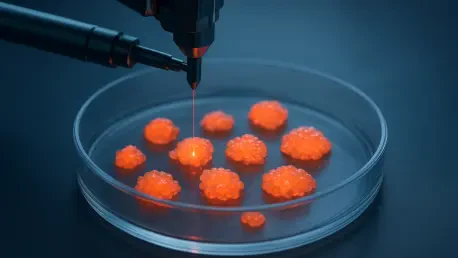

Automated monitoring systems can track organoid morphology in real-time, providing critical data points that are nearly impossible to capture through manual inspection. This technological leap, driven by the collaboration between Molecular Devices and STEMCELL Technologies, addresses the historical challenges of three-dimensional tissue culture. By integrating the CellXpress.ai system with IntestiCult Plus medium, these organizations have created a standardized framework for human intestinal organoids. Previously, the complexity of 3D biology required expert manual intervention, which often introduced human error and batch variability. This approach utilizes machine learning to ensure every stage of the organoid life cycle is managed with precision. The result is a highly reproducible model that offers an accurate representation of human physiology, effectively bridging the gap between basic research and high-throughput discovery. This development ensures that the generation of organoids is not only human-relevant but also consistently reproducible across various laboratories and research phases.
Bridging the Gap Between Complexity and Scalability
The transition to automated cultivation represents a fundamental shift in the reliability of biological data. Manual handling involves labor-intensive protocols subject to the subtle inconsistencies of human technique, which often lead to experimental drift over time. This variability is particularly problematic in drug discovery, where even minor deviations in tissue development can skew the results of efficacy studies or toxicological assessments. The introduction of automated systems ensures every movement, from media exchange to plate handling, is executed with a consistency that a human cannot match. By removing manual variability, laboratories produce tissues that are more human-relevant and uniform. This uniformity is the cornerstone of robust research, providing a stable foundation upon which complex disease models can be tested with high confidence. Such standardized precision is necessary for moving these models into the mainstream of pharmaceutical development, where accuracy is paramount for success.
Democratizing Access to Advanced Biological Models
One significant impact of this workflow is the democratization of advanced cellular models across the global research community. For years, a high barrier to entry—including the need for niche training and the high risk of experimental failure—prevented many laboratories from adopting 3D biology. The collaboration between Molecular Devices and STEMCELL Technologies lowers this barrier by providing ready-to-implement, downloadable protocols that guide the CellXpress.ai system. Researchers can now bypass the trial-and-error periods usually associated with manual cultivation, allowing them to focus on high-level analysis rather than routine maintenance. This shift enables a wider range of institutions to contribute to translational medicine, fostering a more inclusive and innovative environment. By simplifying the technical aspects of organoid growth, automation empowers scientists to accelerate the development of personalized treatments for complex diseases, ensuring that advanced technology is accessible to more than just a few specialized facilities.
The Solution: Standardizing Growth Through Precision Monitoring
The integration of real-time monitoring directly addresses the persistent reproducibility crisis in modern research. The CellXpress.ai system utilizes advanced imaging to capture high-resolution data on organoid growth without disturbing the biological environment. This oversight allows for the immediate identification of outliers, ensuring only the most viable tissues move forward in the testing pipeline. In a manual setting, identifying these subtle changes would require removing plates from incubators, which stresses cells and introduces variability. The automated platform provides a non-invasive way to track health, resulting in a data-rich history for every individual organoid. This level of granular detail is essential for verifying that results are representative of human biological responses, thereby increasing the overall success rate of new therapeutic candidates. By maintaining a stable biochemical environment, the system ensures that the functional fidelity of the tissues remains intact throughout the entire experimental process.
Accelerating the Global Shift Toward New Research Methodologies
This movement toward automation is a critical part of the industry trend toward New Approach Methodologies. As regulatory bodies move away from a reliance on animal models—which often fail to predict human drug responses—the demand for reliable human-relevant tissues has grown. However, the mass adoption of organoids was slowed by the lack of industrial-scale production. Biotechnology leaders agree that automation is the missing link required to integrate these complex models into the mainstream. By providing a scalable way to produce high-fidelity tissues, the partnership is facilitating an efficient path to drug approval. This shift reduces the cost of discovery and ensures that therapies reaching the market are safer. The ability to produce these models at scale means the industry can finally integrate complex 3D biology into the earliest phases of high-throughput screening, allowing for a more ethical and accurate approach to testing the next generation of life-saving medical treatments.
Industry Impact: Replacing Animal Models with Human-Relevant Systems
The synergy between hardware and reagents creates a unified solution that eliminates the silos between engineering and biology. Molecular Devices contributes the mechanical prowess for automation, while STEMCELL provides the biochemical expertise to maintain tissue health. This approach ensures that the automated protocol is an optimized process specifically designed for robotic execution. This framework is being expanded to include lung, brain, and liver organoids, allowing researchers to explore multi-organ effects of systemic diseases or off-target toxicity with precision. By streamlining these workflows, the industry is moving toward a future where sophisticated human models are as common as traditional cell lines. The flexibility to adapt these protocols for specific needs provides the agility required for diverse applications ranging from basic research to toxicology. This unified effort demonstrates how biotechnology and automation intersect to push the boundaries of science, creating a more efficient and reliable pipeline for discovering new medicine.
Streamlining Workflows and Expanding Organoid Portfolios
The collaboration between these industry leaders successfully established a robust foundation for the next generation of drug discovery. By prioritizing standardized, automated workflows, they addressed the critical need for scalability and consistency in 3D biology. This transition proved that replacing manual oversight with robotic precision could significantly reduce the time and labor required for high-impact research. The scientific community recognized the value in expanding these automated portfolios to encompass a broader spectrum of patient-derived models. The industry moved toward a paradigm where data integrity and reproducibility were the primary drivers of therapeutic development. Stakeholders understood that investing in these platforms was a fundamental requirement for the future of precision medicine. These advancements ultimately fostered an environment where safer medicines were developed with greater speed. Moving forward, the focus shifted toward integrating these automated systems into every phase of the pharmaceutical pipeline to maximize their predictive potential and improve human health outcomes.