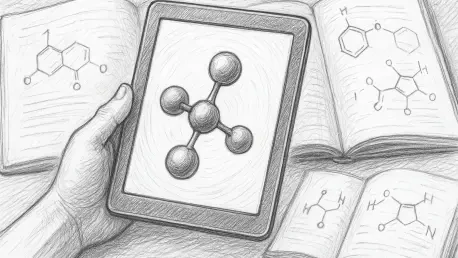

By leveraging a system of base and fibre posets, computational chemists can now characterize the search space for new drugs with mathematical precision and formal semantics. The pharmaceutical industry is currently witnessing a significant shift as artificial intelligence moves from being an experimental tool to a core component of the drug discovery process. A groundbreaking study led by Ashwin Srinivasan and a team from BITS Pilani introduces Symbolic Neural Generation, a framework designed to overcome the persistent hallucination problem in molecular modeling. While standard deep learning models can generate aesthetically pleasing molecular structures, they often lack chemical validity or biological utility. By merging symbolic reasoning with neural networks, the system ensures that new drug candidates are not only creative but also adhere strictly to the immutable laws of chemistry. This leap is essential for moving beyond the trial and error that has long slowed down the development of life saving medications.
Bridging Logic and Generative Creativity
The Mechanics: Hybrid AI Architecture
The technical foundation of the SNG framework rests on a neurosymbolic architecture that effectively divides labor between logic and language processing. The first component is a symbolic learner utilizing Inductive Logic Programming, which can induce complex rules from as few as five known molecular examples. This allows the system to create a transparent, human readable specification of what a viable drug candidate should look like. This hypothesis serves as a rigorous filter, providing a level of interpretability that is missing from standard neural networks. In traditional settings, the lack of transparency often results in scientists discarding potentially useful models due to a lack of trust. However, the SNG approach builds this trust by ensuring that every decision made by the system is grounded in verifiable logic. This shift represents a move toward a more disciplined use of artificial intelligence where reasoning takes precedence over simple pattern matching.
The second component involves generative models, such as GPT-4o or Molecule GPT2, which produce strings representing molecular structures. In the SNG workflow, these neural generators are not autonomous; they are constrained to only output candidates that satisfy the logical rules set by the symbolic learner. This collaboration ensures that the intuition of the neural network is governed by the rigor of symbolic logic, streamlining the path from computational design to actual laboratory synthesis. By forcing the generator to operate within a predefined logical fence, the system eliminates the majority of non viable candidates before they ever reach the evaluation stage. This structural integration is crucial because it addresses the core weakness of large language models their inability to understand physical constraints. Consequently, researchers can focus their resources on a smaller set of high quality molecules that have a much higher probability of succeeding in clinical trials.
Mathematical Foundations: Search Heuristics
To ensure the quality of the generated molecules, the researchers grounded the framework in the mathematics of partially ordered sets. This structure allows for a sophisticated characterization of the search space through base and fibre posets, providing a formal language for chemical diversity. Furthermore, the system employs a Bayesian heuristic to evaluate learned rules, carefully balancing the simplicity of a rule against its ability to explain both positive and negative molecular examples. This balance is vital because overly complex rules can lead to overfitting, while overly simple rules may fail to capture the nuances of molecular interaction. By applying these mathematical principles, the SNG framework can navigate the vast chemical landscape with a level of precision that was previously unattainable. The use of formal semantics ensures that the AI’s internal representation of a molecule aligns perfectly with the physical reality of chemical bonds and valency.
The exploration of chemical parameters, such as molecular weight and binding affinity, is managed through Latin Hypercube sampling within nested hyper rectangles. This mathematical approach allows the AI to efficiently sample the vast chemical space without requiring the massive brute force computing power typically associated with deep learning models. By using smart logic and structured sampling, the SNG framework makes high end drug discovery accessible even with modest computational resources. In the current landscape of 2026, where the cost of high performance computing continues to be a barrier for many institutions, such efficiency is transformative. It allows for a more granular exploration of molecular properties without the environmental and financial costs of training massive models from scratch. This focus on algorithmic efficiency rather than sheer scale marks a new era in computational chemistry, where the quality of the logic is more important than the size of the cluster.
Empirical Success and Human Validation
Performance: Data-Rich and Data-Sparse Targets
The SNG framework was rigorously tested against protein targets like JAK2, DRD2, and DBH to prove its versatility across different therapeutic areas. For well documented targets like JAK2, the system performed on par with state of the art methods, proving that logical constraints do not stifle the generative capacity of the neural network. This result was significant because it dispelled the myth that adding symbolic layers would inevitably slow down or limit the creative output of generative AI. Instead, the constraints acted as a guide, helping the model find high value regions of the chemical space more quickly. The ability to match the performance of established models while offering superior interpretability makes the SNG framework a compelling choice for industrial drug discovery. Furthermore, the consistency of the results across these diverse targets suggests that the underlying logic is robust enough to handle various types of protein structures and binding mechanisms.
However, the most impressive results appeared with DBH, a protein with very little published data that is often considered a difficult target for traditional AI. In this data sparse environment, the specialized Molecule GPT2 combined with SNG outperformed general models, producing molecules with binding affinities comparable to current clinical candidates. To confirm the biological relevance of these outputs, the team used GNINA, a molecular docking program that simulates how a molecule fits into a protein binding pocket. The high scores across the board validated that the SNG guided molecules were not just theoretical exercises but were biologically viable and synthetically accessible. This success in small data scenarios suggests that the framework is particularly well suited for researching orphan diseases where traditional data heavy AI models often fail. It provides a pathway for drug discovery in areas that have been neglected due to a lack of historical training data.
Practical Utility: Expert Consensus
Beyond the quantitative metrics, the study included qualitative reviews by synthetic organic chemists and structural biologists to gauge real world applicability. These experts noted that SNG outputs were remarkably grounded and avoided the monsters or chemically impossible structures often produced by other generative systems. Because the system provides an explicit logical description of its filters, chemists can review and adjust the rules based on their professional intuition. This human in the loop transparency makes the tool far more practical for real world laboratory application than traditional black box models. The ability for a chemist to see exactly why a molecule was proposed or rejected fosters a collaborative relationship between the scientist and the AI. This synergy is essential for accelerating the development cycle, as it reduces the time spent investigating dead ends and allows experts to apply their knowledge more effectively to the AI suggestions.
The economic implications of this research are also noteworthy, as the entire study was conducted with minimal API fees and low overhead. This efficiency suggests a democratization of drug design, where smaller labs can compete with large pharmaceutical firms by focusing on logical precision rather than computational volume. As the third wave of AI continues to evolve, the integration of symbolic reasoning and neural generation provides a robust template for any field that requires creativity within strict physical constraints. Whether in materials science or software verification, the principles of SNG offer a way to harness the power of large models without sacrificing the safety and reliability of formal logic. The shift toward low cost, high precision AI tools is expected to accelerate the pace of innovation across the scientific community. By lowering the barrier to entry, SNG enables a more diverse range of researchers to contribute to the discovery of the next generation of drugs.
The introduction of Symbolic Neural Generation successfully demonstrated that logical constraints are not a hindrance but a catalyst for scientific discovery. By grounding generative AI in the rigorous mathematics of posets and inductive logic, the research team provided a blueprint for more reliable and interpretable drug design. Moving forward, pharmaceutical organizations should consider integrating neurosymbolic layers into their existing pipelines to reduce the high failure rates associated with lead optimization. The ability to generate correct by construction molecules allows for a seamless transition from digital modeling to wet lab validation, saving both time and financial resources. This study proved that the future of medicinal chemistry depends on systems that respect physical laws while exploring vast possibilities. As automated laboratories become more common, the role of symbolic logic will be paramount in ensuring that every experiment conducted is based on a sound hypothesis. Adopting these hybrid frameworks is a practical step toward achieving a more efficient drug discovery process.