
Waning immunity and the subsequent need for frequent booster shots may be addressed by understanding the survival signals provided by the human bone marrow ecosystem. This specialized tissue serves as the primary reservoir for long-lived plasma cells, which are the biological factories responsible for secreting antibodies against pathogens encountered years or even decades prior. Historically, the internal dynamics of the bone marrow remained shielded from view by the dense, opaque nature of cortical bone. This structural barrier forced scientists to rely on simplified laboratory cultures or animal models that often failed to replicate the intricate nuances of human physiology. By 2026, the transition toward sophisticated organ-on-a-chip technologies has finally allowed researchers to penetrate this biological “black box.” The findings from recent collaborative efforts between major technical institutes and medical centers suggest that immune memory is not a static state of storage but rather a dynamic process of constant environmental interaction.
Engineering the Bone Marrow-on-a-Chip
Bridging Bioengineering: The Human Microfluidic Platform
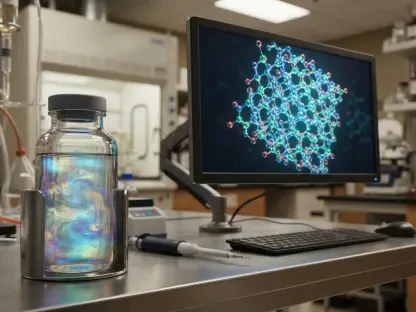
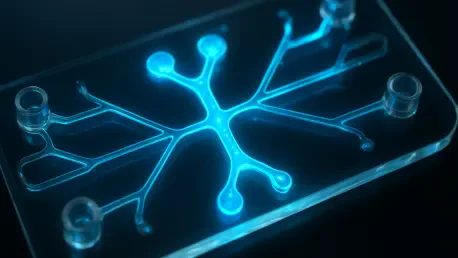
To bridge the gap between abstract biological theories and observable reality, bioengineers designed a microfluidic platform that replicates the complex architecture of human bone. This “bone marrow-on-a-chip” utilizes microscopic channels, roughly the width of a single human hair, to facilitate the precise flow of nutrient-rich fluids and chemical signals. Unlike traditional two-dimensional petri dishes, this three-dimensional environment successfully mimics the vascular networks and interstitial pressures found within living tissue. By recreating these physical conditions, the platform provides a high-fidelity stage for studying how cells move and interact in a setting that feels biologically “at home.”
This technological achievement was crucial because it moved the focus away from isolated cellular behavior and toward a holistic understanding of how the environment itself dictates the fate of the immune cells residing within it. The result is a controlled laboratory setting that offers the transparency of a microscope slide with the complexity of a living organ. This platform allows for the precise manipulation of oxygen levels, fluid shear stress, and nutrient gradients, which are all vital factors in maintaining the health of delicate human plasma cells. By 2026, this tool has become a standard for testing how different drugs and vaccines interact with the deepest layers of the human immune system.
Recreating the Environment: The Synergy of Organoid Technology
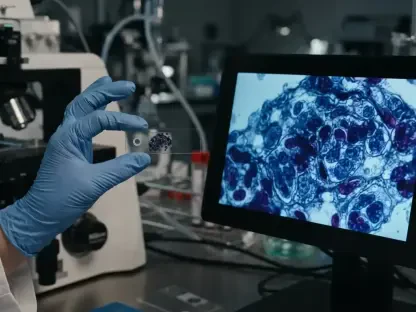
The true power of this microfluidic model lies in its integration with lab-grown miniature tissues known as lymphoid organoids. These organoids are engineered to produce human antibody-secreting plasma cells, which are then introduced into the chip’s vascular channels. This synergy allows for the first-ever direct observation of how these specialized cells navigate from the bloodstream into their protective bone marrow niches. Researchers can now track individual cells in real-time as they respond to specific gradients of cytokines and other signaling molecules. This level of detail was previously impossible, as standard imaging techniques could not penetrate natural bone without destroying cells.
By 2026, the refinement of these organoid-on-a-chip systems has revolutionized the field of immunoengineering, providing a reliable proxy for human clinical trials. This methodology ensures that observations are grounded in human-specific biology, avoiding the common pitfalls associated with translating results from mouse models to human medicine. The ability to populate a synthetic bone environment with human-derived immune cells means that researchers can observe the specific “handshake” between a plasma cell and its surrounding stromal support. This breakthrough has provided a clearer understanding of the survival signals that keep our immune memory intact for decades, even in the absence of recurring infections.
Redefining Cellular Behavior in the Marrow
From Passive Residents: The Shift to Stop-and-Go Motion
For many years, the scientific consensus held that once plasma cells reached the bone marrow, they became sedentary inhabitants of their specific niches. The prevailing textbook description portrayed these cells as stationary units that remained locked in place for the duration of their long lives. However, the latest live-cell imaging data has thoroughly debunked this static model. Observations revealed that plasma cells actually engage in a surprising “stop-and-go” migration pattern. They do not simply find a spot and stay there; instead, they move through the marrow’s intricate spaces with purpose. This discovery suggests that the cells are active participants in their own survival.
This kinetic behavior indicates that the maintenance of immune memory is far more energetic than previously suspected. The bone marrow acts less like a warehouse for stored cells and more like a bustling city where individuals must find the right neighborhood to thrive and remain productive. This movement allows cells to optimize their position relative to the nearest blood vessel or stromal cell, ensuring they receive a continuous supply of the factors required for antibody synthesis. By redefining these cells as active explorers, the research has changed how scientists approach the problem of immune longevity, shifting focus toward the mechanical and chemical cues that guide this constant cellular motion.
The Search for Safe Harbors: Active Selection and Persistence
The active migration of plasma cells serves a critical biological function: the search for “safe harbors.” These specific microenvironments within the marrow provide the biochemical cocktails necessary to prevent cell death and maintain long-term antibody production. The imaging data showed that cells pause for extended periods in certain areas, sampling the local signals before either settling down or moving on to a different location. This suggests an active selection process where cells “audition” different niches to ensure they are receiving the correct survival cues. By understanding that these cells are mobile, scientists can now investigate what specific chemical attractants draw them to these locations.
This paradigm shift from passive storage to active residence opens new doors for investigating how external factors, such as nutrition, stress, or secondary infections, might disrupt this search for survival signals. If a cell cannot find a suitable harbor, it may perish, leading to a permanent loss of the specific immune memory it was programmed to protect and maintain. Furthermore, this discovery explains why some immune memories are more robust than others. Cells that successfully navigate to the most nutrient-rich and stable “safe harbors” are likely the ones that provide protection for sixty or seventy years, while those that fail to find a stable home are lost shortly after a vaccination or infection.
The Strategic Management of Immune Sanctuaries
Spatial Specialization: The Perivascular and Endosteal Ecosystem
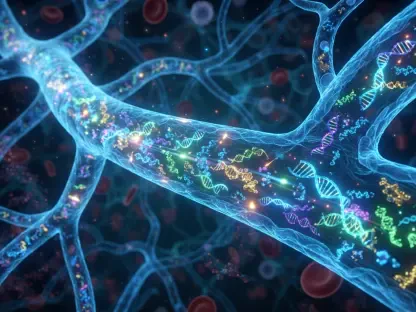
The research successfully mapped two distinct neighborhoods within the marrow that play complementary roles in immune cell longevity: the perivascular niche and the endosteal niche. The perivascular niche, which surrounds the network of blood vessels, acts as the primary destination for incoming plasma cells. This area is exceptionally rich in survival signals and serves as a bustling hub where cells can readily access nutrients and communicate with systemic signals. It functions as a protective sanctuary that encourages cells to persist and continue their vital work of antibody secretion. On the other hand, the endosteal niche resides along the internal surfaces of the bone.
This region appears to govern the mechanics of cell migration and determines how long a cell is retained within a particular segment of the marrow. Together, these two zones create a balanced ecosystem that can support a diverse array of immune cells simultaneously. This spatial organization ensures that the marrow does not become overcrowded or inefficient, maintaining order within a highly complex tissue. This blueprint of bone marrow infrastructure explains why certain immune memories last a lifetime while others fade more quickly. If the signals in these specialized zones are strong and the physical architecture remains intact, the memory persists. However, if the balance between these two niches is disrupted, the capacity of the marrow to act as a reservoir is compromised.
Clinical Innovations: Applying Bone Marrow Dynamics to Therapy
The ability to observe these niches in real-time allowed for a significant shift in clinical strategies regarding vaccine durability and oncology. Researchers identified that by manipulating the specific signals within these “safe harbors,” they could potentially extend the lifespan of vaccine-induced protection. This approach offered a clear path toward reducing the global dependency on frequent boosters. Furthermore, the findings provided a new framework for treating blood cancers like multiple myeloma by targeting the survival cues that malignant cells hijack for their own persistence. The study concluded that the bone marrow functioned as a vibrant, communicative ecosystem rather than a passive storage site.
These breakthroughs suggested that the next generation of therapies should focus on environmental rejuvenation to combat age-related immune decline. By 2026, these organ-on-a-chip platforms successfully demonstrated that maintaining the integrity of the perivascular and endosteal regions was the key to securing long-term biological defense. Scientists moved closer to a future where chronic immune failures were managed by restoring the natural sanctuary of the human body. Future efforts were directed toward identifying the precise molecular keys that unlock these niches for therapeutic entry, allowing for the direct delivery of repair signals to aging bone marrow. This progress marked the transition from treating the symptoms of waning immunity to fixing the architectural foundations of human health.