
Maintaining rigorous audit logs and intrusion detection systems is essential for providing real-time alerts against mutational cyberattacks that adapt to standard defenses. As medical imaging becomes the central nervous system of modern healthcare, the complexity of its digital architecture has turned it into a primary target for global cybercriminals. The Society for Imaging Informatics in Medicine (SIIM) and the American College of Radiology (ACR) have responded by introducing comprehensive guidelines designed to move cybersecurity from a back-office IT concern to a fundamental pillar of patient safety. Since the digital revolution transformed film into pixels, the surface area for potential attacks has expanded exponentially, providing malicious actors with numerous entry points. Recent data confirms that healthcare is currently the most targeted sector worldwide, with ransomware incidents frequently disrupting critical diagnostic workflows and delaying time-sensitive treatments. These new defensive strategies emphasize that protecting imaging data is not just about safeguarding privacy, but about ensuring the continued availability of life-saving medical interventions in an increasingly hostile digital landscape. By formalizing these defensive strategies, professional bodies are providing a much-needed roadmap for navigating an era where a single compromised diagnostic workstation can halt an entire healthcare system’s capabilities.
Assessing the Vulnerabilities of Modern Imaging
The Complexity: Digital Workflows
Radiology’s technical landscape is defined by its massive interconnectedness, where the journey of a single diagnostic study involves a series of high-stakes data handoffs. From the moment a clinician enters a requisition into the Electronic Health Record (EHR), a complex chain of HL7 and DICOM messages is triggered, routing patient data through scheduling systems, modality worklists, and eventually to the Picture Archiving and Communication System (PACS). This intricate web of software integrations means that a vulnerability in one component can jeopardize the entire imaging pipeline, allowing an attacker to move laterally across the hospital network. Security professionals now advocate for a deeper understanding of these clinical workflows, recognizing that standard IT defenses often lack the granularity required to monitor specialized medical protocols. By mapping every touchpoint in the imaging lifecycle, departments can better identify where data is most at risk and implement targeted controls that protect the integrity of the diagnostic record without slowing down the pace of patient care.
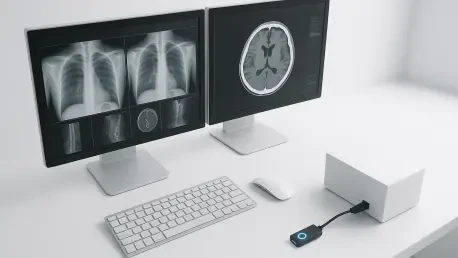
The physical perimeter of modern radiology is equally challenging to defend, consisting of an expansive array of networked hardware such as MRI machines, CT scanners, and mobile imaging units. These devices are effectively high-powered workstations running specialized operating systems that may not always be compatible with standard enterprise security software. The presence of diagnostic workstations, high-resolution monitors, and bedside tablets further complicates the defensive posture, as each device represents a potential entry point for a network-based attack. Because many of these assets have long lifecycles, hospitals often find themselves maintaining legacy equipment that lacks modern encryption or robust authentication features. To mitigate these risks, the latest guidelines recommend the strict segmentation of medical devices into isolated VLANs, which prevents a compromised scanner from becoming a gateway to the broader hospital infrastructure. Continuous monitoring of device traffic patterns is also essential, as any deviation from a scanner’s normal communication behavior can serve as an early warning sign of a sophisticated intrusion or malware infection.
Emerging Threats: The Age of AI
The rapid adoption of Artificial Intelligence (AI) in radiology has introduced a sophisticated new class of vulnerabilities that traditional security measures are often unequipped to handle. One of the most concerning developments involves poisoned pixels, a type of adversarial attack where subtle, imperceptible modifications are made to a medical image to trick an AI algorithm into providing an incorrect diagnosis. These manipulations can add or remove critical findings, such as pulmonary nodules or fractures, leading to potentially catastrophic clinical outcomes while remaining invisible to the human eye. Similarly, prompt injection attacks targeting the large language models used for automated reporting can cause the system to output misleading or malicious information. These high-tech threats represent a shift from simple data theft to the manipulation of clinical integrity, where the goal of the attacker is to undermine the reliability of the diagnostic process itself. Defending against these AI-specific risks requires the implementation of robust data validation techniques and the use of redundant algorithms to cross-verify results.
While high-tech AI threats capture headlines, more traditional security gaps continue to pose a daily threat to the integrity of the imaging environment. Stolen or weak administrative credentials remain one of the most common vectors for initial network penetration, often achieved through targeted social engineering or credential stuffing. Once inside, attackers can leverage the open nature of many clinical environments to move horizontally across the network. Furthermore, the persistent use of unvetted physical media, such as USB drives and CDs for sharing patient studies, creates a recurring risk of malware injection. Despite the availability of secure cloud-based sharing platforms, many facilities still rely on these physical formats, which can easily bypass network-level security controls. Addressing these low-tech vulnerabilities is just as critical as defending against AI manipulation, requiring strict policies regarding the use of portable storage and the implementation of multi-factor authentication for every access point. The goal is to close the gap between the sophisticated digital tools used for diagnosis and the basic security hygiene that often lags behind.
Implementing a Layered Defense Model
Physical Safeguards: Technical Protections
A truly resilient defense strategy for radiology rests on a multi-layered approach, often described as a three-legged stool model, which begins with robust physical and technical safeguards. Physical security is the most basic yet frequently overlooked layer, encompassing the restriction of access to server rooms, wiring closets, and diagnostic equipment consoles. For example, disabling unused USB ports on diagnostic workstations and medical devices is a critical step in preventing the manual injection of malware by unauthorized individuals or well-meaning staff members. Moreover, high-traffic areas such as reading rooms must be secured with badge-access systems to ensure that only authorized personnel can interact with specialized hardware. These physical measures act as the first line of defense, preventing walk-up attacks that can bypass even the most sophisticated digital firewalls. By treating every physical interface as a potential vulnerability, organizations can significantly reduce the risk of internal compromise or the accidental introduction of malicious software through physical contact with clinical systems.
Complementing physical security are the technical protections that govern how data moves and who is permitted to access it. Organizations must implement rigorous identity and access management (IAM) systems that utilize the principle of least privilege, ensuring that users and devices only have the access necessary for their specific roles. Continuous network monitoring, powered by advanced security information and event management (SIEM) tools, is essential for identifying anomalous behavior in real time, such as a sudden spike in outbound traffic from a PACS server or unauthorized login attempts. Since cyber threats are constantly evolving, these digital defenses must remain highly adaptive, employing machine learning to recognize the signatures of new hacking techniques as they emerge. Furthermore, end-to-end encryption for data both at rest and in transit is no longer optional; it is a fundamental requirement for maintaining the confidentiality of sensitive patient information. By integrating these technical layers with physical controls, radiology departments can create a formidable barrier that is difficult for attackers to penetrate without immediate detection.
Administrative Governance: The Human Element
Administrative safeguards are designed to address the human element, which statistics consistently show is the most frequent point of failure in the security chain. This involves more than just periodic software updates; it requires a comprehensive framework for regular risk assessments and the establishment of clear, enforceable security policies. Staff training is a cornerstone of this effort, moving beyond generic compliance videos to specialized training that helps radiologists and technologists recognize the specific signs of social engineering and sophisticated phishing attempts tailored to the medical environment. For instance, employees should be trained to identify fraudulent requests for patient data or unusual system behavior that might indicate an ongoing breach. By fostering a culture of questioning by default, organizations can empower their workforce to act as an active part of the defensive perimeter. When every member of the radiology team understands their role in maintaining cybersecurity, the likelihood of a successful attack stemming from human error is dramatically reduced, creating a more vigilant and resilient clinical environment.
Effective administrative governance also extends to the management of third-party vendors, who often have remote access to sensitive imaging systems for maintenance and updates. The new guidelines advocate for holding these external partners to the same rigorous security standards as the internal IT department. This includes requiring a cybersecurity bill of materials (CBOM) for all medical devices and software, which provides a detailed list of every software component, library, and driver included in a product. Having a CBOM allows hospital security teams to quickly identify whether a newly discovered vulnerability, such as a flaw in a common open-source library, affects their specific equipment. Furthermore, service level agreements should explicitly define the vendor’s responsibilities during a security incident, including timelines for patching and protocols for notification. By integrating these third-party requirements into the procurement process, healthcare organizations can ensure that every new piece of technology brought into the facility has been properly vetted and is equipped with the necessary tools for long-term security management.
Managing Incidents and Building Resilience
Operational Continuity: Restoring Systems
Even the most sophisticated defenses cannot guarantee complete immunity, making it essential for radiology departments to have a comprehensive plan for maintaining operations during a successful breach. A major ransomware attack can paralyze a hospital network for weeks, cutting off access to the PACS, EHR, and digital reporting tools. To counter this, organizations must develop specific protocols for downtime operations, which outline how imaging services will continue when digital systems are unavailable. This involves equipping scanners with local, external storage solutions that allow for the temporary retention of images without a network connection. Furthermore, clinical teams must establish clear procedures for manual workflow management, including the use of paper requisitions and the physical delivery of diagnostic findings to referring physicians. Preparing for these scenarios in advance ensures that patient care does not come to a complete standstill, allowing critical services such as emergency trauma imaging to proceed even while the primary network is undergoing forensic investigation or restoration.
Recovering from a major cyberattack is rarely as simple as rebooting the system or restoring from a backup; it is a complex process that requires intensive forensic oversight. Before any data can be restored, incident response teams must identify clean recovery points to ensure that the malware or the attacker’s backdoors are not reintroduced into the environment. This often involves scanning millions of files and thousands of system images for signs of contamination, a task that can take days or even weeks depending on the scale of the breach. In some cases, hardware that has been deeply compromised may need to be completely replaced or wiped and rebuilt from scratch. This forensic rigor is essential to prevent a secondary attack, where an adversary waits for the system to be restored before re-activating their malicious payloads. The restoration phase is thus a race between the clinical need for system availability and the technical requirement for absolute security, requiring constant communication between IT experts and hospital leadership to manage resources.
Simulation Exercises: A Culture of Preparedness
To ensure that downtime and restoration plans are effective, the new guidelines emphasize the importance of proactive war-gaming and simulation exercises. These drills involve creating realistic cyberattack scenarios where key personnel must respond to a simulated network failure, allowing them to identify flaws and bottlenecks in their existing plans. For example, a simulation might reveal that while the IT team can restore the PACS within 24 hours, the clinical staff has no way to communicate results to the surgical team in the interim. By uncovering these disconnects in a controlled environment, hospital leadership can adjust their strategies and invest in the necessary tools or training before a real crisis occurs. These exercises also help to build muscle memory among staff, reducing the likelihood of panic and ensuring that everyone knows exactly what their responsibilities are when the system goes dark. Regular war-gaming transforms the response plan from a static document on a shelf into a living, breathing strategy that is capable of evolving alongside the threat landscape.
The adoption of these comprehensive guidelines represented a fundamental turning point for the radiology community, shifting the focus from simple compliance to an active posture of resilience. Leaders within the field recognized that the complexity of modern imaging workflows required a dedicated, multi-layered defense strategy that addressed both the high-tech threats of the AI era and the enduring risks of human error. Organizations that prioritized these strategies found themselves better equipped to handle the surge in ransomware incidents, maintaining clinical continuity even when their primary networks were targeted. The integration of the cybersecurity bill of materials became a standard part of procurement, ensuring that every piece of medical equipment was vetted for security from the moment it entered the hospital. Through regular war-gaming and a commitment to staff education, healthcare providers successfully bridged the gap between IT security and patient safety. These proactive measures ensured that the integrity of the diagnostic process remained intact, safeguarding the trust that patients placed in the digital healthcare ecosystem during a period of unprecedented digital hostility.