
The intricate web of human blood vessels stretches for nearly sixty thousand miles, creating a labyrinth that modern surgical instruments still struggle to navigate with full precision. While cardiovascular medicine has made extraordinary leaps in the last several years, the fundamental reliance on manual, tethered tools often leaves the most delicate regions of the circulatory system unreachable. A blockage in a major artery can be addressed with relative speed, yet the microscopic branches that sustain vital organ tissues remain a “no-man’s-land” for traditional catheters. As the industry moves toward a new era of autonomous medical intervention, the development of nanorobotic systems represents a shift from invasive plumbing to intelligent, microscopic navigation. These tiny machines are designed not just to travel where steel cannot go, but to interact with biological threats at a molecular level, offering a level of specificity that was previously relegated to the realm of science fiction.
Challenges in Modern Clot Removal
The Constraints of Traditional Mechanical Interventions
Currently, the standard of care for acute ischemic events involves the use of aspiration catheters and stent retrievers, which have proven highly effective in clearing large-vessel occlusions. These devices rely on mechanical force to physically pull or suck a clot out of the vascular space, providing immediate relief to downstream tissues. However, the inherent stiffness of these tethered tools creates a significant ceiling for their utility; they simply cannot bend sharply enough to enter the distal branches where many smaller, yet equally devastating, clots reside. When a surgeon encounters a vessel that is too narrow or too tortuous, the procedure often hits a dead end, forcing a reliance on systemic thrombolytic drugs. These medications, while helpful, circulate throughout the entire body and increase the risk of internal bleeding, highlighting a desperate need for a more localized and flexible approach to mechanical thrombectomy.
Beyond the physical reach of the instruments, the mechanical interaction between a catheter and the delicate vessel wall poses a constant risk of endothelial damage. Even when a tool successfully reaches a clot, the process of dragging the blockage out can scrape the inner lining of the artery, potentially leading to long-term complications like restenosis or localized inflammation. Furthermore, the reliance on manual control means that the success of the procedure is heavily dependent on the individual skill and steady hand of the clinician. This variability in outcomes has pushed researchers to look for solutions that do not require a physical “leash” to the outside world. By removing the tether, it becomes possible to envision a system that glides through the bloodstream without exerting unnecessary pressure on the vascular architecture, thereby preserving the integrity of the patient’s circulatory health while still achieving the primary goal of rapid recanalization.
Residual Risks and the Microcirculation Barrier
Even when the primary blockage is cleared from a major artery, patients frequently suffer from what is known as the “no-reflow” phenomenon, where blood fails to return to the tissue. This occurs because fragments of the original clot often break away during the mechanical removal process, drifting further downstream until they lodge in the microvasculature. These microscopic emboli act like tiny dams in the smallest capillaries, and because they are far too small for any catheter to reach, they cause persistent ischemia that can lead to permanent organ damage or cognitive decline in stroke victims. Traditional medicine has lacked a targeted way to address these secondary blockages, often leaving clinicians to simply wait and hope that the body’s natural processes can dissolve the debris. This gap in treatment efficacy is where autonomous microsystems are poised to make their most significant impact by hunting down these fragments at the source.
The challenge of microcirculation is further compounded by the dense, fibrous nature of aged clots, which become increasingly resistant to standard chemical dissolving agents over time. These “hard” clots act as physical barriers that prevent life-saving oxygen from reaching distal cells, yet the tools required to break them down must be small enough to fit within a space no wider than a human hair. Previous attempts to use high-dose drug therapy have often failed to penetrate the core of these dense fibrin structures, as the lack of flow prevents the medication from reaching the center of the blockage. Consequently, a new class of intervention is required—one that can provide localized mechanical agitation to “drill” into the clot and increase the surface area available for chemical action. By combining mechanical disruption with targeted drug delivery, nanobots offer a dual-action strategy that addresses the limitations of both pharmacology and traditional surgery in a single platform.
The Evolution of Untethered Robotic Systems
From Passive Carriers to Active Magnetic Swarms
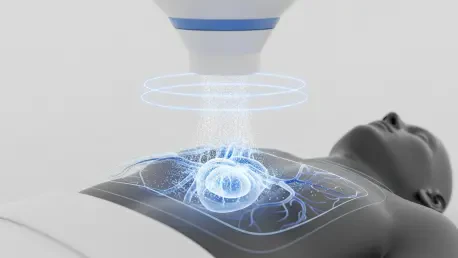
The transition toward autonomous treatment began with the development of passive nanocarriers, which were essentially microscopic envelopes designed to transport drugs directly to the site of a clot. While these particles were a major improvement over systemic injections, they were largely at the mercy of the bloodstream’s natural flow, making it difficult to target blockages in areas with low or non-existent perfusion. To solve this, engineering teams have developed active particles that can be “steered” using external magnetic fields. These robots are often constructed from biocompatible polymers infused with magnetic nanoparticles, allowing a clinician to guide them through the vascular maze using a specialized imaging and control suite. This active movement allows the bots to swim against the current or navigate into stagnant zones, ensuring that the therapeutic payload reaches the exact coordinates of the blockage without being diluted.
Perhaps the most revolutionary aspect of this technology is the ability to organize these individual nanobots into cohesive swarms that exhibit collective intelligence. Instead of relying on a single large device, a physician can deploy thousands of tiny robots that work in tandem to disassemble a clot from the outside in. These swarms can change their shape—thinning out to pass through narrow gaps or expanding to cover the entire face of a blockage—providing a level of adaptability that no solid tool could ever match. Once the clot has been mechanically disrupted and the medication has been delivered, the magnetic field can be reversed to draw the swarm back into a waiting catheter for safe removal from the body. This “deliver, amplify, and retrieve” protocol ensures that no foreign materials are left behind in the patient’s system, minimizing the risk of long-term immune responses while maximizing the immediate success of the procedure.
Actuation Technologies and Autonomous Control
Modern navigation has successfully integrated multimodal actuation techniques that utilize acoustic and optical energy to power these microscopic machines. Ultrasound-based systems, for instance, can trigger the vibration of microbubbles within the swarm, creating localized micro-jets that physically punch holes in the fibrin mesh of a clot. This mechanical “shaking” significantly speeds up the dissolution process, turning a procedure that once took hours into one that takes minutes. Meanwhile, light-activated systems use photothermal effects to slightly warm the area around the clot, softening the tissue and making it more susceptible to both mechanical disruption and chemical breakdown. These diverse energy sources allowed for a customized treatment plan where the type of force used was matched to the specific density and age of the patient’s blockage, ensuring a high success rate even for difficult cases.
The medical community successfully transitioned from experimental trials to the widespread adoption of micro-robotic protocols for emergency stroke and cardiac care. By integrating real-time MRI feedback with autonomous swarm coordination, clinicians moved beyond the limitations of manual catheterization and addressed the persistent dangers of the no-reflow phenomenon. This evolution allowed for a hybrid surgical environment where traditional tools handled large-vessel access while nanobots navigated the delicate microvascular network. As these technologies matured, the focus shifted toward preventative maintenance, using biodegradable bots to clear early-stage arterial plaque before it could trigger a major event. These advancements established a new standard of precision medicine, ensuring that even the smallest vessels were no longer beyond the reach of life-saving intervention. The path forward was paved by this synergy of robotics and biology, redefining the boundaries of treatment.