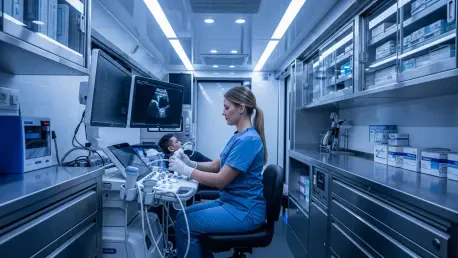

The systematic destruction of stationary healthcare facilities across vast stretches of Ukrainian territory has left millions of civilians without reliable access to essential life-saving medical services. Since the escalation of the conflict, more than 1,500 hospitals and clinics have sustained significant damage, necessitating a rapid shift toward flexible and decentralized health interventions that can operate in high-risk zones. Mobile medical units have emerged as a critical response to this crisis, functioning as high-tech clinics on wheels that penetrate areas where the traditional medical grid has completely collapsed. These units are not merely transport vehicles but are sophisticated environments equipped with point-of-care testing, specialized diagnostic tools, and pharmacy dispensers. By reaching the most isolated elderly populations and displaced families, these mobile facilities serve as the primary link between vulnerable citizens and the broader national health system. This strategy represents a fundamental change in how emergency care is delivered.
Strategic Deployment: Reaching the Frontline Communities
The operational success of these units depends heavily on their specialized technical configurations, which often include reinforced chassis and independent power systems designed for rugged terrain. Each vehicle is typically staffed by a multidisciplinary team consisting of a family physician, a nurse, and often a psychologist, providing a holistic approach to trauma-informed care in recently liberated regions. These teams carry advanced diagnostic hardware, such as handheld ultrasound machines and portable ECG monitors, allowing for immediate assessment of cardiovascular health and internal injuries that would otherwise go undetected. Furthermore, the integration of cold-chain storage within the units ensures that essential vaccines and insulin remain stable regardless of the external environmental conditions. This technical self-sufficiency allows medical professionals to conduct full-scale screenings and minor surgical procedures in locations that lack running water or a functioning electricity grid. This capability is vital.
Building on this technical foundation, the logistics of deployment require a high degree of coordination between international humanitarian organizations and the local Ministry of Health. In regions like Kharkiv and Kherson, where infrastructure damage is most severe, these units follow a rotating schedule to ensure that dozens of remote villages receive a visit at least once every two weeks. This predictable presence is vital for managing chronic conditions like hypertension and diabetes, which often worsen during periods of prolonged stress and lack of medication. The mobility of these clinics also allows them to evacuate quickly if security conditions deteriorate, protecting both the staff and the valuable medical equipment. By mapping out medical deserts and prioritizing them for these mobile patrols, the healthcare system can maintain a level of coverage that prevents a total public health collapse. This targeted approach has already facilitated hundreds of thousands of medical consultations.
Innovative Infrastructure: Resilience in the Healthcare Sector
The effectiveness of mobile medical interventions is significantly amplified by the use of satellite-based internet services, which provide reliable connectivity in remote areas. This digital backbone allows field medics to connect with specialized surgeons and consultants in urban centers or abroad for real-time second opinions on complex cases. High-resolution imaging can be transmitted instantly from the mobile unit to a central hospital database, ensuring that a patient’s medical history is updated even if they are seen in a field setting. Moreover, the adoption of electronic health records within these units ensures that there is a seamless transition of care when a patient is eventually moved to a more permanent facility. This technological integration bridges the gap between basic field medicine and sophisticated clinical practice, ensuring that patients receive the same standard of evidence-based care as those in the capital. This progress was essential for maintaining medical equity in all regions.
Educational initiatives played a crucial role in this transition by training a new generation of medical professionals specifically in the nuances of expeditionary and mobile medicine. These specialized training programs focused on the use of compact diagnostic tech and the management of patients in non-traditional settings, ensuring that the workforce was prepared for future challenges. The government also streamlined regulatory frameworks to allow for the rapid certification of new mobile medical technologies, encouraging innovation in portable health solutions. Financial mechanisms were put in place to provide ongoing funding for the maintenance of these fleets, recognizing them as essential national assets rather than short-term expenditures. By moving away from a purely reactive stance, the healthcare system developed a proactive capability that anticipated population shifts and potential disruptions. The government outlined a plan to expand the fleet from 2026 to 2028 to cover every district.