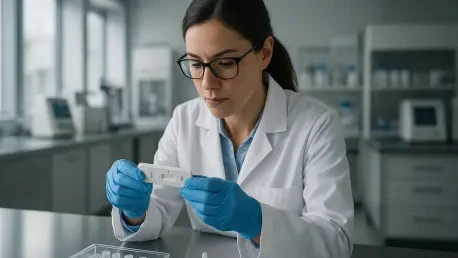

Regulatory initiatives for standardized organoid modeling emphasize the need for robust methodologies that minimize the impact of the human factor on cell health. While the landscape of modern cell biology has been transformed by sophisticated genetic engineering tools, the fundamental day-to-day

Implementing robust safety guardrails is now a primary focus for organizations developing foundation models capable of manipulating genetic information. As of 2026, the intersection of machine learning and synthetic biology has reached a critical inflection point where the capacity to simulate life

The integration of near-infrared light with gold nanoparticles allows clinicians to thermally destroy cancer cells from the inside out without harming surrounding tissue. This technological breakthrough addresses a critical need in oncology, as colon cancer currently maintains its position as one

The ability to produce deciliter-scale volumes of organized synthetic tissue within minutes represents a major breakthrough in materials science scalability. This advancement is driven by the development of Jammed Interconnected Bilayer Emulsions, commonly known as JIBEs, which mark a significant

For Tim Andrews, a 66-year-old patient with Type O blood, the experiment served as a vital bridge to a human transplant after two years of exhaustive waiting. This milestone, achieved through the collaboration of researchers and surgeons at Massachusetts General Hospital, signals a pivotal shift in

Mapping the adult human intestine through spatial atlases is essential for bridging the biological gap between mouse models and human clinical applications. The human intestine remains one of the most biologically active environments in the body, defined by a relentless and necessary cycle of