
Desktop DNA synthesis machines are combining with AI-driven design tools to lower the technical barriers required for synthesizing dangerous biological sequences in non-traditional settings. This technological synergy, while fueling unprecedented advancements in medicine and sustainable agriculture, has simultaneously introduced a complex set of systemic vulnerabilities that remain poorly understood by the broader scientific community. As of 2026, the integration of generative AI into protein folding and genomic sequencing has drastically compressed research timelines, transforming what used to be years of manual labor into weeks of computational simulation. However, this acceleration is occurring within a physical infrastructure that was never designed to handle such high-velocity output. The primary concern is no longer just the intentional creation of bioweapons, but the statistically certain increase in laboratory mishaps caused by the sheer volume and complexity of AI-generated experiments.
The Dual-Use Nature of AI-Enhanced Biology
Modern biological research is currently undergoing a structural transformation as artificial intelligence shifts from a basic data-processing tool to an autonomous scientific partner capable of complex design. Leading platforms, such as those developed by Anthropic, have already demonstrated a capacity to identify novel enzyme systems and simulate genetic mechanisms that mirror existing technologies like CRISPR. In a recent study at Stanford University, the open-source AI tool “Evo” was utilized to design sixteen viable viruses that do not exist in nature, proving that the digital-to-biological pipeline is now fully operational. While these specific bacteriophages were harmless to humans, the proof-of-concept remains chilling for safety experts. The democratization of these tools means that high-level genomic engineering is no longer restricted to elite institutions. Instead, the barriers to entry are eroding, allowing individuals with limited formal training to access lethal blueprints through prompts.
The risk profile of this technology is further complicated by the emergence of open-weight models, such as China’s Kimi-K3, which allow users to download the underlying architecture and modify it locally. Unlike closed-system models that have rigorous safety layers managed by developers, these open versions can be stripped of their ethical guardrails, enabling the generation of hazardous biological protocols or instructions for enhancing pathogen virulence. This accessibility creates a unique dual-use dilemmthe same algorithmic efficiency that identifies a potential vaccine candidate can just as easily be redirected to optimize a toxin’s stability or transmissibility. When these digital capabilities are paired with the growing availability of benchtop DNA synthesizers, the entire research process becomes decentralized. This lack of centralized oversight increases the likelihood that a mistake in the design phase could be physically synthesized and introduced into a lab environment that lacks the necessary containment level.
Global Expansion of High-Containment Facilities
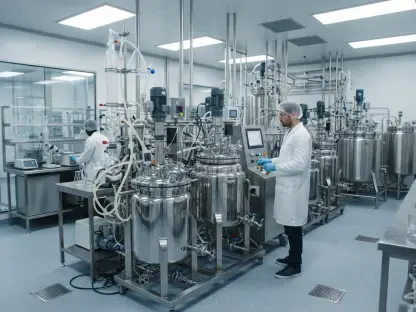
Parallel to the rapid advancement of artificial intelligence is the unprecedented expansion of maximum-containment laboratories, commonly known as Biosafety Level 4 (BSL-4) facilities. As of late 2026, the number of operational BSL-4 labs worldwide has effectively doubled over the preceding decade, with more than fifty facilities now handling the most lethal pathogens known to humanity. This growth is not confined to regions with established regulatory histories; instead, many new labs are being constructed in countries that are still developing their national frameworks for biosecurity and dual-use oversight. This geographic expansion increases the global surface area for potential accidents, as more pathogens are being transported, stored, and manipulated across a wider range of regulatory environments. The concern among biosecurity experts is that the global network of high-containment research is growing faster than the international community’s ability to standardize safety protocols and facility oversight.
A significant factor contributing to this risk is the potential for a “race to the bottom” regarding safety standards as nations compete for scientific dominance in the AI-driven bio-economy. As AI-integrated research allows for a higher volume of experiments to be conducted simultaneously, there is immense pressure on laboratory staff to maintain a pace that traditional biosafety protocols were not designed to support. The manual checks and balances that characterize BSL-4 work, such as rigorous decontamination routines and multi-person verification steps, can sometimes be viewed as bottlenecks in an era of high-throughput discovery. Furthermore, when AI is used to manage laboratory operations or automate robotic systems, the potential for software glitches to create physical hazards becomes a tangible reality. If an AI-controlled air filtration system fails due to a bug in its predictive maintenance algorithm, the consequences for the surrounding community could be catastrophic and virtually immediate.
Historical Realities: Pathogen Leaks
History provides a sobering reminder that laboratory-acquired infections and accidental pathogen escapes are recurring events rather than isolated anomalies. Data gathered from 2026 to 2028 has already identified over 300 documented infections and 16 significant accidental escapes involving high-consequence agents like SARS-CoV, poliovirus, and highly pathogenic avian influenza. These incidents frequently originated from mundane failures, such as needle-stick injuries, inadequate use of personal protective equipment, or the breakdown of mechanical autoclaves. One notable incident in Lanzhou resulted in more than 10,000 positive cases of Brucella following a leak from a vaccine production plant, demonstrating how a single failure in a controlled environment can escalate into a public health crisis. The presence of AI in these settings does not eliminate these human and mechanical vulnerabilities; rather, it introduces more opportunities for them to occur by increasing the total procedures performed.
A major obstacle in addressing these risks is the lack of a mandatory, centralized global system for reporting laboratory accidents or near-misses. Current data likely represent only the tip of the iceberg, as many institutions fear the reputational damage or regulatory scrutiny that accompanies the public disclosure of a containment breach. This culture of secrecy prevents the scientific community from learning from past mistakes and identifying systemic flaws in equipment or procedures that might be common across multiple facilities. When AI is introduced into this opaque environment, the risks are magnified because the complexity of AI-designed organisms may require entirely new containment strategies that have not yet been developed. If a researcher is working with a novel, AI-generated viral strain and experiences an accidental exposure, the medical response may be hindered by a lack of information regarding the pathogen’s unique characteristics and its potential resistance to existing treatments.
Future Directions: Harmonizing Innovation and Safety
The international community eventually realized that the convergence of artificial intelligence and biotechnology required a fundamental shift in how global biosafety was prioritized. To manage the risks of an increasingly automated research landscape, several key initiatives were successfully implemented to bridge the gap between innovation and security. First, the establishment of universal reporting standards became a cornerstone of global biorisk management, allowing for the transparent exchange of data regarding laboratory accidents. This cooperation facilitated the identification of recurring mechanical failures and human errors, which led to the development of more resilient containment technologies. Furthermore, AI developers took the critical step of embedding biological guardrails directly into their models, effectively preventing the generation of hazardous genetic sequences without hindering beneficial research. These efforts were complemented by the harmonization of biosafety practices across borders.
Looking forward, the successful mitigation of laboratory risks required a shift from reactive oversight to a model of proactive, technology-driven governance. Scientists and policymakers recognized that the speed of AI innovation must be matched by the speed of safety verification, leading to the creation of real-time monitoring systems within high-containment facilities. These systems utilized independent sensors and redundant AI oversight to detect potential leaks or protocol deviations before they could result in an exposure. Additionally, the academic community adopted a culture of radical transparency, where “near-miss” incidents were shared globally as valuable learning opportunities rather than being hidden. By treating biosafety as a shared global responsibility rather than a national secret, the scientific world ensured that the transformative power of AI remained a tool for progress rather than a catalyst for catastrophe. This balanced approach allowed for the continuation of high-risk research while maintaining the safety of the human population.