
The inaugural Singapore Engineering Biology Week in October 2026 will showcase the nation’s progress in research translation and the bioeconomy. This landmark event serves as the backdrop for the unveiling of the National Centre for Engineering Biology, a specialized facility hosted at the National University of Singapore. With a funding injection of S$50 million, this initiative marks a pivot toward high-tech biomanufacturing from 2026 to 2033. The facility is designed to replace manual experimentation with a predictive paradigm driven by artificial intelligence. By leveraging these computational tools, researchers aim to transform renewable feedstocks into high-value specialty chemicals, effectively bypassing the limitations of traditional synthesis. This move ensures that Singapore remains at the forefront of the global race for sustainable industrial solutions and biological engineering excellence throughout the current decade.
Establishing a Collaborative National Ecosystem: Integrating Research and Industry
The operational success of the National Centre for Engineering Biology depends on a seamless integration of diverse scientific disciplines and institutional strengths. By functioning as a collaborative nexus, the center brings together heavyweights such as Nanyang Technological University, the Agency for Science, Technology and Research, and the Singapore Institute of Technology. This unified approach is essential for breaking down the traditional silos that often hinder the progress of complex biotechnological projects. Through shared resources and synchronized research goals, these organizations are working to streamline the path from initial discovery to commercial implementation. The focus remains on building a resilient innovation infrastructure that can support a burgeoning bioeconomy. By pooling the nation’s collective expertise, the hub ensures that breakthroughs are translated into viable products for the global marketplace.
Bridging the divide between small-scale laboratory experiments and large-scale industrial manufacturing is one of the most significant challenges in modern synthetic biology. To address this, the center emphasizes the development of scalable bioprocessing methods that can withstand the rigors of commercial production. This objective is closely tied to the national strategy of fostering a circular bioeconomy, where waste products are repurposed into valuable materials. The partnership with the Singapore Institute of Technology plays a pivotal role here, providing the necessary facilities for pilot-scale fermentation and downstream processing. These capabilities allow researchers to validate biological designs in environments that mimic real-world factory conditions. By proving that engineered microbes can operate efficiently at scale, the initiative provides a clear roadmap for industrial adoption, ensuring the nation remains a competitive player in the shift toward bio-based manufacturing.
Advancing Bioproduction: Predictive Design and High-Throughput Automation
At the heart of the center’s technological edge lies its commitment to the three fundamental pillars of biological engineering, starting with machine learning for predictive biodesign. Traditionally, genetic engineering has been a laborious process of trial and error, but the new framework utilizes AI models to simulate how specific genetic sequences influence cellular functions. This capability allows for the precise modeling of biological systems before any physical materials enter a test tube. Initial projects are targeting the production of specialty lipids and biosurfactants, which serve as sustainable alternatives to ingredients derived from fossil fuels. By predicting the behavior of complex metabolic pathways, scientists can optimize the yield of functional fatty acids used in sectors ranging from cosmetics to nutrition. This move toward a predictive, data-centric approach reduces the time and cost of developing new products, making the biomanufacturing lifecycle more efficient.
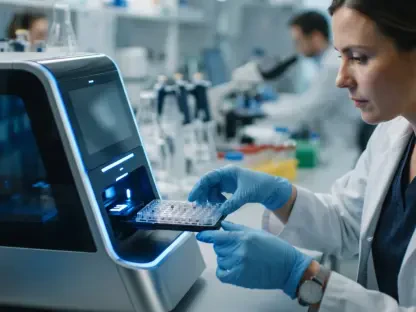
To complement the predictive power of artificial intelligence, the facility houses an Advanced Biofoundry that serves as its experimental engine. This laboratory environment is characterized by high-throughput automation, featuring robotic liquid handlers and colony pickers that execute the Design–Build–Test–Learn cycle with speed. By automating these repetitive tasks, the center can evaluate thousands of unique biological designs simultaneously, a feat impossible using manual labor alone. The data generated from these high-speed tests is fed back into machine learning models, creating a continuous loop of refinement. This integration of robotics and AI not only accelerates research but also lowers the carbon footprint of chemical production. By engineering microbes to act as microscopic factories, the facility demonstrates how biological processes achieve high precision while operating under milder conditions, leading to a cleaner and more sustainable industrial landscape.
Strengthening Digital Foundations: Standardization and Future Workforce Training
A robust digital framework is the backbone that supports all operations within the National Centre for Engineering Biology. Recognizing that high-quality, standardized data is the lifeblood of AI, the center has established an AI-Augmented Synthetic Biology Database. This repository ensures that every piece of research data collected across various teams is consistent, searchable, and ready for computational analysis. Furthermore, tools like the Synthetic Biology AI Designer and specialized enzyme informatics platforms have been deployed to facilitate secure, collaborative research into biocatalysts. These digital assets are instrumental in shortening the development cycle for new biological solutions, allowing for rapid iteration and testing. By setting international standards for data management, the initiative positions itself as a global leader in the field. This digital-first strategy ensures that information generated by the biofoundry is fully utilized to drive biotechnological innovation.
The establishment of this center successfully shifted the focus of regional biotechnology toward a more integrated and autonomous future. Throughout its initial operational phase, the initiative prioritized human capital by involving over 150 researchers and students in complex, real-world engineering challenges. These professionals gained critical experience at the intersection of AI and biology, ensuring a steady pipeline of talent for the evolving industrial sector. The project moved beyond theoretical research to provide actionable frameworks for the pilot-scale production of specialty chemicals and sustainable materials. Leaders in the field encouraged the adoption of these standardized digital tools to foster international collaboration. By demonstrating the feasibility of autonomous, AI-enabled design platforms, the center provided a clear blueprint for future industrial facilities. This proactive investment in infrastructure and people ensured that the nation was prepared to lead the bioeconomy.