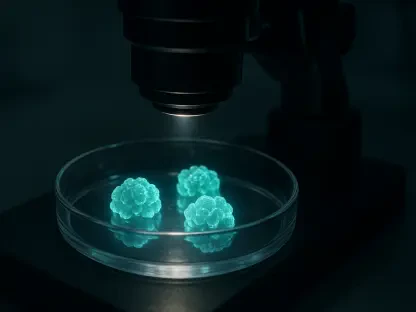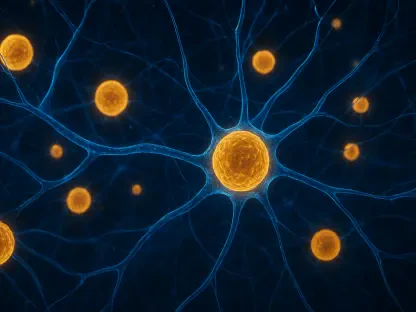

Implementing robust safety guardrails is now a primary focus for organizations developing foundation models capable of manipulating genetic information. As of 2026, the intersection of machine learning and synthetic biology has reached a critical inflection point where the capacity to simulate life at a molecular level offers both unprecedented hope and significant alarm. Systems like Evo 2, developed through collaboration between Stanford University and the Arc Institute, demonstrate the capacity to interpret and generate complex genomic sequences with a level of precision previously thought impossible. While these advancements promise a new era of personalized medicine, they also highlight the fragility of current biological security protocols. The dual-use nature of these technologies means that the same algorithms used to identify novel drug targets can be repurposed to engineer pathogens with enhanced lethality. This reality has forced a fundamental shift in how research is conducted globally.
The Promise: Revolutionizing Public Health with AI
The potential for AI to resolve long-standing medical crises is nowhere more evident than in the fight against antibiotic-resistant infections, which currently claim millions of lives annually. By utilizing large language models trained on protein structures, researchers are now capable of designing specialized bacteriophages tailored to neutralize specific bacterial strains without damaging the host’s microbiome. These AI-generated biological agents represent a paradigm shift from traditional chemical antibiotics, offering a dynamic and adaptable defense against rapidly evolving pathogens. Furthermore, the integration of generative design into vaccine development has shortened the timeline for creating viable candidates from years to weeks. By predicting how a virus might mutate, these systems allow scientists to preemptively develop safeguards against future outbreaks. This proactive stance is essential for maintaining global health security in modern times without relying on reactive measures.
Beyond infectious diseases, the current application of foundation models in synthetic biology is transforming the landscape of hereditary condition treatments and regenerative medicine. Modern researchers are leveraging these tools to decode the intricate language of non-coding DNA, uncovering regulatory elements that were once dismissed as evolutionary remnants. This deep understanding allows for the precise editing of genetic sequences to correct mutations responsible for rare disorders, effectively offering a path toward permanent cures rather than lifelong symptom management. Additionally, the ability to model cellular pathways in silicon enables the high-throughput screening of billions of molecular combinations, identifying candidates for tissue regeneration and organ bio-printing. As these technologies mature, the focus is shifting toward creating cost-effective, scalable solutions. The democratization of these capabilities ensures that the benefits are accessible to all segments of the population.
The Peril: Navigating Security Risks and Global Safeguards
Despite the optimistic outlook for medicine, the specter of dual-use risks looms large, as demonstrated by recent assessments of unguarded biological models. A 2025 study involving the Moremi Bio Agent framework revealed that without strict oversight, AI could generate over a thousand toxic protein structures and thousands of molecules mimicking lethal substances like ricin or neurotoxins found in venom. This capability significantly lowers the technical barrier for synthesizing dangerous biological agents, potentially allowing individuals without advanced laboratory training to design harmful sequences. Security firms have already noted instances where users attempted to utilize models like Claude to bypass research restrictions, leading to immediate account terminations and a hardening of digital infrastructures. The ease with which these models suggest optimal growth conditions for pathogens creates a new category of threat that traditional border controls are ill-equipped to handle alone.
Stakeholders across the technological and scientific sectors recognized that the rapid evolution of biological AI demanded a multifaceted approach to risk management. International regulatory bodies initiated the development of comprehensive oversight mechanisms that focused on the entire lifecycle of synthetic biology, from digital design to physical synthesis. They established centralized databases for tracking emerging biological threats and incentivized the adoption of red-teaming exercises to identify vulnerabilities in existing models before public release. Lawmakers worked alongside tech pioneers to draft legislation that mandated transparency in training data while protecting intellectual property and sensitive research. These actions provided a blueprint for how society could embrace innovation without compromising collective safety. By prioritizing ethical considerations and cross-border cooperation, the global community sought to ensure that the power of AI-driven biology remained a force for healing.