
A strategic framework for Western-led stability in the biological sciences is now a matter of national security rather than just a scientific pursuit. The global economy is currently undergoing a fundamental transformation as it moves away from traditional 20th-century heavy industries toward a sophisticated, 21st-century bio-economy. While policymakers often focus on revitalizing legacy sectors like steel and automotive manufacturing, the true source of future geopolitical power lies in the biological sciences. This shift envisions a world where Western expertise ensures global stability and economic security. By mastering the ability to grow products rather than simply building them, the West can redefine its industrial base and reclaim its position at the forefront of global innovation. This transition is not merely about changing how we manufacture goods; it is about rewriting the rules of global trade and resource management for many decades to come.
Countering the Shift Toward Adversarial Dominance
The Challenge of Chinese Industrial Expansion
China has aggressively positioned itself as the indispensable hub of the global bio-economy by investing heavily in the “picks and shovels” of life sciences. This strategy is realized through massive state support for Contract Development and Manufacturing Organizations, which have become the silent backbone of the international pharmaceutical industry. By offering subsidized infrastructure and streamlined regulatory pathways, these firms are systematically displacing Western incumbents who struggle with higher overhead and slower domestic scaling. Since early 2026, the volume of biological research being outsourced to these offshore entities has reached a critical threshold, leaving Western biotech firms in a vulnerable position where they own the intellectual property but lack the physical means to produce it at scale. This reliance creates a bottleneck where foreign interests can effectively control the pace and availability of essential medical breakthroughs across the globe.
This burgeoning dominance in biomanufacturing mirrors previous Chinese successes in the sectors of rare earth minerals and consumer electronics. In those instances, the West ceded its manufacturing capacity in exchange for lower costs, only to find itself strategically hamstrung when supply chains were later weaponized or disrupted by geopolitical friction. The current trajectory suggests a similar risk in the biological arena, where the loss of production capacity equates to a loss of national resilience. If the primary facilities for vaccine production and synthetic proteins are concentrated within a single adversarial territory, the West loses its ability to respond independently to health crises. Maintaining a competitive edge now requires more than just innovative laboratory work; it necessitates a robust and secure manufacturing ecosystem that ensures biological sovereignty is not traded for short-term economic convenience or corporate efficiency.
Moving Beyond Technological Nostalgia
A significant hurdle to Western leadership in this field is a persistent political fixation on reviving legacy manufacturing jobs that no longer reflect the modern economic landscape. While the historical importance of the automotive and steel industries cannot be denied, these sectors are no longer the primary engines of exponential growth. Many policymakers remain trapped in a 20th-century mindset, promising a return to traditional factory floors while ignoring the transformative potential of synthetic biology. Although silicon chips and artificial intelligence dominate the current high-tech discourse, they represent only a specific portion of the manufacturing potential that biological engineering offers. To achieve a genuine economic renaissance, leaders must broaden their vision to include the “Bio Belt,” where the intersection of data science and cellular biology creates new categories of wealth that are more resilient than old-world industrial roles.
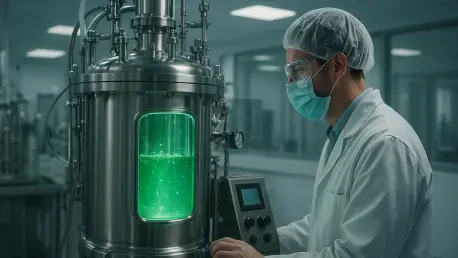
Embracing this new paradigm involves a shift toward a sustainable industrial model where local bioreactors and fermentation facilities replace centralized, carbon-intensive factories. Unlike traditional manufacturing, which often requires massive logistics networks, biomanufacturing can be localized and tailored to regional needs. This transition offers a viable pathway to bring technical jobs back to diverse regions that were previously hollowed out by deindustrialization. By utilizing agricultural waste or captured carbon as feedstocks for engineered microbes, communities can “grow” everything from high-performance textiles to sustainable aviation fuels. This decentralized approach not only reduces the environmental footprint of heavy industry but also creates a more flexible and robust economic architecture that is less susceptible to the global supply chain shocks that have plagued the international market since the turn of the decade and into the current year.
Establishing Strategic Sovereignty and Infrastructure
The Strategic Imperative of Biological Security
The establishment of a stable biological framework is a matter of national survival, requiring the West to set global standards for ethical innovation and secure its access to life-sustaining resources. As gene editing and synthetic biology technologies become more accessible, the potential for both immense benefit and significant harm increases. Without a coordinated effort to lead the development of these regulations, the world risks a “race to the bottom” where safety and ethics are sacrificed for rapid commercial gain. By taking the lead in setting international norms for genomic data privacy and biosafety, Western nations can ensure that these powerful tools are utilized for human flourishing rather than being co-opted for surveillance or biological warfare. This leadership role is essential for maintaining the moral and technological high ground in a world where biological capabilities are increasingly seen as the measure of a nation’s influence.
Furthermore, failing to secure domestic biological capacity leaves democratic nations dangerously reliant on adversarial regimes for healthcare, nutrition, and essential industrial materials. This dependency creates a strategic vulnerability that can be exploited during times of international tension, as observed in recent history with energy and electronics. If the critical components of the modern pharmacopeia or the primary sources of synthetic agricultural inputs are controlled by non-aligned powers, Western security is fundamentally compromised. Developing a secure and redundant domestic supply chain for biological products serves as a necessary firewall against coercive economic tactics. Ensuring that the West can produce its own antibiotics, critical enzymes, and biological fertilizers is not just a commercial objective; it is a foundational requirement for maintaining political independence and protecting the well-being of the population in an increasingly volatile global environment.
Scaling Innovation in the Physical Economy
The integration of biology and engineering allows for the creation of a new physical economy that is both high-performance and environmentally resilient. Through advanced biomanufacturing, it is now possible to produce superior materials that were previously impossible to manufacture using traditional chemical processes. These include self-healing coatings, ultra-lightweight structural proteins, and specialized chemicals designed at the molecular level for maximum efficiency. This shift moves the world toward a “bio-foundry” model, where the ability to design and scale biological organisms becomes the primary driver of economic terms in the 21st century. In this new era, the nation that masters the bio-foundry will dictate the standards of production, replacing the old-world reliance on resource extraction with a system built on intellectual property and biological precision. This represents a fundamental move from a world of scarcity to one of programmed abundance and sustainability.
To ensure future prosperity, the West focused on bridging the gap between research and commercial scale. From 2026 to 2028, policymakers prioritized the construction of domestic “bio-fabs” and the development of a workforce proficient in both biology and data science. This strategic pivot moved the economy away from a reliance on foreign manufacturing hubs and established a secure, values-aligned industrial ecosystem. The successful implementation of these initiatives demonstrated that long-term security depends on the ability to translate lab innovations into tangible products. Moving forward, nations must continue to provide robust tax incentives for biomanufacturing and establish international partnerships that facilitate the exchange of talent and ethical guidelines. These steps ensure that the biological revolution remains a force for stability, creating a resilient physical economy that is no longer vulnerable to external supply chain coercion.