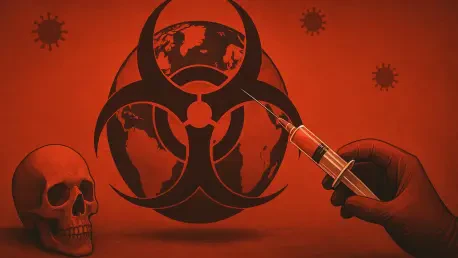

Boris Yeltsin admitted in 1992 that the Soviet Union had maintained a massive, covert biological weapons program despite being an original signatory of the BWC. This revelation shattered the illusion that international treaties alone could prevent the weaponization of biology. Today, the world faces a similarly precarious reality where the line between scientific research and catastrophic risk has become increasingly blurred. Recent reports of accidental exposures in high-security laboratories, such as a fatal case involving the pneumonic plague in a specialized facility, serve as chilling reminders that even regulated environments are not immune to failure. These incidents are not merely isolated tragedies; they represent a fundamental vulnerability in the global architecture designed to manage infectious agents. As biotechnology continues to advance at a breakneck pace, the shadow of past clandestine activities looms over modern efforts to ensure transparency. The intersection of historical deception and contemporary negligence creates a landscape where a single breach could trigger a crisis.
Institutional Deficiencies and Historical Deception
Structural Flaws in Global Oversight
The institutional framework supporting the Biological Weapons Convention is strikingly underpowered when compared to other international safeguards. While the Chemical Weapons Convention is bolstered by the Organization for the Prohibition of Chemical Weapons, which employs hundreds of specialized personnel and conducts rigorous on-site monitoring, the BWC operates with a skeletal staff of only a few individuals. This lack of organizational “teeth” means there are no mandatory declarations of sensitive facilities and no standardized procedures for regular inspections. Without a dedicated oversight body to verify the claims of signatory nations, the global community remains in a state of perpetual uncertainty regarding the true nature of biological research programs. This structural weakness has effectively turned the treaty into a symbolic gesture, relying on voluntary cooperation rather than enforceable rules. The absence of a robust verification regime remains the most glaring omission in the effort to prevent biological warfare.
The Soviet Legacy of Covert Research
The most profound blow to the BWC’s credibility during the late twentieth century was the discovery of the Soviet Union’s massive, covert biological program. Despite its formal commitment to the 1972 treaty, the USSR expanded a network of dozens of facilities dedicated to perfecting exotic weaponry through the use of recombinant DNA technology. This program was not a small-scale operation but a vast industrial complex that employed tens of thousands of scientists. Their work focused on creating antibiotic-resistant strains of the plague and maintaining significant stockpiles of smallpox and anthrax. Western intelligence remained largely unaware of the sheer scale of these operations until high-level defections revealed the horrifying extent of the violation. The existence of such a sophisticated program for decades without international detection highlighted the total failure of the BWC’s verification capabilities and set a precedent for state-sponsored deception that continues to resonate today.
Emerging Technical Risks and Diplomatic Gridlock
Technical Threats: The Convergence of AI and Biotech
As modern technology advances, the barriers to creating sophisticated bioweapons are falling at an unprecedented rate. The convergence of artificial intelligence and biotechnology has fundamentally changed the risk landscape by allowing for the rapid design of novel pathogens with enhanced lethality. AI-driven models can now predict the protein structures of viruses, enabling researchers to optimize their harmful characteristics with a precision that was once impossible. This digital acceleration of biological threats means that the time required to develop a weaponized agent has shrunk significantly. Moreover, the automation of laboratory processes reduces the need for a large, specialized workforce, potentially allowing small groups to achieve results that previously required state-level resources. The ability of AI to sift through genomic databases identifies new ways to bypass existing immunity, making the prospect of a customized, uncontrollable outbreak a tangible concern for security experts today.
Political Obstacles: The Road to Modernization
Efforts to modernize the Biological Weapons Convention have historically stalled due to intense geopolitical friction and competing national interests. In the late 1990s, a major push to establish a formal verification protocol was derailed when negotiations collapsed, primarily due to concerns over national security and the protection of trade secrets within the pharmaceutical industry. Since that failure, diplomatic progress has been incremental at best, with regular review conferences often ending in stalemate. While international working groups are currently aiming to produce recommendations for the upcoming 2027 Review Conference, progress remains slow. The requirement for consensus among all member states means that a single dissenting nation can block the adoption of more rigorous standards. Political leaders remain hesitant to surrender sovereignty or open their most sensitive laboratories to international scrutiny. This lack of political will has left the BWC in a state of paralysis.
Public Accountability and the Path Forward
Psychological Apathy: Overcoming Learned Helplessness
The sheer scale of the biological threat often induces a sense of learned helplessness within the general public. When faced with the prospect of an engineered pandemic, many individuals choose to ignore the danger because it feels too massive to address. This psychological avoidance is dangerous, as it allows the competitive logic of weapons development to continue unchecked by civilian oversight. Historically, the most effective checks on government excess have come from informed and vocal publics demanding transparency. However, the specialized nature of biotechnology creates a barrier to entry for the average citizen, making it difficult to engage in advocacy. To counter this, there must be a concerted effort to demystify biosecurity issues and present them as matters of public safety rather than military strategy. Breaking the cycle of apathy requires a proactive approach to education that empowers citizens to demand accountability from their leaders. By fostering a global mandate for safety, the public can force a shift in priorities.
Actionable Solutions: Cultivating a Global Mandate
The preservation of human civilization depended on a collective rejection of the secret machinations that drove bioweapons programs for decades. By drawing inspiration from successful disarmament movements, advocates established a new era of transparency through strengthened international law. This effort required a fundamental shift in how nations viewed biological security, moving away from a zero-sum game toward mutual protection. Leaders recognized that in a world of global travel, a biological threat anywhere was a threat everywhere. Consequently, the international community invested in robust monitoring systems that combined traditional inspections with advanced digital surveillance of genomic data. This proactive stance allowed for the early detection of anomalies and provided a mechanism for investigating suspicious activities without compromising progress. These steps were critical in rebuilding the trust that had been eroded by years of non-compliance. The result was a world where biotechnology was used exclusively for the benefit of humanity.