
Biofilms formed by Staphylococcus aureus and Pseudomonas aeruginosa render standard antibiotics ineffective in treating deep dermatological trauma. This biological reality has pushed the field of regenerative medicine toward a major paradigm shift, where the focus has moved away from mere wound

The current clinical movement toward active surveillance for low-risk thyroid nodules is frequently hampered by the inability to detect occult metastasis using traditional imaging techniques. While modern medical guidelines encourage monitoring small, indolent papillary thyroid carcinomas to avoid
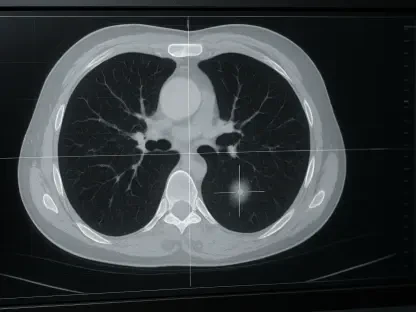
Feature selection techniques like LASSO and PCA are essential for filtering noise from the vast datasets generated by high-resolution radiomic analysis. This realization sits at the heart of a transformative shift in medical imaging, where clinicians are moving away from subjective visual
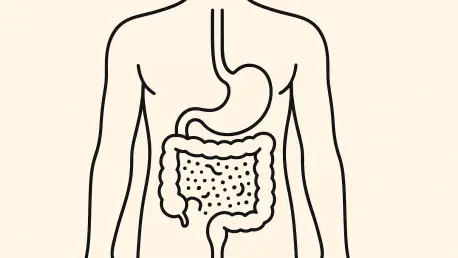
In partnership with the health science company ZOE, researchers are now tracking brand-specific food consumption to determine if certain chemical additives contribute to cancer risk. For decades, bowel cancer was almost exclusively a concern for the elderly, with the vast majority of cases

Primary central nervous system lymphoma presents a unique clinical paradox where a common steroid used for brain swelling acts as a potent cytotoxic agent that can cause tumors to vanish completely before a diagnosis is secured. This malignancy, primarily manifesting as a diffuse large B-cell
Long non-coding RNAs often migrate to the nucleus to orchestrate chromatin remodeling, while microRNAs typically reside in the cytoplasm to silence specific messenger RNA transcripts. This fundamental spatial arrangement defines the functional identity of a cell, acting as a complex logistics