
A strategic partnership with a pharmaceutical firm allows Outer Biosciences to investigate the biological mechanisms behind skin rashes caused by cancer treatments. This initiative marks a significant departure from traditional dermatological research, signaling a move toward high-precision, data-driven methodology. Michael Polansky, whose career has spanned from the rigorous environments of Bridgewater Associates to the venture capital landscapes of Silicon Valley, is applying his expertise in computer science and applied mathematics to the complexities of human biology. While many startups in the beauty space focus on marketing or surface-level trends, Outer Biosciences addresses the fundamental science of skin at a cellular level. By integrating advanced artificial intelligence with sophisticated laboratory techniques, the company seeks to bridge the gap between initial lab discovery and actual human efficacy. This approach does not just promise better cosmetic products; it represents a systemic change in how biological research is conducted. As the industry moves through 2026, the focus has shifted toward creating more reliable proxies for human tissue, ensuring that innovations are both safe and effective before they ever reach a consumer. Polansky’s leadership at the Parker Institute for Cancer Immunotherapy provided a unique perspective on the limitations of modern medicine, specifically the sluggish pace of biological iteration compared to the agility of software development. This realization is what drives the current mission to optimize skin health through a fusion of technology and biology.
Evolution: A Masterclass in Technological Strategy
The professional trajectory of Michael Polansky reflects a deep immersion in the most influential hubs of American innovation. His tenure at Bridgewater Associates instilled a commitment to radical transparency and data-centric decision-making, principles that he later carried into the venture capital world at Founders Fund. These experiences were not merely steps in a career but served as a rigorous training ground for understanding how to scale disruptive technologies in competitive markets. By working alongside industry titans, Polansky developed a keen eye for identifying the “translation gap” in the life sciences, where promising laboratory findings often fail to manifest as successful real-world treatments. This background in finance and computer science provided him with the tools to look at biological systems through a mathematical lens, treating the human body as a complex set of data points that can be decoded and optimized through iterative processing.
During his time at the Parker Institute for Cancer Immunotherapy, Polansky observed firsthand the physical and ethical constraints that often stall progress in medical research. He recognized that while the digital world benefits from rapid experimentation and constant updates, the biological world remains tethered to slow, expensive, and often inaccurate testing models. This discrepancy led to the founding of Outer Biosciences, a venture designed to apply the speed of software development to the traditionally stagnant field of dermatology. By shifting the focus from speculative digital modeling to high-fidelity human biological data, Polansky has positioned his company at the forefront of a new era. This transition from managing capital to managing cellular innovation illustrates a broader trend where tech-minded leaders are increasingly taking the helm of biotech firms to solve the most persistent challenges in human health.
Human-Centric Methodology: Solving the Translation Gap
The fundamental challenge in modern skincare research involves the reliance on biological proxies that do not accurately represent human skin. For decades, the industry has leaned on animal models or basic lab-grown organoids to test new ingredients, but these methods often lead to “failed translations” when the products are finally applied to actual people. This disconnect results in billions of dollars in wasted research and development costs, as well as a consumer market filled with products that lack scientific validation. Outer Biosciences addresses this inefficiency by moving human-centric testing to the very beginning of the discovery process. Instead of guessing how a compound might react based on non-human data, the company utilizes actual human tissue to verify efficacy from day one. This radical shift ensures that every insight gained in the laboratory is directly applicable to the end-user, significantly reducing the time required to bring new treatments to the market.
To implement this human-first strategy, Polansky and his team of bioengineers and pharmacologists have developed a framework that eliminates the need for inadequate proxies. By focusing on the direct interaction between active compounds and living human cells, the company can bypass the uncertainty that plagues traditional biotech. This approach is particularly relevant in 2026, as consumer demand for evidence-based skincare continues to rise and regulatory scrutiny over ingredient safety becomes more stringent. The methodology employed by Outer Biosciences provides a level of biological relevance that was previously unattainable, allowing for the identification of subtle cellular changes that might be missed in less sophisticated models. By prioritizing human biology at every stage, the firm is not only improving product outcomes but also setting a new standard for transparency and scientific integrity within the global beauty and pharmaceutical industries.
Engineering Success: Breakthroughs in Tissue Longevity
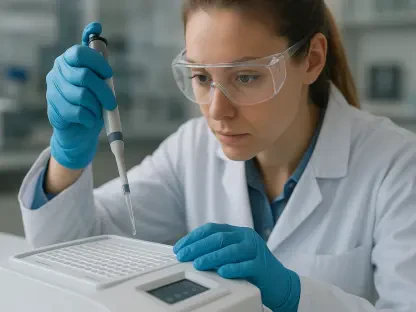
At the heart of the technological advantage held by Outer Biosciences is a proprietary system capable of maintaining human skin in a living, biologically active state outside the body. Historically, researchers have been limited by the fact that excised human tissue begins to degrade almost immediately, typically losing its viability within a few days. The platform developed by Polansky’s team extends this window to over thirty days by providing a specialized support system that mimics the body’s natural physiological environment. This system delivers essential nutrients and removes metabolic waste, preserving the original architecture of the skin. This breakthrough allows scientists to observe slow-moving biological processes, such as the remodeling of collagen or the repair of the skin’s moisture barrier, in a way that was never before possible without conducting expensive and risky clinical trials on living volunteers.
The skin used for these experiments is ethically sourced from surgical procedures, such as plastic surgeries, through a network of vetted nonprofit biobanks. Because the samples remain alive for an entire month, the researchers can conduct longitudinal studies on how specific ingredients affect the skin over time. This capability provides a depth of data that far exceeds what can be gathered from short-term experiments. The ability to monitor cellular responses over thirty days means that Outer Biosciences can identify long-term benefits and potential side effects with high precision. This technical achievement serves as the bedrock for the company’s entire research pipeline, offering a stable and reliable environment for testing that matches the complexity of a living organism. It is this marriage of ethical sourcing and advanced bioengineering that enables the company to produce insights that are both scientifically rigorous and commercially valuable.
Computational Power: The AI Discovery Loop
The true transformative power of Outer Biosciences lies in its ability to generate and utilize high-fidelity datasets through a closed-loop artificial intelligence system. In many fields, AI models are limited by the quality of public data available, but in dermatology, there is no comprehensive database that details how living human skin reacts to thousands of different chemical compounds. To overcome this, the company has built its own data generation engine. An AI model first predicts which substances might be effective for specific skin concerns, and these predictions are then tested on the company’s proprietary living tissue platform. The results of these physical tests are then fed back into the AI, which learns from the outcomes and refines its next set of predictions. This creates a self-reinforcing cycle of discovery that grows more accurate with every iteration, allowing the company to navigate the vast landscape of molecular possibilities with unprecedented speed.
This iterative process has resulted in a massive acceleration of the discovery timeline. In the past, identifying a single viable skincare candidate could take eighteen months or longer using traditional laboratory methods. However, the AI-integrated loop at Outer Biosciences now produces a promising candidate approximately every six weeks. In an industry where the number of truly effective active ingredients has remained stagnant for years, this rate of innovation represents a significant leap forward. By automating the trial-and-error phase of research, the company can focus its resources on the most promising leads, ensuring that only the most effective compounds move toward commercialization. This data-driven approach not only reduces costs but also increases the likelihood of success in a market where consumers are increasingly skeptical of unproven claims. The precision of the AI model, combined with the reality of the living tissue testing, creates a formidable engine for scientific advancement.
Strategic Synergies: Bridging Beauty and Medicine
The collaboration between Michael Polansky and Stefani Germanotta, known professionally as Lady Gaga, provides a unique bridge between high-stakes laboratory science and the global consumer market. While their personal connection is often highlighted in the media, their professional partnership is built on a shared vision for evidence-based innovation. Germanotta, who serves on the board of Outer Biosciences, brings a deep understanding of the beauty industry through her successful brand, Haus Labs. This relationship is further solidified by the fact that the chief scientist at Outer Biosciences also serves on the scientific advisory board of Haus Labs. This structural link ensures a constant exchange of information, where laboratory breakthroughs can inform the development of high-end cosmetics, and real-world consumer needs can guide the direction of high-tech biological research. This synergy allows Outer Biosciences to maintain its scientific focus while having a direct line to the commercial trends and demands of the modern beauty landscape.
Beyond the world of cosmetics, the company is leveraging its platform to address serious medical needs. The ongoing work to investigate the biological causes of skin rashes resulting from cancer treatments demonstrates the versatility of the technology. By testing pharmaceutical mitigations on their human tissue platform, Outer Biosciences is helping drug companies improve the quality of life for patients undergoing intensive therapies. This B2B model, where the company acts as a discovery engine for both beauty brands and pharmaceutical firms, allows it to maximize its impact without the overhead of maintaining a direct-to-consumer retail presence. By licensing validated ingredients and biological insights to established global partners, the startup can focus entirely on its core competency: the scientific discovery of how to keep human skin healthy and resilient. This strategic positioning ensures that the company’s innovations reach the widest possible audience through trusted industry leaders.
Future Horizons: Mapping the Path to Advanced Skincare
As the company moves from its development phase into a position of industry leadership, the focus has shifted toward securing a defensive competitive moat through data sovereignty and regulatory agility. Because the primary focus is on cosmetic ingredients rather than prescription drugs, Outer Biosciences can navigate a more streamlined path to market, avoiding the decade-long timelines associated with FDA drug approvals. However, the company maintains a level of scientific rigor that rivals pharmaceutical standards, ensuring that its products are backed by robust evidence. To protect its intellectual property, all AI training and data processing are conducted on-premise, keeping sensitive biological insights off the cloud. This commitment to data security and the use of real surgical-grade human tissue provides a level of fidelity that synthetic “organ-on-a-chip” models cannot replicate, creating a significant barrier to entry for potential competitors in the emerging field of AI-driven biology.
The journey of Outer Biosciences from its inception to its current status in 2026 was marked by a series of strategic decisions that prioritized scientific reality over speculative modeling. The project succeeded in creating a predictive model so accurate that it can anticipate how any substance will interact with the complex architecture of human skin. Moving forward, the industry was encouraged to adopt these high-fidelity testing standards to ensure that consumer safety and product efficacy remain at the forefront of innovation. For professionals in the biotech and beauty sectors, the actionable takeaway is the necessity of integrating real-world biological feedback into AI training sets to avoid the “hallucinations” of purely digital models. By fostering a culture where data is grounded in the reality of living human tissue, the field of dermatology has entered a new paradigm of precision. The work completed thus far serves as a blueprint for the future, suggesting that the most significant breakthroughs in human health will come from those who successfully bridge the gap between computational power and biological complexity.