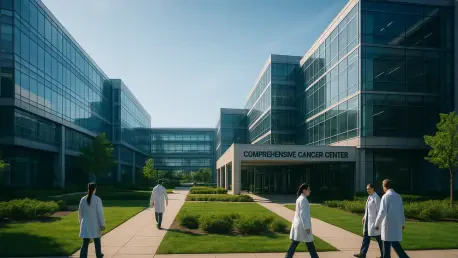

In addition to the recent NCI renewal, the UC Davis Medical Center has maintained its ranking as the top hospital in the Sacramento area for fifteen consecutive years according to national reports. This sustained excellence reached a new milestone today as the National Cancer Institute officially renewed the “comprehensive” designation for the UC Davis Comprehensive Cancer Center. This elite status, held by only 58 institutions across the United States, comes with an $18 million grant spanning from 2026 to 2031. This funding is specifically designed to accelerate laboratory breakthroughs and expand the availability of high-stakes clinical trials throughout Northern California and the Central Valley. The renewal underscores the facility’s role as a primary engine for oncological progress, integrating rigorous laboratory science with real-world clinical applications. By adhering to the NCI’s stringent review process, the center has proven its ability to lead deep community engagement while training future specialists.
Elevating Regional Healthcare Standards
Impact on Survival: A Critical Geographic Lifeline
The geographic footprint of the UC Davis Comprehensive Cancer Center is immense, serving as the only NCI-designated comprehensive facility in the vast corridor between San Francisco, Portland, and Salt Lake City. This unique positioning is not merely a matter of convenience; it is a critical factor in patient outcomes for the 100,000 individuals treated there annually. Research consistently indicates that patients who receive treatment for solid tumors at NCI-designated centers experience a significant 23% reduction in mortality compared to those treated elsewhere. This survival advantage stems from the center’s ability to offer specialized care teams and cutting-edge therapies that are often unavailable at community hospitals. By maintaining this designation, the center ensures that residents of the Sacramento region and surrounding rural communities have immediate access to world-class medical interventions that prioritize both survival rates and long-term quality of life for survivors of all ages and backgrounds.
Community Outreach: Expanding Access to Underserved Populations
Beyond immediate survival statistics, the center’s presence in Northern California serves as a hub for population-based health initiatives that target specific regional needs. The NCI renewal emphasizes the importance of addressing the diverse demographics of the Central Valley, where agricultural workers and rural residents often face significant barriers to specialized oncology care. By deploying mobile screening units and expanding telemedicine capabilities, the center bridges the distance between remote townships and advanced medical research. This outreach is complemented by a robust educational framework that trains oncologists, nurses, and researchers to understand the socioeconomic factors influencing cancer outcomes. The integration of community-specific data into clinical practice allows for more personalized and effective prevention strategies. Consequently, the institution does more than treat the disease; it works to dismantle the systemic hurdles that prevent underserved populations from receiving timely diagnostic services.
Technological Frontiers and Collaborative Ecosystems
Personalized Medicine: Advanced Manufacturing and Clinical Trials
A primary driver of the center’s success is its investment in advanced medical manufacturing, particularly its on-site facility for CAR-T cell therapies. This infrastructure allows clinicians to harvest a patient’s own immune cells, genetically re-engineer them to fight cancer, and reintroduce them into the system without the logistical delays inherent in external production. This localized capability is a game-changer for those with aggressive malignancies, significantly reducing the time between diagnosis and treatment. Currently, the facility manages over 200 active clinical trials, providing the region’s only access to Phase 1 experimental treatments. These trials offer hope to patients for whom traditional therapies have proven ineffective, providing access to novel drug compounds years before they become available to the general public. The renewal of the NCI grant ensures this research infrastructure continues to thrive, supporting the complex data management necessary for high-level clinical experimentation.
Future Frontiers: The Aggie Square Initiative and Diagnostic Precision
Diagnostic precision reached new heights through the implementation of the EXPLORER total-body PET scanner and robotic bronchoscopy, which allowed for the detection of microscopic lesions and hard-to-reach tumors. Looking ahead, the institution focused on the development of the Aggie Square innovation district to bridge the gap between academic research and commercial industry. This $1 billion project accelerated the delivery of new diagnostics to underserved populations while fostering high-level collaborative ecosystems. A unique comparative oncology program with the School of Veterinary Medicine further enriched the research environment by studying cancer pathways across species. These initiatives established a modern standard for cancer care throughout the American West, ensuring that breakthroughs remained accessible and effective. Ultimately, the center took actionable steps to integrate laboratory science with compassionate care, providing a clear roadmap for other institutions to follow in the effort to eliminate cancer.