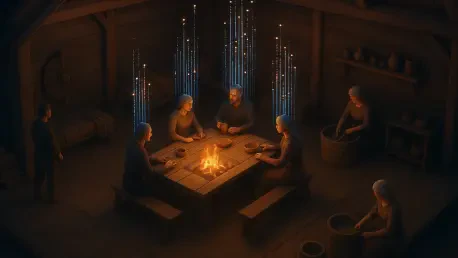

For centuries, the sight of multiple individuals resting in a single medieval grave was interpreted by archaeologists as a poignant snapshot of a family unit, perhaps a mother and child or siblings, bound together even in death. This romanticized view suggested that the biological nuclear family was the foundational pillar of communal life and the primary organizer of funerary space during the transition from the Viking Age to the Christian Middle Ages. However, recent scientific advancements have allowed researchers to peer beneath the surface of these long-held assumptions to uncover a much more complex social reality. A comprehensive study of ancient DNA from 142 individuals illustrates that medieval Scandinavians were part of a highly mobile European world connected by both kinship and international religious participation. By leveraging state-of-the-art genomic analysis, a team of scientists from Stockholm University has effectively dismantled the myth that blood relations were the sole architects of shared burial plots. Their investigation focused on several significant Swedish sites, including Sigtuna, Västerhus, and Fjälkinge, covering a period that saw radical shifts in religious practice and societal structure. What they discovered was not a collection of tight-knit biological families, but rather a dynamic system where social ties, professional roles, and household allegiances often carried more weight than genetic inheritance. This shift in perspective transforms our understanding of the medieval Scandinavian experience, revealing a society that was far more integrated into the broader European cultural fabric than previously believed.
Redefining the Medieval Family Unit
Deconstructing the Nuclear Family Narrative: Genomic Evidence
The genomic screening of significant archaeological sites like Västerhus provided a transformative look at how medieval communities organized their dead, showing that only a small fraction of multiple burials actually contained first-degree relatives such as siblings or parents. In many instances, the genetic data revealed that individuals sharing a single grave were no more related to one another than they were to any other random person buried across the entire cemetery grounds. This finding was particularly striking because the researchers identified numerous second-degree relatives, such as grandparents, uncles, or cousins, elsewhere in the churchyard, yet these biological matches were almost never found interred within the same burial plot. The separation of close biological kin into distinct graves suggests that while the cemetery as a whole might have been organized around broad family groups, the immediate act of sharing a grave was determined by criteria other than simple genetic closeness. It appears that the physical proximity of bodies in the earth was not a biological map but rather a reflection of different types of intimacy or social obligation that modern observers are only beginning to comprehend through molecular science.
The implications of these findings suggest that the medieval household was a diverse and inclusive environment that extended far beyond the modern Western definition of a nuclear family unit. Instead of a house solely occupied by a mother, father, and their biological offspring, the medieval Scandinavian residence likely served as a hub for a wide variety of individuals, including domestic servants, foster children, and strategic social allies. When these individuals passed away, their burial alongside one another served as a powerful social statement about their shared daily lives and their common membership in a specific household or community alliance. This “fellowship of the grave” prioritized the bonds of lived experience and social loyalty over the rigid hierarchies of biological descent. By moving away from a blood-centric interpretation of these sites, historians can now view the medieval graveyard as a complex social registry. This registry recorded the interconnectedness of people who worked, ate, and lived together, regardless of whether they shared a genetic heritage. This broader understanding of kinship aligns with a more nuanced view of medieval social structures, where institutional and communal ties were often the most defining characteristics of an individual’s identity and legacy within the local parish.
Social Belonging: Inclusive Households and Communal Ties
The transition toward a more inclusive understanding of medieval kinship is further supported by the diverse genetic profiles found in communal burial pits across Scandinavia. These sites indicate that the social fabric of the era was woven from threads of mutual protection, economic cooperation, and religious fellowship that frequently superseded the importance of the nuclear family. In the urban environment of Sigtuna, for example, the high degree of genetic diversity among those buried together points toward a society characterized by significant internal and external migration. People from different regions and backgrounds were brought together by trade, service, or religious vocation, forming new types of families based on shared goals and shared spaces. The act of burying a servant next to a master, or a foster child next to a biological child, was not merely a matter of convenience but a deliberate recognition of their integrated roles within the social hierarchy of the time. This inclusive approach to burial highlights a cultural priority on the stability and continuity of the household as a social institution rather than a purely biological one, which was essential for maintaining order in a rapidly changing medieval world.
Furthermore, the data suggests that these communal identities were often reinforced by religious doctrines that emphasized the spiritual brotherhood of all believers over secular lineage. As Christianity became more entrenched in the Scandinavian landscape, the churchyard itself became a site for expressing new forms of communal belonging that transcended traditional Viking-age clan structures. The shared graves of unrelated individuals may have represented guilds, religious sodalities, or even neighborhood clusters that sought to remain together in the afterlife as they had in the world of the living. This focus on communal identity provides a necessary counter-narrative to the idea of the isolated individual or the isolated nuclear family, showing instead a world where people were deeply embedded in layers of social and religious networks. By recognizing these non-biological connections, researchers can better appreciate the sophisticated ways in which medieval people navigated their world. The cemetery becomes a place where the boundaries of the family were redefined every day, reflecting a society that valued the strength of chosen alliances and the enduring power of shared communal life, proving that the social bonds forged in life were often the ones most honored in death.
Gender, Status, and Social Identity
The Socialization of Children: Gendered Spaces and Identity
One of the most significant breakthroughs of the genomic study was the ability to determine the biological sex of children and infants, a task that is typically impossible through traditional physical bone analysis due to the lack of developed sexually dimorphic traits in young skeletons. The findings at Västerhus suggest that children were not treated as a separate or protected social class but were instead integrated into the adult world’s gender-based hierarchies from a very early age. The spatial data from the cemetery indicates that boys were generally buried in sections of the graveyard reserved for men, while girls were placed in female sections alongside same-sex adults. This practice reveals that gender identity was assigned and socially reinforced almost from birth, with children being categorized according to the roles they were expected to fulfill as they matured. This early socialization underscores a societal structure where gender was a primary organizing principle, dictating not only how a person lived but also where they were permitted to rest. The integration of infants into these gendered zones suggests that even the youngest members of society were seen as integral parts of a larger, gender-divided communal order.
Despite the prevailing adherence to these strict gender lines, the DNA analysis also uncovered fascinating exceptions that highlight the complexity of medieval status and how it could occasionally override traditional norms. In certain high-status families, the researchers found infant girls buried in sections primarily occupied by adult men or in close proximity to prominent male figures. These outliers provide a more nuanced view of how medieval societies navigated individual identity versus communal expectations, suggesting that high social standing could grant a degree of flexibility in how certain individuals were commemorated. For a powerful family, the desire to place a deceased daughter near a patriarch or in a prestigious “male” zone of the church might have been more important than following the standard gendered layout of the parish. These instances of deviation from the norm indicate that while gender was a dominant force, it existed in a dynamic interplay with wealth, power, and family prestige. This complexity shows that medieval social rules were not monolithic; they were subject to negotiation and change based on the specific circumstances and status of the individuals involved, allowing for a more personalized approach to burial in elite circles.
Mobility and the Legend: The Legacy of Lady 56
The case of a woman known in the research as “Lady 56” provides a vivid illustration of the high degree of mobility and international prestige that existed within these medieval communities. Although she died before the age of 30 and had many biological relatives buried within the same cemetery, she was not laid to rest with any of them, nor was her burial dictated by standard kin-based clustering. Her grave was found to contain a scallop shell, a universally recognized symbol of the pilgrimage to Santiago de Compostela in Spain, marking her as a traveler who had likely journeyed thousands of miles across Europe. This single artifact transforms her story from a local burial into a testament of a connected European world where faith and mobility allowed individuals to forge identities far beyond their local villages. Her family’s prominent burial locations near the church further emphasize how status and religious participation shaped individual legacies, showing that her identity as a pilgrim and a member of the elite was prioritized over her role as a sister or daughter. Lady 56 serves as a reminder that medieval people were often part of a globalized religious culture that offered opportunities for travel and social advancement.
This high-status mobility was not an isolated phenomenon but was part of a broader trend where individuals used religious participation to cement their standing within the community. The fact that Lady 56 was buried in a prime location, yet separate from her immediate genetic kin, suggests that her personal achievements and her status as a pilgrim were the primary factors in her funerary arrangement. This decoupling of burial location from biological kinship highlights a sophisticated society where individual agency and religious devotion could redefine a person’s place in the communal memory. The presence of international symbols in a Swedish churchyard demonstrates that the medieval North was not a peripheral or isolated region but was deeply integrated into the cultural and spiritual currents of the rest of the continent. By studying individuals like Lady 56, researchers can see how the interplay of wealth, faith, and mobility created a society where social identity was a multifaceted construct. This person’s journey, both in life and in the way she was remembered after death, provides a clear example of how medieval Scandinavians navigated a world where their horizons were limited only by their resources and their devotion, rather than by the borders of their local parish or the lineages of their ancestors.
Modern Methodology and Future Perspectives
The Rise of Molecular Archaeology: Precision and Insight
The recent advancements in genomic screening have inaugurated a pivotal moment in what is now being called “molecular archaeology,” demonstrating how these sophisticated tools can resolve long-standing debates that traditional methods simply cannot address. By bridging the gap between physical remains and genetic reality, researchers have moved beyond the limitations of osteological analysis, which often struggles with fragmented remains or the lack of identifiable traits in infants. The ability to accurately determine the sex of children and verify biological links between individuals across a cemetery has allowed for a much deeper exploration of how social standing and religious doctrine influenced the deliberate act of burial. This level of precision enables scientists to reconstruct the social lives of medieval people with unprecedented accuracy, moving from broad generalizations about the past to specific, data-driven insights into individual lives and community structures. The integration of ancient DNA analysis with traditional archaeological context has created a powerful multidisciplinary framework that is currently redefining our understanding of historical social dynamics and the evolution of the family unit.
This technological revolution has also allowed for a more detailed examination of how specific religious and social movements shaped the physical landscape of the medieval world. For instance, the ability to track migration patterns through genomic data helps researchers understand how the spread of Christianity and the growth of urban centers like Sigtuna influenced the genetic and social makeup of the population. By comparing the DNA of individuals from different regions, scientists can see the tangible effects of mobility and the ways in which diverse groups integrated into existing Scandinavian communities. This approach provides a clearer picture of the demographic shifts that occurred during the Middle Ages, offering a more dynamic view of a society in flux. As these molecular tools become more refined and accessible, they will continue to provide new avenues for exploring the complexities of human history. The precision offered by genomic analysis is not just a supplement to traditional archaeology; it is a transformative force that is forcing scholars to reconsider everything they thought they knew about the relationships, identities, and daily lives of those who lived a millennium ago, ensuring that the study of the past remains a vibrant and evolving field of scientific inquiry.
Evolving Frameworks for Historical Research: Actionable Next Steps
Despite the transformative findings presented by this latest study, the researchers involved remained cautious about generalizing these specific trends across the entirety of medieval Scandinavia. The focus was primarily on multiple burials, which represent a unique and potentially specialized segment of the population, meaning that more comprehensive site-wide mapping is required to determine if these patterns were consistent for the general public. To build on this foundation, future research must expand to include a wider variety of burial types and locations, ensuring that the data reflects a truly representative cross-section of medieval society. This will involve the large-scale genomic sequencing of entire cemeteries, which was previously too costly or technically difficult but is now becoming increasingly feasible. By mapping the genetic relationships of every individual in a given parish, scholars will be able to see exactly how kinship, status, and gender interacted to form the complex social geography of the medieval churchyard. This holistic approach will provide the necessary evidence to confirm whether the inclusive household models and gendered socialization patterns observed at Västerhus were indeed the norm across the region or were specific to certain communities or social classes.
Looking forward, the integration of genomic data with other scientific techniques, such as stable isotope analysis for dietary and mobility studies, was identified as a critical next step for the field. This multi-proxy approach will allow researchers to connect an individual’s genetic heritage with their lived experiences, such as where they grew up and what they ate, providing a three-dimensional view of their life and death. Scholars should prioritize the development of standardized protocols for “molecular mapping” to ensure that data from different sites can be easily compared and synthesized into a larger regional narrative. As these advanced tools are applied to more sites, the myths of a static and purely biological medieval society were replaced by a far more sophisticated reality defined by the interplay of blood, faith, and fellowship. The future of historical research lies in this intersection of technology and the humanities, where the secrets of the past were unlocked by the codes of the present. By continuing to challenge established narratives with hard evidence, the academic community ensured that the understanding of medieval Scandinavia remained as dynamic and interconnected as the lives of the people who inhabited it centuries ago, paving the way for a more accurate and inclusive history of Northern Europe.