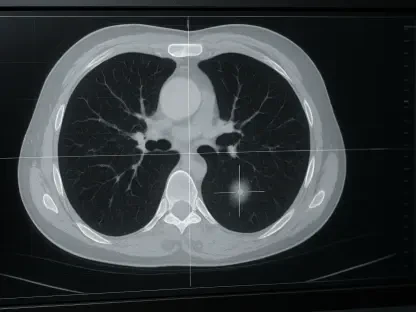
The persistent failure of conventional neuro-oncology treatments to extend median survival beyond eighteen months has catalyzed a profound transition from targeting individual malignant cells to orchestrating the total disruption of the glioma microenvironment. This shift represents more than just

The historical classification of the PVT1 locus as a non-coding region has been overturned by evidence showing it produces functional proteins that dictate the survival of malignant cells. For decades, the oncology community has viewed the MYC gene as the most frustrating obstacle in cancer

A major challenge in pharmaceutical development is the high failure rate of programs that stall because a target protein’s structure cannot be mapped. For many years, the pharmaceutical industry relied heavily on physical laboratory experiments that were both time-consuming and prone to human

A record 383 vials of LYMPHIR were ordered in July, establishing a new performance benchmark for the company’s expanded 29-member nationwide sales infrastructure. This milestone represents a significant pivot for Citius Pharmaceuticals as it transitions from a clinical-stage entity into a

Evidence suggests that neuroinflammation in CAR T-cell patients can persist as a localized metabolic crisis even after systemic inflammatory markers in the bloodstream have been successfully reduced. This finding highlights the complex nature of Chimeric Antigen Receptor (CAR) T-cell therapy, a

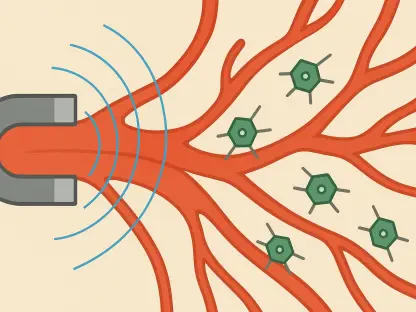
A newly developed molecular shield consisting of a positively charged oligopeptide linked to two polyethylene glycol chains can transiently block the entry points of the liver. This innovation addresses a fundamental limitation in the field of genetic medicine, where the immense potential of