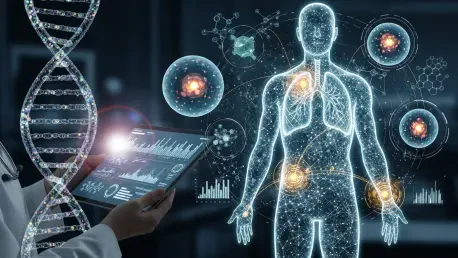

Scientists have spent decades meticulously mapping the two percent of the human genome that codes for proteins, yet the remaining ninety-eight percent, often dismissed as “junk DNA,” is proving to be the most critical frontier in modern oncology. This vast, unexplored territory, now commonly referred to as the dark genome, contains the intricate regulatory blueprints that dictate when, where, and how genes are expressed within a cell. For a patient battling a treatment-resistant tumor, the answers may not lie within the mutations of the proteins themselves but rather in the broken switches and silent enhancers hidden in these non-coding regions. As researchers transition through the current year of genomic mapping, the focus is shifting toward these cryptic sequences to understand the fundamental drivers of malignancy. By illuminating the dark genome, clinicians are beginning to uncover a more comprehensive picture of cancer biology that promises to redefine personalized medicine, moving past simple genetic sequencing toward a holistic view of the molecular landscape.
Moving Beyond Protein-Coding Boundaries
The Impact of Regulatory Variation on Tumorigenesis
The realization that non-coding DNA governs the spatial and temporal execution of genetic instructions has revolutionized the way oncologists approach the concept of driver mutations. While traditional oncology focuses on exomes, recent studies demonstrate that structural variations in long non-coding RNAs and distal enhancers can lead to the over-activation of oncogenes without changing the protein sequence at all. These regulatory aberrations act as silent drivers, pushing a cell toward uncontrolled proliferation while remaining invisible to standard diagnostic panels that only scan for coding errors. Mapping these interactions provides a more durable understanding of the underlying mechanics of the disease and potential points of therapeutic failure.
Furthermore, the dark genome plays a pivotal role in how tumors adapt to and survive the selective pressures of chemotherapy and immunotherapy. Epigenetic modifications within non-coding regions often facilitate the rapid rewiring of cellular pathways, allowing cancer cells to bypass drug-induced blocks and enter a state of dormancy or drug tolerance. These changes are not permanent genetic mutations but rather dynamic shifts in the regulatory landscape that can be reversed if identified and targeted correctly. Advanced computational models are now being deployed to predict how these regulatory networks will respond to specific therapeutic agents, allowing for the design of more resilient and effective treatment strategies.
Computational Analysis of Complex Genomic Patterns
The sheer volume and complexity of the data generated by sequencing the entire three-billion-base-pair genome necessitate the use of highly specialized artificial intelligence algorithms. Modern machine learning platforms are specifically designed to recognize patterns within the dark genome that are too subtle for human observation or traditional statistical methods. These AI systems scan vast libraries of non-coding sequences to identify recurrent mutations in promoters and introns that correlate with specific patient outcomes or treatment responses. By training on datasets from the current period through 2028, these models are becoming increasingly adept at distinguishing between benign variations and pathogenic disruptions.
Beyond mere identification, AI is also instrumental in simulating the functional consequences of dark genome alterations on cellular behavior and organelle function. Digital twins of patient tumors can now be constructed, incorporating both coding and non-coding data to test the efficacy of various drug combinations in a virtual environment before they are administered. This predictive capability is particularly valuable for rare cancers where clinical trial data is scarce and the need for personalized precision is paramount. By analyzing the synergistic effects of targeting both a protein product and its non-coding regulatory switch, these AI-driven simulations are guiding the development of next-generation clinical trials and therapies.
Clinical Integration and Therapeutic Innovation
Liquid Biopsies and Real-Time Surveillance
One of the most practical applications of dark genome research is the enhancement of liquid biopsy technologies, which analyze circulating tumor DNA in a patient’s blood. Because non-coding regions make up the vast majority of the genome, they provide a much larger surface area for detecting the fragmented DNA shed by tumors into the bloodstream. Advanced assays are now being tuned to detect specific fragmentation patterns and methylation signatures within the dark genome that are characteristic of early-stage malignancies. These non-coding biomarkers often appear much earlier in the disease progression than traditional protein markers, offering a critical window for early intervention.
Furthermore, the information gleaned from these non-invasive tests is being used to adjust treatment regimens in real-time based on the shifting regulatory landscape of the tumor. Liquid biopsies that incorporate dark genome analysis allow for a molecular check-in that informs the clinician whether the current therapy remains effective or if a pivot to a different agent is necessary. This continuous feedback loop minimizes the time a patient spends on ineffective treatments and reduces the overall toxicity of the therapeutic journey. The integration of this high-resolution genomic data into daily clinical practice is transforming the standard of care from a series of static snapshots into a continuous movie of biological activity.
Advancing Genomic Literacy in Medical Practice
The transition toward dark genome integration in oncology shifted the paradigm of personalized medicine from a narrow focus on protein-coding genes to a comprehensive understanding of the entire human blueprint. This expansion allowed medical professionals to identify the hidden regulatory drivers behind aggressive cancers, leading to more precise and effective intervention strategies. Stakeholders in the healthcare sector addressed the challenges of data complexity by investing in robust computational infrastructures and specialized training for molecular pathologists. By prioritizing the exploration of these previously ignored sequences, the oncology community provided a pathway for treating the most elusive forms of the disease.
Future progress remained dependent on the continued standardization of non-coding data interpretation and the cross-institutional sharing of genomic libraries to refine AI predictive models. Moving forward, the focus centered on translating these complex molecular insights into accessible diagnostic tools and affordable therapeutic options for all patients. The successful navigation of this genomic frontier required a collaborative effort between bioinformaticians and clinicians to turn dark data into tangible clinical outcomes. By ensuring that every patient benefited from the full depth of genetic knowledge, the medical community established a new standard for precision care that looks far beyond the surface of the protein-coding exome.