With a focus on advanced machine learning, Isomorphic Labs is attempting to cut years off the timeline required to bring life-saving drugs from the lab to patients. This ambitious goal is currently being met with unprecedented investor enthusiasm, as reports indicate the Alphabet spinoff is seeking

The era where pharmaceutical success depended on the serendipitous discovery of a blockbuster molecule has officially been eclipsed by a precision-engineered approach that treats biological research as a programmable loop. The pharmaceutical industry currently navigates a transformative era where

The Joint Steering Committee oversees a research pipeline that allows for the rapid pivot toward new health threats as they emerge in the Southern Hemisphere landscape. This strategic collaboration between Moderna and CSIRO establishes a robust biosecurity framework intended to fortify Australia’s
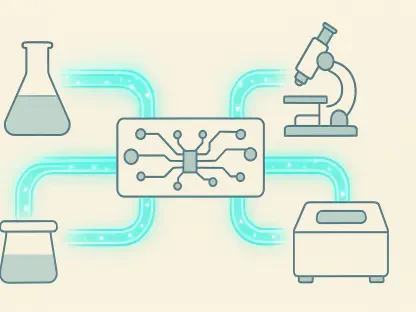
Industrializing the drug discovery process requires a closed-loop system where automated laboratories feed real-world experimental data back into predictive AI models. This fundamental shift has redefined the landscape of biotechnology between 2023 and 2026, transitioning the sector from an

Atrogi intends to launch the next phase of clinical trials in 2027 to establish a definitive proof of concept across a larger and more diverse demographic of patients. For decades, the pharmaceutical industry has searched for a "holy grail" that could fundamentally alter human body composition by
A comparative study using a trastuzumab biosimilar revealed that automation can reduce the average variability in glycan profiling by twenty-eight percent compared to manual processing. This discovery comes at a critical time in 2026, as the pharmaceutical sector grapples with the increasing