
The pursuit of engineering non-standard proteins has reached a significant milestone with the development of a system that reassigns sense codons on a massive scale. At the Wyss Institute for Biologically Inspired Engineering, a research group led by George Church has unveiled AGENTEX, a platform that stands for Automated Genetic tRNA Expansion. This advancement effectively breaks the constraints of the natural genetic code, which has remained largely stagnant for billions of years across all domains of life. By expanding the genetic alphabet, the team has successfully incorporated 14 non-standard amino acids into complex polypeptides, offering a level of chemical versatility previously thought impossible. This is not merely a refinement of existing techniques but a fundamental shift toward creating designer proteins with properties tailored for specific industrial or medical needs. The project highlights a move away from the traditional 20-amino-acid repertoire, paving the way for a new era of synthetic molecular architecture that transcends the limitations of nature’s original toolkit.
Refactoring the Code: Genetic Compression and New Biological Insights
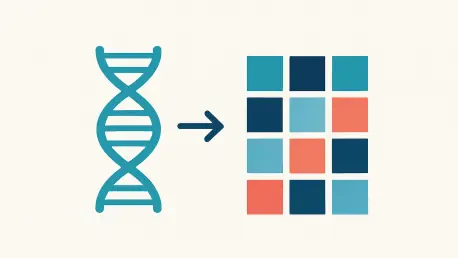
The fundamental architecture of life relies on a redundant genetic code where 64 possible three-letter combinations, known as codons, translate into only 20 standard amino acids. This redundancy often means that multiple different codons signify the same building block, acting as a buffer against mutations but also limiting the room for biological innovation. To overcome this, the Church team developed a sophisticated “compressed” genetic library. They meticulously engineered transfer RNA (tRNA) molecules to represent each of the 20 standard amino acids using just one specific codon each. By stripping away the natural redundancy, the researchers managed to free up 14 previously occupied codon slots. This compression process is a logistical masterpiece of molecular biology, as it requires the simultaneous modification of numerous genetic components without destabilizing the overall synthesis process. It provides the necessary “blank space” within the genome required to introduce entirely new chemical functions.
In addition to these structural achievements, the research has yielded profound scientific insights that challenge long-standing dogmatic views in molecular biology. For decades, the scientific community operated under the belief that the terminal sequence of tRNA molecules was an unchangeable requirement for biological activity. Specifically, it was thought that a highly conserved tail was essential for enzymes to “charge” the tRNA with its corresponding amino acid. Earlier experiments appeared to confirm this necessity, suggesting that any deviation would render the molecule useless. However, the Wyss Institute researchers hypothesized that these previous observations were a byproduct of overly simplified laboratory environments that did not capture the true complexity of cellular machinery. By employing innovative analytical tools, the team demonstrated that natural enzymes are actually capable of processing tRNAs with alternative terminal sequences, fundamentally altering our understanding of the chemical interactions at the core of life.
Systemic Integration: Automation and the Future of Biosecurity
To ensure the reliability of the platform, the researchers addressed the significant challenge of “crosstalk,” where natural cellular processes interfere with synthetic instructions. The solution implemented within AGENTEX involves the creation of two distinct translational pathways that operate within a single cell-free environment. One pathway utilizes natural ribosomes to manage the standard biological functions necessary for the system’s operation. In parallel, the second pathway employs specialized, engineered ribosomes designed to interact exclusively with the synthetic tRNAs and their non-standard amino acid cargo. Because these two systems are functionally isolated from one another, they can run simultaneously without cross-contamination or competitive inhibition. This dual-pathway architecture allows for the high-fidelity production of complex proteins, ensuring that the synthetic instructions are executed with surgical precision. Such a design represents a major architectural milestone, proving that it is possible to bifurcate the most central process of life.
Alongside these performance gains, the AGENTEX platform successfully integrated an inherent layer of biosecurity through its cell-free design, which operated outside of any living, self-replicating organism. This approach created a robust biocontainment barrier, ensuring that synthetic proteins and modified genetic components remained isolated from the natural environment. Beyond safety, the results provided a transformative outlook for medicine and industry, specifically through the creation of highly stable therapeutic drugs and novel biopolymers with unique physical properties. The ability to synthesize proteins with over a dozen non-standard amino acids proved that biological engineering could transcend natural constraints. As the project concluded, the focus shifted toward integrating these automated systems into scalable industrial pipelines. Moving forward, the industry should prioritize the development of standardized protocols to fully realize the potential of this technology in commercial healthcare and advanced material manufacturing across global markets.