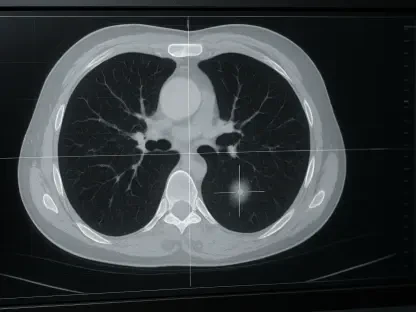

Network Bio’s debut marks a strategic shift toward solving the biological puzzle holistically rather than focusing on isolated components of individual human diseases. In a landscape where traditional drug discovery often stumbles over the immense complexity of the human body, this company has emerged from stealth with fifty million dollars in Series A funding and a thirty million dollar commercial partnership. The initiative is built upon a foundation of high-fidelity datasets sourced directly from human tissue, blood, and molecular profiles that are meticulously linked to long-term clinical outcomes. By integrating these biological signals with a custom computational architecture, the firm aims to accelerate the identification of biomarkers and the accuracy of diagnostics. Supported by top-tier venture capital firms such as Section 32 and Founders Fund, the organization is leveraging this capital to apply its multimodal platform to real-world clinical challenges. This approach provides the research stability and immediate market validation required to scale.
Establishing a Collaborative Biological Framework
Scaling DatThe Power of Institutional Partnerships
Central to the strategy is a multi-institutional network that connects biobanks at premier academic medical centers, including Mass General Brigham and the University of Pennsylvania. This collaborative web allows the organization to overcome the limitations of siloed data, providing access to a diversity of patient populations and biological samples that no single hospital could offer on its own. These partnerships are essential for gathering the high-fidelity samples needed to train sophisticated AI models effectively.
By standardizing data collection and curation across these various sites, the company converts disparate samples into a massive, harmonized dataset that fuels its predictive engines. This process ensures that the molecular insights are consistent and reproducible, which is essential for translating laboratory findings into clinical practice. This systemic integration of diverse data sources creates a robust foundation for identifying rare disease markers that were previously hidden in fragmented records.
Driving Discovery: Clinical Utility and Data Exchange
The data generated through this network is not a one-way street; instead, insights are returned to academic partners to foster basic science and clinical research. By applying rigorous quality standards and sophisticated harmonization, the firm ensures that the molecular insights it uncovers are useful for healthcare providers. This virtuous cycle of data exchange ensures that the platform remains at the cutting edge of medicine while providing tangible value to those who contribute data. This methodology fosters long-term cooperation between the tech and medical sectors.
This collaborative model encourages a broader participation from the medical community, as the benefits of the platform are shared among all stakeholders. Researchers gain access to advanced analytical tools that enhance their ability to conduct high-impact studies. Ultimately, this exchange accelerates the pace of innovation, leading to better patient outcomes and more efficient treatment protocols across the entire healthcare spectrum, bridging the gap between research and clinical care.
Engineering Intelligence for Complex Biology
Bio-Native Design: Overcoming Technical Confounders
The company distinguishes its technology through a “bio-native” AI architecture specifically engineered to navigate the noise inherent in biological samples. While standard AI models often struggle with technical confounders—errors introduced during the collection or processing of physical tissue—this system is designed to identify and account for such variables. This ensures that the results are grounded in true biology rather than being skewed by the mechanical artifacts of data processing. This precision is what allows the model to perform in complex clinical environments.
The result is an interpretable representation of data, allowing human researchers to understand exactly how the AI reached its conclusions and ensuring that findings are reliable. This transparency is vital for clinical applications, where understanding the “why” behind a prediction is just as important as the prediction itself. By prioritizing interpretability, the platform bridges the gap between complex machine learning and the practical needs of medical professionals who require evidence-based insights for decision-making.
General Medical Intelligence: The Goal of Unified Learning
The ultimate ambition is the creation of General Medical Intelligence, a unified platform capable of learning broad biological principles across different diseases. Rather than building isolated models for specific conditions, the system identifies underlying biological “barcodes” that are shared across respiratory, cardiovascular, and autoimmune pathologies. As the platform processes more data, it becomes progressively more capable, transferring its learning from one area to another. This cross-disciplinary approach allows for a more holistic understanding of the human body as a single system.
The ability to transfer learning between disparate medical fields redefined how therapeutic strategies were designed for orphan diseases and complex comorbidities. By leveraging the foundational insights gained from common illnesses, the organization positioned itself to tackle rarer conditions that historically lacked data. Stakeholders in the biotechnology sector moved toward integrated, multimodal data strategies that prioritized biological context and quality. This shift ensured that medical intelligence evolved to meet the needs of every patient, regardless of their specific diagnosis.